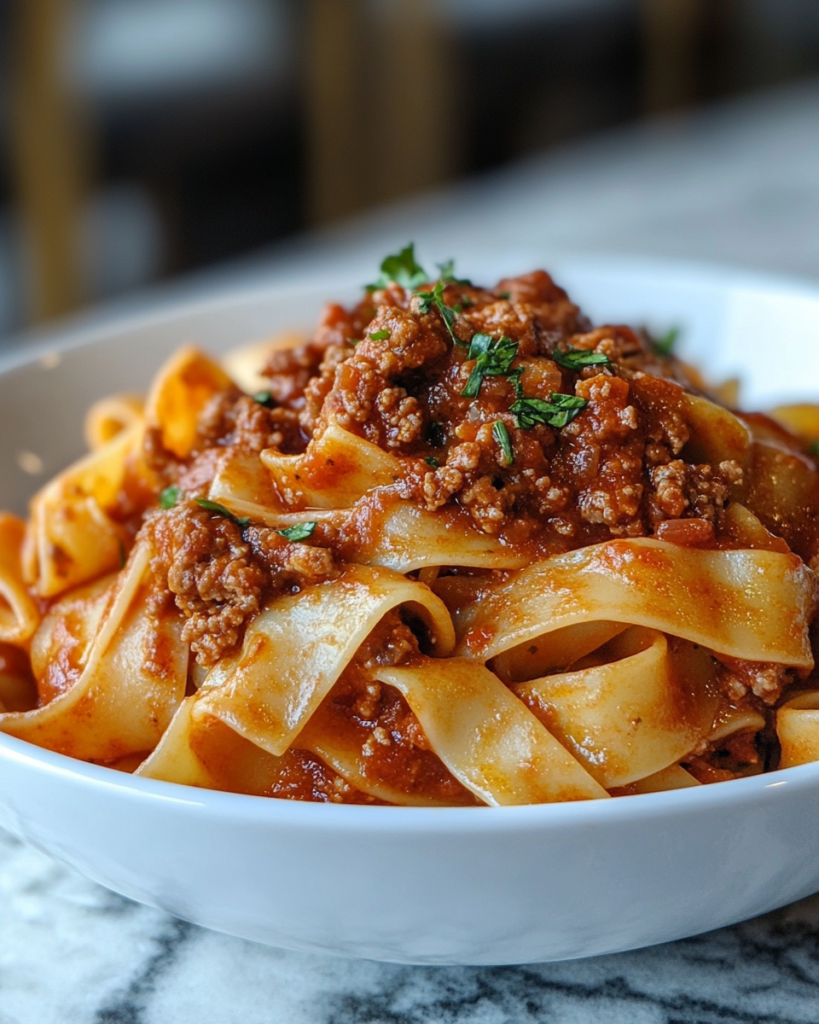
Beef meat sauce pasta is a timeless comfort dish made with tender ground beef simmered in a savory tomato sauce and served over perfectly cooked pasta. This meal brings together everyday pantry ingredients to create something warm, filling, and deeply satisfying for busy weeknights or relaxed family dinners.
The combination of slow-simmered meat sauce and pasta creates a balanced plate with hearty protein, soft noodles, and a rich tomato base that coats every bite. It is the kind of recipe that feels familiar from the very first taste and works well for both beginners and experienced home cooks.
The beauty of beef meat sauce pasta lies in its simplicity. With a few basic ingredients and steady cooking, the flavors build naturally as the sauce thickens and develops depth. It is flexible, easy to adjust, and pairs well with a variety of pasta shapes.
Ingredients Overview
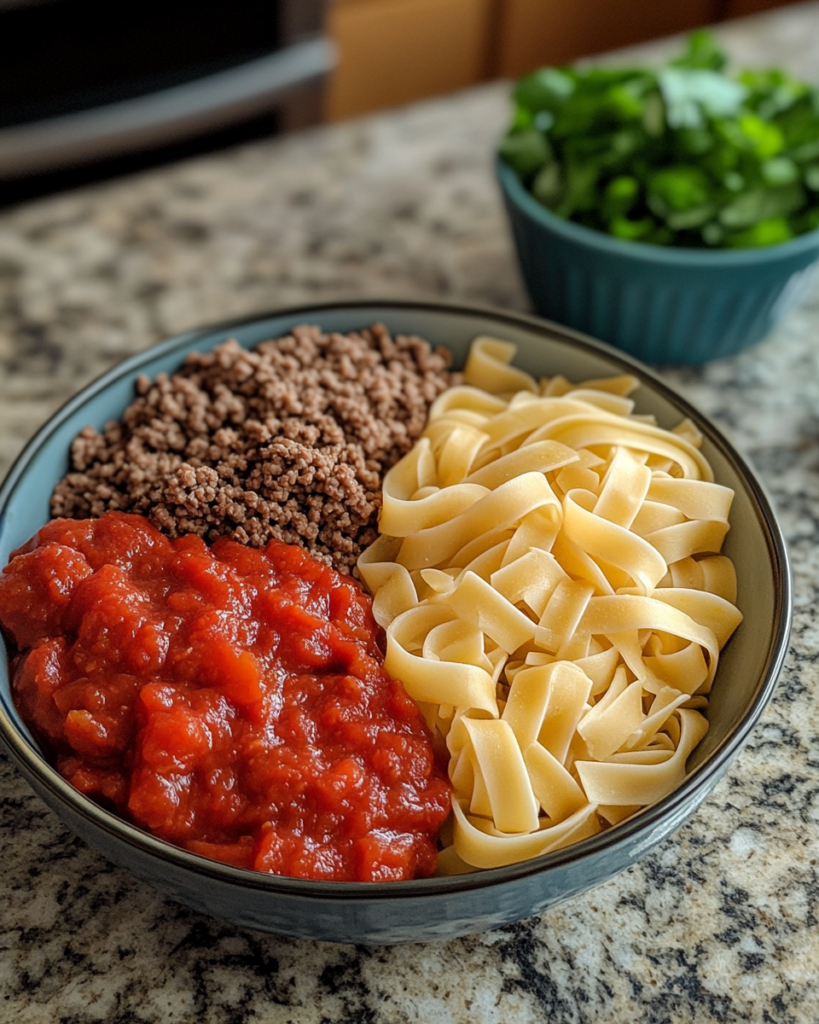
The foundation of beef meat sauce pasta starts with ground beef, which provides a savory and hearty base. Choosing beef with a moderate fat content helps keep the sauce flavorful without becoming overly greasy. As it cooks, the beef releases juices that blend into the tomato mixture, creating a strong savory backbone.
Tomatoes form the next key layer, usually in the form of crushed tomatoes or tomato sauce. They add natural acidity and body to the dish, helping balance the richness of the meat. As the sauce simmers, the tomatoes break down and create a smooth, cohesive texture.
Onion and garlic bring aroma and depth. Onion softens into the sauce, adding gentle sweetness, while garlic gives a warm, savory note that lifts the overall flavor. These two ingredients are essential for building a well-rounded base.
Olive oil is used at the start to sauté the aromatics and help brown the beef evenly. A touch of salt, pepper, and dried herbs like oregano or basil enhances the natural flavors without overpowering the sauce.
Pasta acts as the final component, carrying the sauce and adding structure to the dish. Shapes like spaghetti, penne, or rigatoni work well because they hold the sauce effectively.
Optional additions such as grated cheese or a pinch of chili flakes can adjust the flavor profile depending on personal preference. Each ingredient works together to create a balanced, comforting meal.
Ingredients
1 pound ground beef
12 ounces spaghetti or penne pasta
2 tablespoons olive oil
1 medium onion, finely chopped
3 cloves garlic, minced
1 can (28 ounces) crushed tomatoes
2 tablespoons tomato paste
1 teaspoon dried oregano
1 teaspoon dried basil
1/2 teaspoon salt
1/2 teaspoon black pepper
1/2 teaspoon sugar
1/2 cup water or beef broth
1/4 teaspoon chili flakes (optional)
1/2 cup grated Parmesan cheese (optional for serving)
Fresh parsley, chopped for garnish
Step-by-Step Instructions
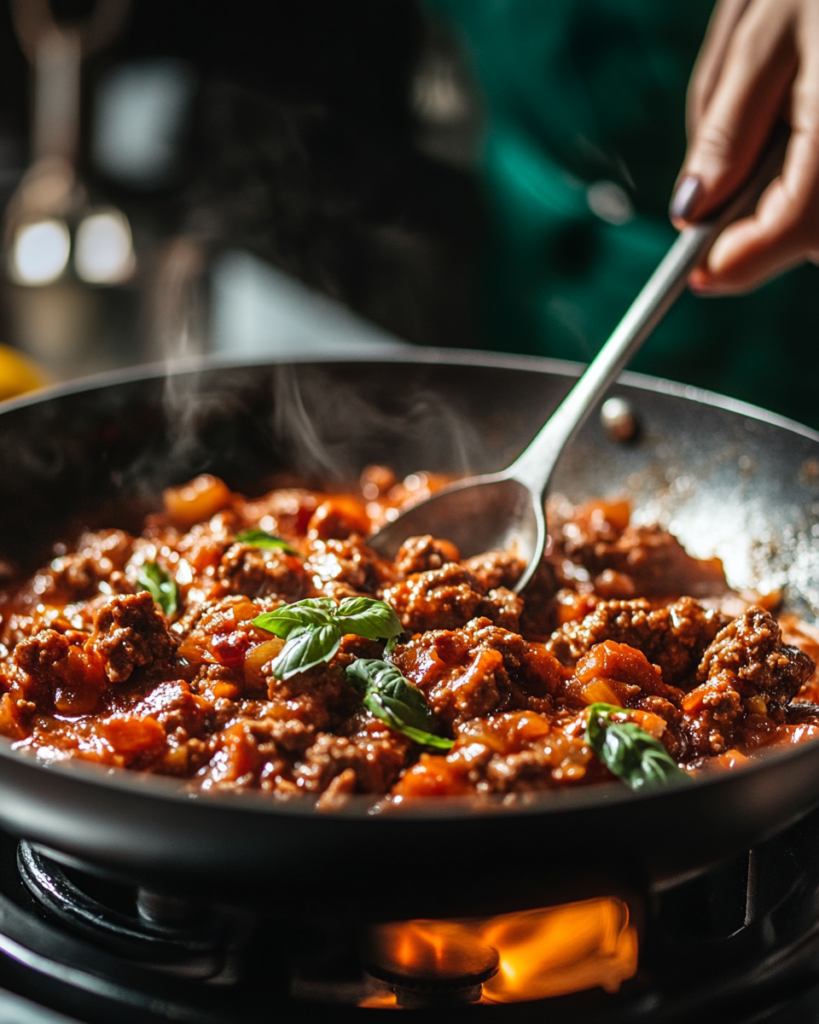
Start by heating olive oil in a large skillet or deep pan over medium heat. Add the chopped onion and cook until it becomes soft and translucent. This step builds the aromatic base of the sauce and usually takes about 4 to 5 minutes.
Add the minced garlic and cook for another minute, stirring constantly to prevent it from burning. The aroma will become stronger and more fragrant at this stage.
Next, add the ground beef to the pan. Break it apart using a wooden spoon and cook until it is fully browned. This process helps develop flavor through caramelization. If there is excess fat, carefully drain a portion while leaving some for flavor.
Stir in the tomato paste and mix it thoroughly with the beef. This helps deepen the tomato flavor and gives the sauce more body.
Pour in the crushed tomatoes and add water or broth. Stir well to combine all ingredients evenly. Add oregano, basil, salt, pepper, sugar, and chili flakes if using. The sugar helps balance the acidity of the tomatoes.
Lower the heat and let the sauce simmer gently for 25 to 30 minutes. Stir occasionally to prevent sticking. As it cooks, the sauce will thicken and the flavors will blend together into a cohesive mixture.
While the sauce simmers, bring a large pot of salted water to a boil. Add the pasta and cook according to package instructions until al dente. Drain and set aside.
Once the sauce is ready, taste and adjust seasoning if needed. Combine the cooked pasta with the meat sauce or serve the sauce over the pasta, depending on preference.
Finish with grated Parmesan cheese and chopped parsley for added freshness and flavor.
Tips, Variations & Substitutions
For a deeper flavor, allow the sauce to simmer longer over low heat. A slow simmer helps the ingredients blend more thoroughly and creates a thicker texture.
Ground beef can be replaced with ground turkey, chicken, or even a plant-based alternative for a lighter version. Each option brings a slightly different taste but still works well with the tomato base.
Adding finely grated carrots or chopped celery can increase vegetable content and add natural sweetness to the sauce. These ingredients blend smoothly as they cook.
If you prefer a spicier version, increase the chili flakes or add a small amount of paprika. For a creamier variation, a splash of milk or cream can be stirred in at the end of cooking.
Different pasta shapes can change the eating experience. Short pasta like rigatoni holds more sauce, while long pasta like spaghetti offers a more classic presentation.
Serving Ideas & Occasions
Beef meat sauce pasta is often served as a main dish for lunch or dinner. It pairs well with simple sides such as green salads, roasted vegetables, or garlic bread.
For drinks, light options like sparkling water or a mild iced tea complement the richness of the sauce without overpowering it.
This dish is commonly enjoyed during family meals, casual gatherings, or meal prep for the week. It holds up well when reheated, making it practical for busy schedules.
It also works well as a comforting dinner after a long day, offering warmth and satisfaction in every serving.
Nutritional & Health Notes
Beef meat sauce pasta provides a balanced combination of protein, carbohydrates, and fats. The ground beef contributes protein and iron, while pasta supplies energy-rich carbohydrates.
Tomatoes add vitamins such as vitamin C and antioxidants like lycopene, which are naturally present in cooked tomato products. Olive oil contributes healthy fats in moderate amounts.
Portion control can help maintain balance, especially when paired with vegetables or lighter side dishes. Using lean ground beef can reduce overall fat content while still maintaining flavor.
This dish can be adjusted to fit different dietary preferences by choosing whole wheat pasta or reducing added salt.
FAQs
Can I make beef meat sauce pasta ahead of time?
Yes, this dish works very well for meal preparation. The sauce can be made ahead and stored in the refrigerator for up to three days. In fact, the flavors often become deeper after resting overnight. When ready to serve, simply reheat the sauce on the stove and cook fresh pasta or warm pre-cooked pasta before combining.
What type of pasta works best for this recipe?
Spaghetti and penne are the most common choices for beef meat sauce pasta. Spaghetti provides a classic presentation, while penne holds the sauce in its hollow shape for a more coated bite. Other options like rigatoni or fusilli also work well because they capture the sauce effectively.
Can I freeze the meat sauce?
Yes, the meat sauce freezes very well. Allow it to cool completely before placing it in an airtight container. It can be stored in the freezer for up to three months. When ready to use, thaw it in the refrigerator overnight and reheat slowly on the stove.
How can I make the sauce thicker?
If the sauce feels too thin, let it simmer uncovered for additional time so excess liquid evaporates. Adding a small amount of tomato paste can also help thicken the texture while intensifying the flavor.
Can I use fresh tomatoes instead of canned?
Fresh tomatoes can be used, but they need to be cooked longer to break down properly. Blanching and peeling them first will help create a smoother sauce. Canned tomatoes are often more consistent in texture and flavor for this recipe.
Is it possible to make this dish without garlic or onion?
Yes, but the flavor will be milder. Garlic and onion provide the base aroma and depth for the sauce, so removing them will result in a simpler taste. You can replace them with mild herbs if preferred.
How do I prevent the pasta from becoming mushy?
Cook the pasta until just al dente, meaning it should still have slight firmness when bitten. Drain it immediately and avoid overcooking. If mixing with sauce, do so right before serving to maintain texture.