Cheesy Chicken Orzo Skillet: 30-Minute Comforting Supper

Posted on

Uncategorized

Difficulty

Prep time

Cooking time

Total time

Servings

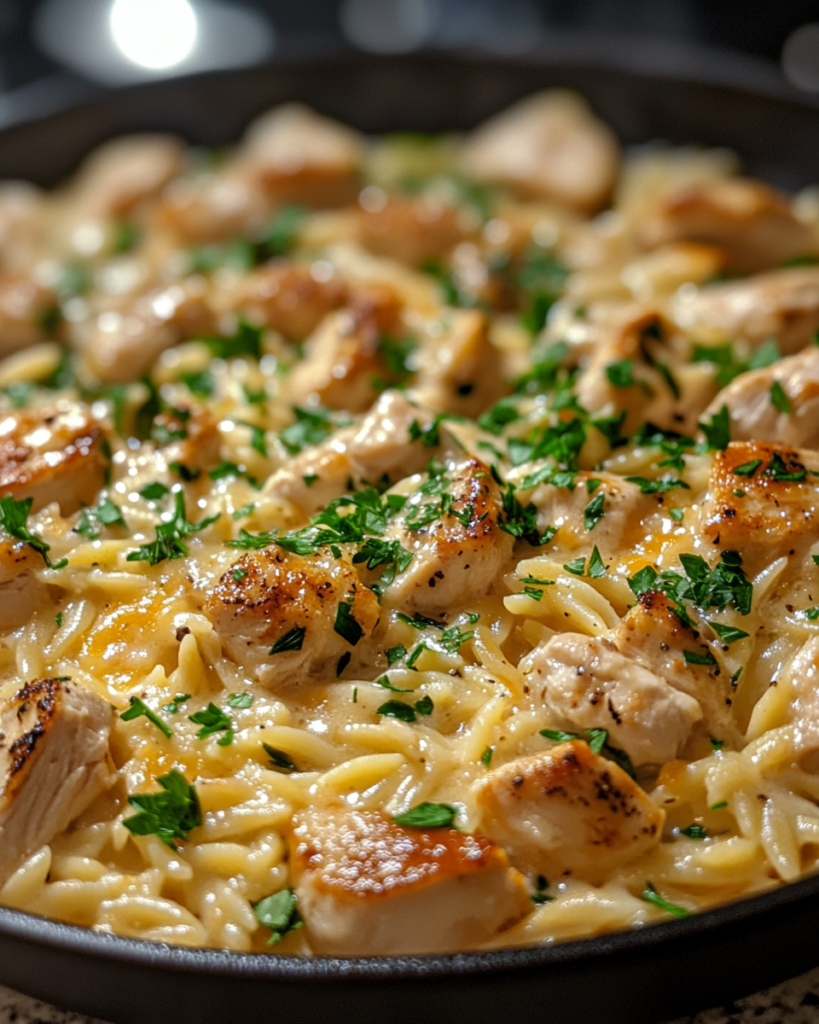
Cheesy Chicken Orzo Skillet brings together tender chicken, creamy orzo, and rich melted cheese in a single pan that suits busy evenings and relaxed family dinners alike. The pasta slowly cooks in savory broth, soaking up flavor while the cheese creates a silky finish that coats every spoonful.

This dish carries the cozy feel of a creamy casserole while staying simple enough for weeknight cooking. Juicy chicken pieces pair beautifully with soft orzo, garlic, herbs, and a touch of parmesan for a hearty skillet meal with very little cleanup afterward.

A skillet recipe like this also suits households searching for filling comfort food without complicated preparation. Since the orzo cooks directly in the pan, the starch naturally thickens the sauce and creates a smooth texture that tastes rich without requiring heavy cream in large amounts.

The balance of protein, pasta, broth, and cheese creates a satisfying dinner that feels warm and homemade. Fresh parsley at the finish adds color and brightness that balances the creamy texture perfectly.

Ingredients Overview

Chicken breast serves as the hearty base for Cheesy Chicken Orzo Skillet. Boneless skinless chicken breast cooks quickly and stays tender when cut into bite-sized pieces. Chicken thighs also work nicely for households that enjoy richer flavor and slightly juicier texture.

Orzo plays a major role in this skillet recipe. Although shaped like rice, orzo belongs in the pasta category and absorbs broth beautifully during cooking. Its small size allows quick cooking while creating a creamy consistency throughout the skillet. Arborio rice may stand in as a substitute, though cooking duration becomes slightly longer.

Chicken broth gives depth and savory richness while helping the orzo soften evenly. Low-sodium broth offers additional control over seasoning. Garlic and onion create the aromatic foundation and pair naturally with poultry and cheese.

Mozzarella adds smooth meltability while parmesan contributes nutty flavor and slight saltiness. Combining two cheeses gives the dish a balanced texture rather than overly thick heaviness. Sharp white cheddar may replace mozzarella for a richer finish.

A small amount of cream softens the sauce and ties the ingredients together. Half-and-half also works nicely. Italian seasoning provides herb flavor without overpowering the skillet, while paprika adds subtle warmth and color.

Fresh parsley brightens the final dish and balances the creamy richness. Spinach may also join the skillet during the final few minutes for additional color and texture.

Ingredients

1 1/2 pounds boneless skinless chicken breast, diced

1 teaspoon kosher salt

1/2 teaspoon black pepper

1 teaspoon paprika

2 tablespoons olive oil

1 small yellow onion, finely chopped

3 cloves garlic, minced

1 cup uncooked orzo

2 1/2 cups low-sodium chicken broth

1/2 cup heavy cream

1 teaspoon Italian seasoning

1 cup shredded mozzarella cheese

1/2 cup grated parmesan cheese

2 tablespoons chopped fresh parsley

1 cup fresh spinach, optional

Step-by-Step Instructions

Pat the chicken pieces dry using paper towels. Dry surfaces brown more evenly and help the seasoning cling properly during cooking. Toss the chicken with salt, pepper, and paprika in a medium bowl until coated evenly.

Warm a large deep skillet over medium heat. Add olive oil, followed by the seasoned chicken. Spread the pieces into a single layer so they brown rather than steam. Cook for about 5 to 6 minutes, stirring occasionally, until lightly golden and mostly cooked through. Transfer the chicken onto a plate temporarily.

Lower the heat slightly and add the chopped onion into the same skillet. Stir frequently for about 3 minutes until softened and lightly translucent. Add the garlic and stir for another 30 seconds until fragrant. Garlic cooks quickly, so avoid prolonged cooking that may create bitterness.

Pour the uncooked orzo into the skillet and stir continuously for 1 minute. Toasting the pasta lightly adds depth and prevents mushy texture later. Slowly pour in the chicken broth while scraping any browned bits from the bottom of the skillet. Those browned pieces carry savory flavor that strengthens the entire dish.

Return the chicken along with any juices back into the skillet. Stir in Italian seasoning and cream. Raise the heat slightly until the liquid reaches a gentle simmer. Once simmering, lower the heat and partially cover the skillet.

Cook for 10 to 12 minutes, stirring every few minutes so the orzo cooks evenly and avoids sticking near the bottom. The pasta gradually absorbs the broth and thickens the mixture naturally. If the skillet appears dry before the orzo softens fully, stir in a splash of additional broth.

Once the orzo reaches tender texture, reduce the heat to low. Stir in mozzarella and parmesan gradually until fully melted and creamy. Add spinach during this stage if desired. The residual heat softens the greens quickly without overcooking them.

Taste the skillet and adjust seasoning if necessary. Scatter fresh parsley across the surface before serving.

Avoid overcrowding the skillet during the chicken browning stage because excess moisture prevents caramelization. Another common issue involves overcooking the orzo. Stirring occasionally and monitoring liquid levels helps maintain creamy texture rather than thick clumps.

Serve immediately while the cheese remains silky and smooth.

Tips, Variations & Substitutions

Chicken thighs provide slightly richer flavor and remain tender even after reheating. Turkey breast also works nicely for households searching for another protein option.

For additional vegetables, stir in mushrooms, peas, broccoli florets, or chopped spinach near the final cooking stage. Sun-dried tomatoes contribute tangy richness that pairs beautifully with parmesan and garlic.

Cheddar, fontina, Monterey Jack, or provolone may replace mozzarella depending upon personal preference. Parmesan remains valuable because its savory depth balances creamy cheese varieties very well.

A splash of lemon juice right before serving brightens the skillet and balances the dairy richness. Crushed red pepper flakes also add gentle heat without overpowering the dish.

Gluten-free orzo works successfully in this recipe, though broth amounts may require slight adjustment depending upon the brand. Lactose-free cream and cheese substitutes may also stand in comfortably.

Leftovers reheat beautifully in a skillet over low heat with a small splash of broth or milk. Microwaving also works, though slower stovetop reheating preserves creamier texture.

Fresh herbs such as basil, thyme, or chives bring additional freshness. Parsley remains especially suitable because its clean flavor balances the hearty chicken and cheese combination naturally.

Serving Ideas & Occasions

Cheesy Chicken Orzo Skillet suits casual family dinners, chilly evenings, potluck gatherings, and comforting weekend meals. Since the recipe cooks in a single pan, it also fits busy schedules when simple cleanup matters.

A crisp green salad with vinaigrette balances the creamy texture nicely. Roasted green beans, asparagus, or garlic broccoli pair naturally alongside the savory skillet. Warm bread or toasted garlic bread also complements the cheesy sauce beautifully.

For beverages, sparkling water with lemon keeps the meal light and refreshing. Iced tea or crisp white wine also pairs comfortably with the creamy pasta and chicken.

This skillet recipe works nicely during colder months thanks to its warm and hearty texture, though the fresh herbs keep it pleasant during spring and summer evenings as well. Since the dish reheats successfully, it also suits meal preparation for lunches throughout the week.

Nutritional & Health Notes

Cheesy Chicken Orzo Skillet offers a balanced mixture of protein, carbohydrates, and dairy in a satisfying meal. Chicken breast supplies lean protein that supports fullness and muscle maintenance, while orzo contributes energy-rich carbohydrates.

The cheese and cream create richness and creamy texture while contributing calcium and protein. Using moderate amounts allows the dish to stay hearty without becoming excessively heavy. Reduced-fat dairy products may lower overall richness while still maintaining creamy consistency.

Adding spinach or broccoli increases fiber, vitamins, and color throughout the skillet. Fresh herbs also contribute flavor without relying heavily upon additional salt.

Since the recipe cooks entirely in one skillet, very little added oil becomes necessary. Low-sodium broth also helps maintain balanced seasoning.

Portion size plays an important role because creamy pasta dishes naturally feel filling. Pairing the skillet with vegetables or salad creates a rounded dinner with pleasing texture contrast and additional freshness.

FAQs

Can I prepare Cheesy Chicken Orzo Skillet ahead of time?

Yes. This skillet recipe works nicely for advance preparation because the flavors continue blending during refrigeration. Allow the skillet to cool fully before transferring leftovers into airtight containers. Refrigerated portions stay fresh for about three days.

During reheating, add a splash of broth, milk, or cream because the orzo absorbs liquid while sitting. Warm the skillet slowly over low heat while stirring occasionally until creamy again. Microwaving also works for individual servings, though gentle stovetop reheating usually preserves texture more successfully.

If preparing the dish entirely ahead for guests, slightly undercook the orzo initially so it stays tender rather than overly soft after reheating later.

Which cheese melts most smoothly in this skillet?

Low-moisture mozzarella creates smooth creamy texture and melts evenly throughout the skillet. Parmesan contributes savory depth and slight saltiness that balances the mild mozzarella beautifully.

Freshly shredded cheese usually melts more smoothly than packaged pre-shredded varieties because packaged cheese often contains anti-caking ingredients that affect texture. White cheddar, fontina, or Monterey Jack also work nicely and create slightly richer flavor profiles.

For a silkier finish, stir the cheese into the skillet gradually over low heat rather than high heat. Excessive heat sometimes causes dairy ingredients to separate or become grainy instead of smooth and creamy.

Can I freeze leftover Cheesy Chicken Orzo Skillet?

Freezing remains possible, though creamy pasta dishes occasionally change texture slightly after thawing. For strongest results, cool the skillet fully before placing portions into freezer-safe containers.

Frozen portions usually remain suitable for around two months. Thaw overnight inside the refrigerator before reheating slowly over low heat with additional broth or milk. The extra liquid helps restore creaminess because pasta absorbs moisture during storage.

Avoid overheating during reheating because prolonged heat may toughen the chicken and affect the cheese texture. Gentle warming produces the smoothest final consistency after freezing.

What vegetables pair nicely inside this recipe?

Spinach remains among the simplest additions because it wilts quickly and blends naturally with creamy sauce. Mushrooms also contribute savory richness and pair beautifully with garlic and parmesan.

Broccoli florets, peas, zucchini, kale, and asparagus all work successfully depending upon seasonal preference. Firmer vegetables should enter earlier during cooking so they soften fully before serving.

Sun-dried tomatoes contribute pleasant tangy flavor that balances the richness especially nicely. Fresh basil or parsley added near the finish brightens the skillet and contributes fresh contrast against the creamy orzo texture.

Why did my orzo turn sticky or overly thick?

Orzo absorbs liquid quickly, so prolonged cooking may create thick texture if insufficient broth remains inside the skillet. Stirring occasionally during cooking prevents sticking and allows even absorption throughout the pan.

If the mixture thickens too quickly before the pasta softens fully, stir in extra broth gradually. Heat level also matters. A gentle simmer cooks the orzo evenly without rapid evaporation.

Another helpful step involves removing the skillet from heat shortly after the pasta turns tender. Residual warmth continues thickening the sauce naturally while resting for several minutes before serving.

Can rotisserie chicken stand in for raw chicken?

Yes. Rotisserie chicken works especially nicely during busy evenings because it shortens preparation considerably. Since the poultry already cooks fully, simply shred or chop the chicken and stir it into the skillet during the final few minutes.

Using cooked chicken also changes timing slightly because the focus shifts mainly toward softening the orzo and thickening the sauce. Rotisserie chicken often carries additional seasoning, so taste carefully before adding extra salt.

This variation creates an especially fast dinner while still providing the creamy texture and savory flavor expected from Cheesy Chicken Orzo Skillet.

Which skillet size works strongest for this recipe?

A large deep skillet around 12 inches wide usually works strongest because it provides enough surface area for browning the chicken evenly while allowing space for the orzo to expand during cooking.

Heavy-bottomed skillets distribute heat more evenly and reduce sticking near the center. Nonstick or enameled pans also work comfortably for creamy pasta dishes because cheese cleanup becomes easier afterward.

If using a smaller skillet, overcrowding may prevent proper browning and create uneven cooking. A deeper pan additionally helps contain bubbling broth and sauce during simmering without spilling over the edges.

[rank_math_breadcrumb]

Cheesy Chicken Orzo Skillet: 30-Minute Comforting Supper

Photo of author
Author: Carol
Published:

Cheesy Chicken Orzo Skillet brings together tender chicken, creamy orzo, and rich melted cheese in a single pan that suits busy evenings and relaxed family dinners alike. The pasta slowly cooks in savory broth, soaking up flavor while the cheese creates a silky finish that coats every spoonful.

This dish carries the cozy feel of a creamy casserole while staying simple enough for weeknight cooking. Juicy chicken pieces pair beautifully with soft orzo, garlic, herbs, and a touch of parmesan for a hearty skillet meal with very little cleanup afterward.

A skillet recipe like this also suits households searching for filling comfort food without complicated preparation. Since the orzo cooks directly in the pan, the starch naturally thickens the sauce and creates a smooth texture that tastes rich without requiring heavy cream in large amounts.

The balance of protein, pasta, broth, and cheese creates a satisfying dinner that feels warm and homemade. Fresh parsley at the finish adds color and brightness that balances the creamy texture perfectly.

Ingredients Overview

Chicken breast serves as the hearty base for Cheesy Chicken Orzo Skillet. Boneless skinless chicken breast cooks quickly and stays tender when cut into bite-sized pieces. Chicken thighs also work nicely for households that enjoy richer flavor and slightly juicier texture.

Orzo plays a major role in this skillet recipe. Although shaped like rice, orzo belongs in the pasta category and absorbs broth beautifully during cooking. Its small size allows quick cooking while creating a creamy consistency throughout the skillet. Arborio rice may stand in as a substitute, though cooking duration becomes slightly longer.

Chicken broth gives depth and savory richness while helping the orzo soften evenly. Low-sodium broth offers additional control over seasoning. Garlic and onion create the aromatic foundation and pair naturally with poultry and cheese.

Mozzarella adds smooth meltability while parmesan contributes nutty flavor and slight saltiness. Combining two cheeses gives the dish a balanced texture rather than overly thick heaviness. Sharp white cheddar may replace mozzarella for a richer finish.

A small amount of cream softens the sauce and ties the ingredients together. Half-and-half also works nicely. Italian seasoning provides herb flavor without overpowering the skillet, while paprika adds subtle warmth and color.

Fresh parsley brightens the final dish and balances the creamy richness. Spinach may also join the skillet during the final few minutes for additional color and texture.

Ingredients

1 1/2 pounds boneless skinless chicken breast, diced

1 teaspoon kosher salt

1/2 teaspoon black pepper

1 teaspoon paprika

2 tablespoons olive oil

1 small yellow onion, finely chopped

3 cloves garlic, minced

1 cup uncooked orzo

2 1/2 cups low-sodium chicken broth

1/2 cup heavy cream

1 teaspoon Italian seasoning

1 cup shredded mozzarella cheese

1/2 cup grated parmesan cheese

2 tablespoons chopped fresh parsley

1 cup fresh spinach, optional

Step-by-Step Instructions

Pat the chicken pieces dry using paper towels. Dry surfaces brown more evenly and help the seasoning cling properly during cooking. Toss the chicken with salt, pepper, and paprika in a medium bowl until coated evenly.

Warm a large deep skillet over medium heat. Add olive oil, followed by the seasoned chicken. Spread the pieces into a single layer so they brown rather than steam. Cook for about 5 to 6 minutes, stirring occasionally, until lightly golden and mostly cooked through. Transfer the chicken onto a plate temporarily.

Lower the heat slightly and add the chopped onion into the same skillet. Stir frequently for about 3 minutes until softened and lightly translucent. Add the garlic and stir for another 30 seconds until fragrant. Garlic cooks quickly, so avoid prolonged cooking that may create bitterness.

Pour the uncooked orzo into the skillet and stir continuously for 1 minute. Toasting the pasta lightly adds depth and prevents mushy texture later. Slowly pour in the chicken broth while scraping any browned bits from the bottom of the skillet. Those browned pieces carry savory flavor that strengthens the entire dish.

Return the chicken along with any juices back into the skillet. Stir in Italian seasoning and cream. Raise the heat slightly until the liquid reaches a gentle simmer. Once simmering, lower the heat and partially cover the skillet.

Cook for 10 to 12 minutes, stirring every few minutes so the orzo cooks evenly and avoids sticking near the bottom. The pasta gradually absorbs the broth and thickens the mixture naturally. If the skillet appears dry before the orzo softens fully, stir in a splash of additional broth.

Once the orzo reaches tender texture, reduce the heat to low. Stir in mozzarella and parmesan gradually until fully melted and creamy. Add spinach during this stage if desired. The residual heat softens the greens quickly without overcooking them.

Taste the skillet and adjust seasoning if necessary. Scatter fresh parsley across the surface before serving.

Avoid overcrowding the skillet during the chicken browning stage because excess moisture prevents caramelization. Another common issue involves overcooking the orzo. Stirring occasionally and monitoring liquid levels helps maintain creamy texture rather than thick clumps.

Serve immediately while the cheese remains silky and smooth.

Tips, Variations & Substitutions

Chicken thighs provide slightly richer flavor and remain tender even after reheating. Turkey breast also works nicely for households searching for another protein option.

For additional vegetables, stir in mushrooms, peas, broccoli florets, or chopped spinach near the final cooking stage. Sun-dried tomatoes contribute tangy richness that pairs beautifully with parmesan and garlic.

Cheddar, fontina, Monterey Jack, or provolone may replace mozzarella depending upon personal preference. Parmesan remains valuable because its savory depth balances creamy cheese varieties very well.

A splash of lemon juice right before serving brightens the skillet and balances the dairy richness. Crushed red pepper flakes also add gentle heat without overpowering the dish.

Gluten-free orzo works successfully in this recipe, though broth amounts may require slight adjustment depending upon the brand. Lactose-free cream and cheese substitutes may also stand in comfortably.

Leftovers reheat beautifully in a skillet over low heat with a small splash of broth or milk. Microwaving also works, though slower stovetop reheating preserves creamier texture.

Fresh herbs such as basil, thyme, or chives bring additional freshness. Parsley remains especially suitable because its clean flavor balances the hearty chicken and cheese combination naturally.

Serving Ideas & Occasions

Cheesy Chicken Orzo Skillet suits casual family dinners, chilly evenings, potluck gatherings, and comforting weekend meals. Since the recipe cooks in a single pan, it also fits busy schedules when simple cleanup matters.

A crisp green salad with vinaigrette balances the creamy texture nicely. Roasted green beans, asparagus, or garlic broccoli pair naturally alongside the savory skillet. Warm bread or toasted garlic bread also complements the cheesy sauce beautifully.

For beverages, sparkling water with lemon keeps the meal light and refreshing. Iced tea or crisp white wine also pairs comfortably with the creamy pasta and chicken.

This skillet recipe works nicely during colder months thanks to its warm and hearty texture, though the fresh herbs keep it pleasant during spring and summer evenings as well. Since the dish reheats successfully, it also suits meal preparation for lunches throughout the week.

Nutritional & Health Notes

Cheesy Chicken Orzo Skillet offers a balanced mixture of protein, carbohydrates, and dairy in a satisfying meal. Chicken breast supplies lean protein that supports fullness and muscle maintenance, while orzo contributes energy-rich carbohydrates.

The cheese and cream create richness and creamy texture while contributing calcium and protein. Using moderate amounts allows the dish to stay hearty without becoming excessively heavy. Reduced-fat dairy products may lower overall richness while still maintaining creamy consistency.

Adding spinach or broccoli increases fiber, vitamins, and color throughout the skillet. Fresh herbs also contribute flavor without relying heavily upon additional salt.

Since the recipe cooks entirely in one skillet, very little added oil becomes necessary. Low-sodium broth also helps maintain balanced seasoning.

Portion size plays an important role because creamy pasta dishes naturally feel filling. Pairing the skillet with vegetables or salad creates a rounded dinner with pleasing texture contrast and additional freshness.

FAQs

Can I prepare Cheesy Chicken Orzo Skillet ahead of time?

Yes. This skillet recipe works nicely for advance preparation because the flavors continue blending during refrigeration. Allow the skillet to cool fully before transferring leftovers into airtight containers. Refrigerated portions stay fresh for about three days.

During reheating, add a splash of broth, milk, or cream because the orzo absorbs liquid while sitting. Warm the skillet slowly over low heat while stirring occasionally until creamy again. Microwaving also works for individual servings, though gentle stovetop reheating usually preserves texture more successfully.

If preparing the dish entirely ahead for guests, slightly undercook the orzo initially so it stays tender rather than overly soft after reheating later.

Which cheese melts most smoothly in this skillet?

Low-moisture mozzarella creates smooth creamy texture and melts evenly throughout the skillet. Parmesan contributes savory depth and slight saltiness that balances the mild mozzarella beautifully.

Freshly shredded cheese usually melts more smoothly than packaged pre-shredded varieties because packaged cheese often contains anti-caking ingredients that affect texture. White cheddar, fontina, or Monterey Jack also work nicely and create slightly richer flavor profiles.

For a silkier finish, stir the cheese into the skillet gradually over low heat rather than high heat. Excessive heat sometimes causes dairy ingredients to separate or become grainy instead of smooth and creamy.

Can I freeze leftover Cheesy Chicken Orzo Skillet?

Freezing remains possible, though creamy pasta dishes occasionally change texture slightly after thawing. For strongest results, cool the skillet fully before placing portions into freezer-safe containers.

Frozen portions usually remain suitable for around two months. Thaw overnight inside the refrigerator before reheating slowly over low heat with additional broth or milk. The extra liquid helps restore creaminess because pasta absorbs moisture during storage.

Avoid overheating during reheating because prolonged heat may toughen the chicken and affect the cheese texture. Gentle warming produces the smoothest final consistency after freezing.

What vegetables pair nicely inside this recipe?

Spinach remains among the simplest additions because it wilts quickly and blends naturally with creamy sauce. Mushrooms also contribute savory richness and pair beautifully with garlic and parmesan.

Broccoli florets, peas, zucchini, kale, and asparagus all work successfully depending upon seasonal preference. Firmer vegetables should enter earlier during cooking so they soften fully before serving.

Sun-dried tomatoes contribute pleasant tangy flavor that balances the richness especially nicely. Fresh basil or parsley added near the finish brightens the skillet and contributes fresh contrast against the creamy orzo texture.

Why did my orzo turn sticky or overly thick?

Orzo absorbs liquid quickly, so prolonged cooking may create thick texture if insufficient broth remains inside the skillet. Stirring occasionally during cooking prevents sticking and allows even absorption throughout the pan.

If the mixture thickens too quickly before the pasta softens fully, stir in extra broth gradually. Heat level also matters. A gentle simmer cooks the orzo evenly without rapid evaporation.

Another helpful step involves removing the skillet from heat shortly after the pasta turns tender. Residual warmth continues thickening the sauce naturally while resting for several minutes before serving.

Can rotisserie chicken stand in for raw chicken?

Yes. Rotisserie chicken works especially nicely during busy evenings because it shortens preparation considerably. Since the poultry already cooks fully, simply shred or chop the chicken and stir it into the skillet during the final few minutes.

Using cooked chicken also changes timing slightly because the focus shifts mainly toward softening the orzo and thickening the sauce. Rotisserie chicken often carries additional seasoning, so taste carefully before adding extra salt.

This variation creates an especially fast dinner while still providing the creamy texture and savory flavor expected from Cheesy Chicken Orzo Skillet.

Which skillet size works strongest for this recipe?

A large deep skillet around 12 inches wide usually works strongest because it provides enough surface area for browning the chicken evenly while allowing space for the orzo to expand during cooking.

Heavy-bottomed skillets distribute heat more evenly and reduce sticking near the center. Nonstick or enameled pans also work comfortably for creamy pasta dishes because cheese cleanup becomes easier afterward.

If using a smaller skillet, overcrowding may prevent proper browning and create uneven cooking. A deeper pan additionally helps contain bubbling broth and sauce during simmering without spilling over the edges.
Name

Lorem ipsum dolor sit amet, consectetur adipiscing elit. Suspendisse varius enim in eros elementum tristique. Duis cursus, mi quis viverra ornare, eros dolor interdum nulla, ut commodo diam libero vitae erat.

You Might Also Like...

Lemon Herb Chicken Thighs: 7 Cozy Family Favorites

Lemon Herb Chicken Thighs: 7 Cozy Family Favorites

Beef and Broccoli Stir Fry: 6 Savory Skillet Favorites

Beef and Broccoli Stir Fry: 6 Savory Skillet Favorites

Creamy Cajun Chicken Pasta: 5 Rich Dinner Favorites

Creamy Cajun Chicken Pasta: 5 Rich Dinner Favorites

Garlic Butter Chicken Bake: 5 Cozy Family Dinner Tips

Garlic Butter Chicken Bake: 5 Cozy Family Dinner Tips

Tags:

You might also like these recipes

Leave a Comment