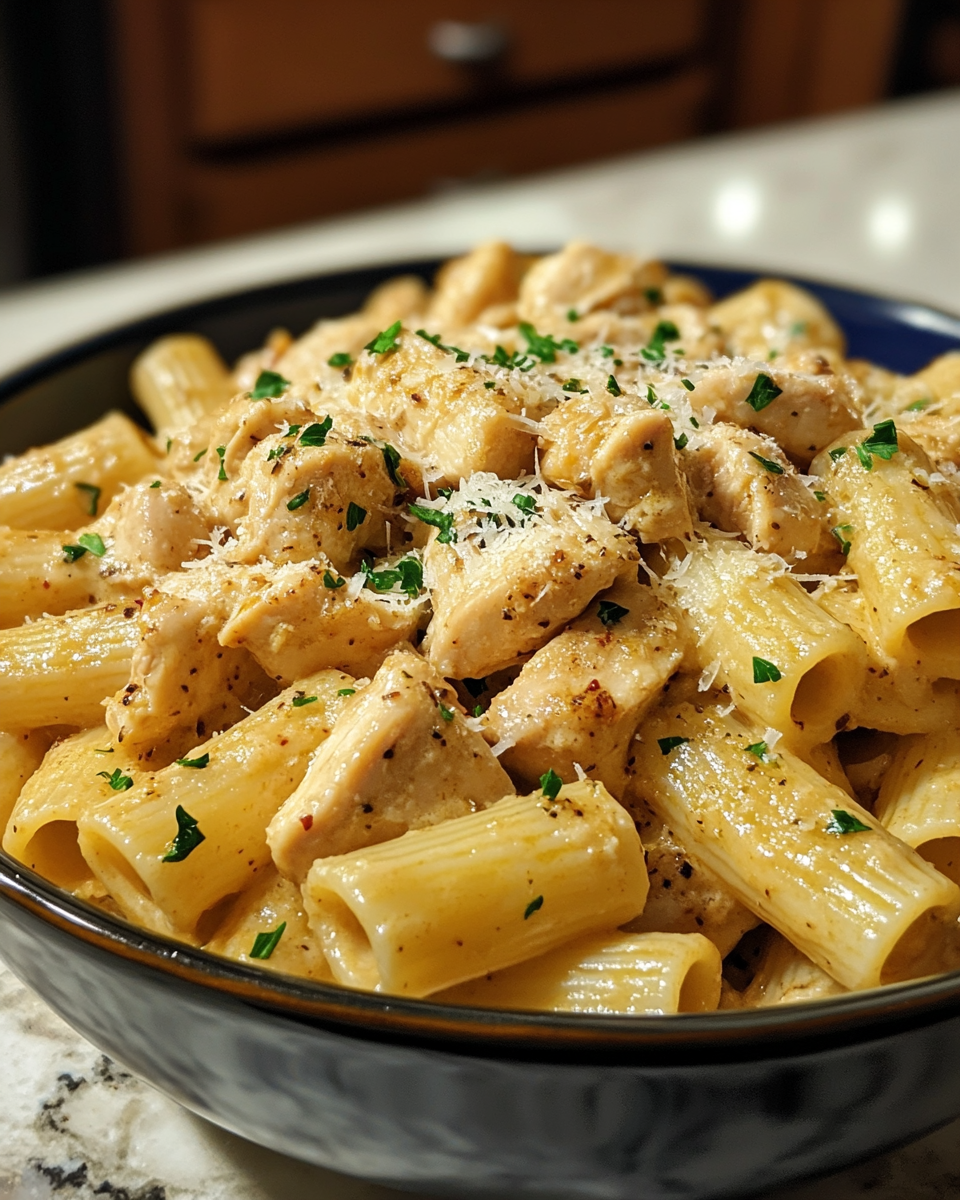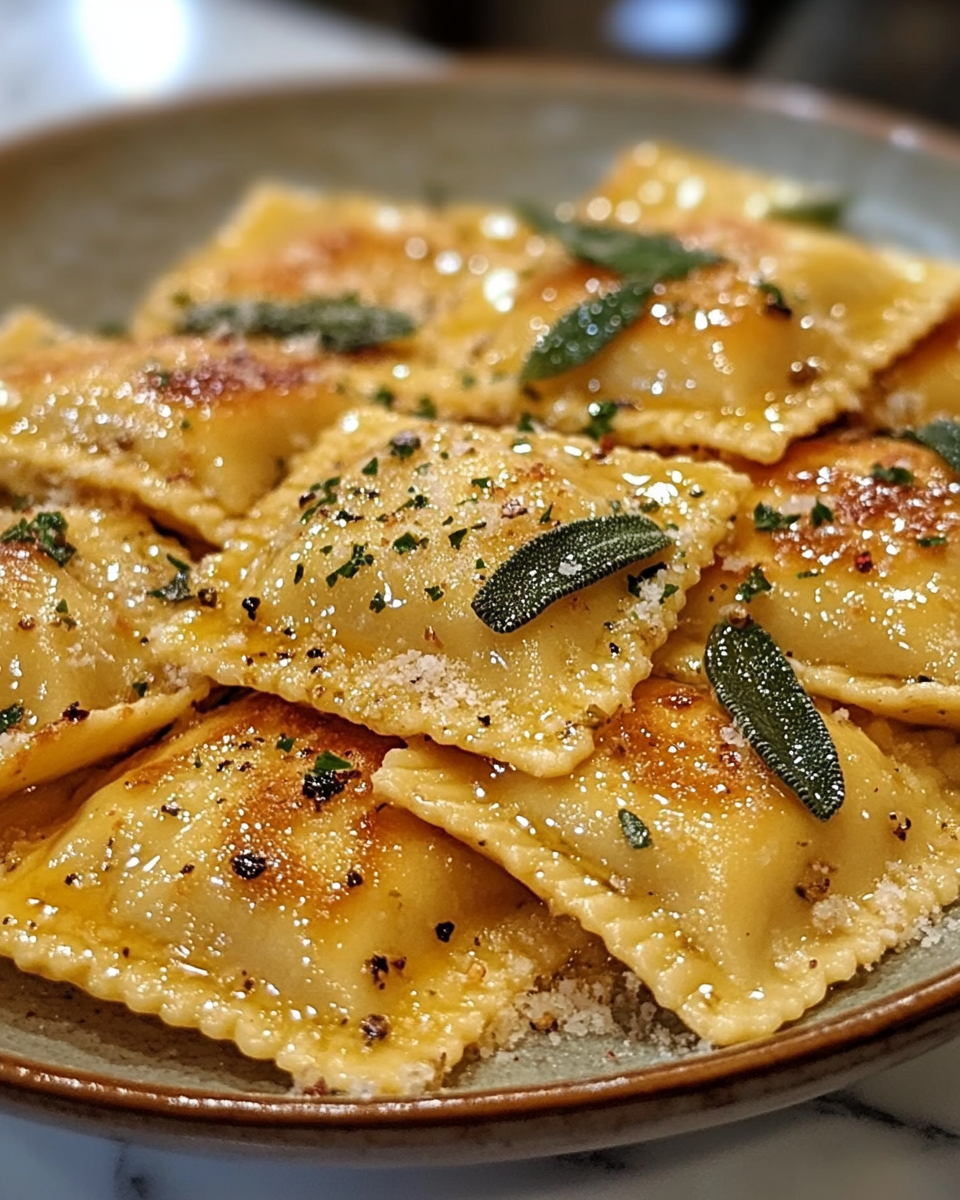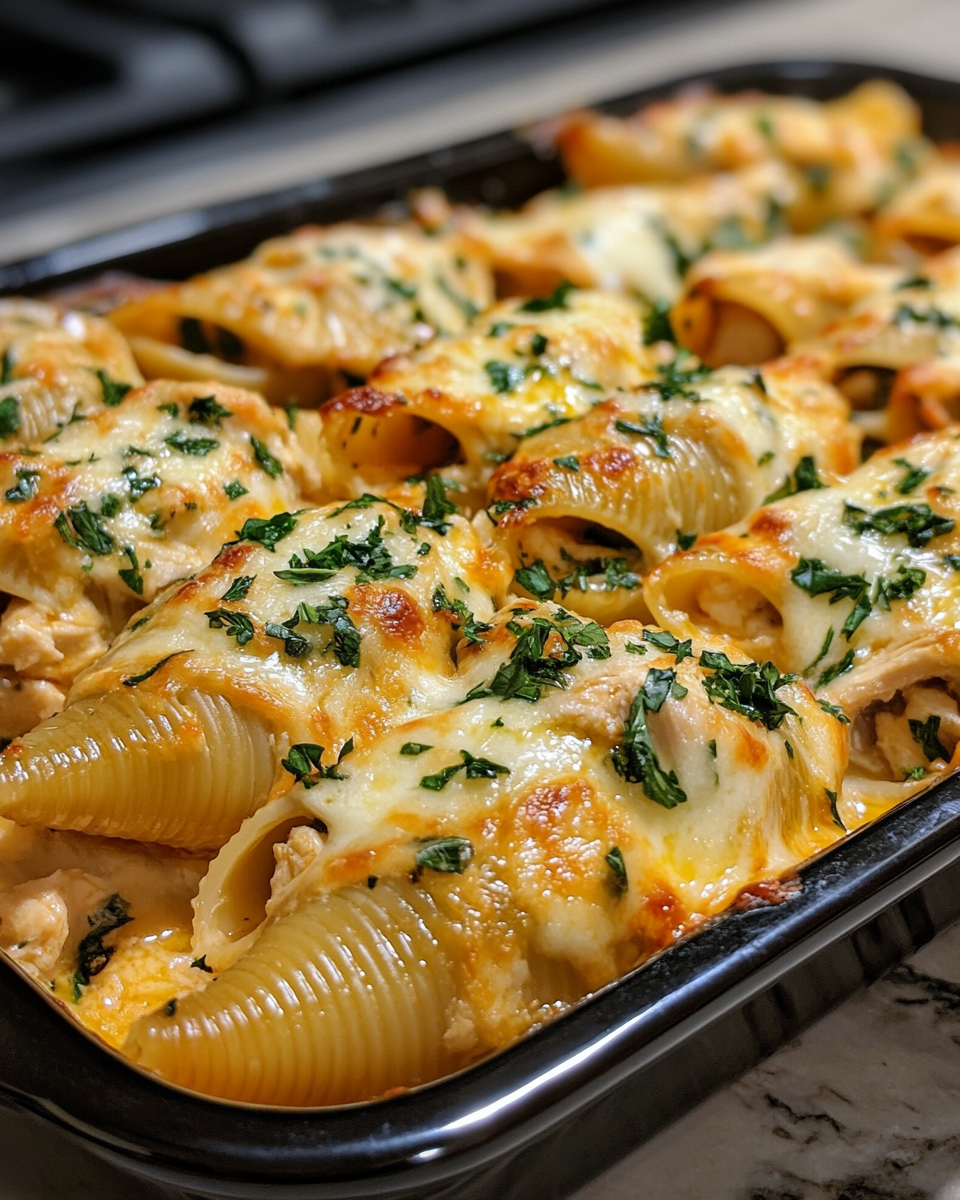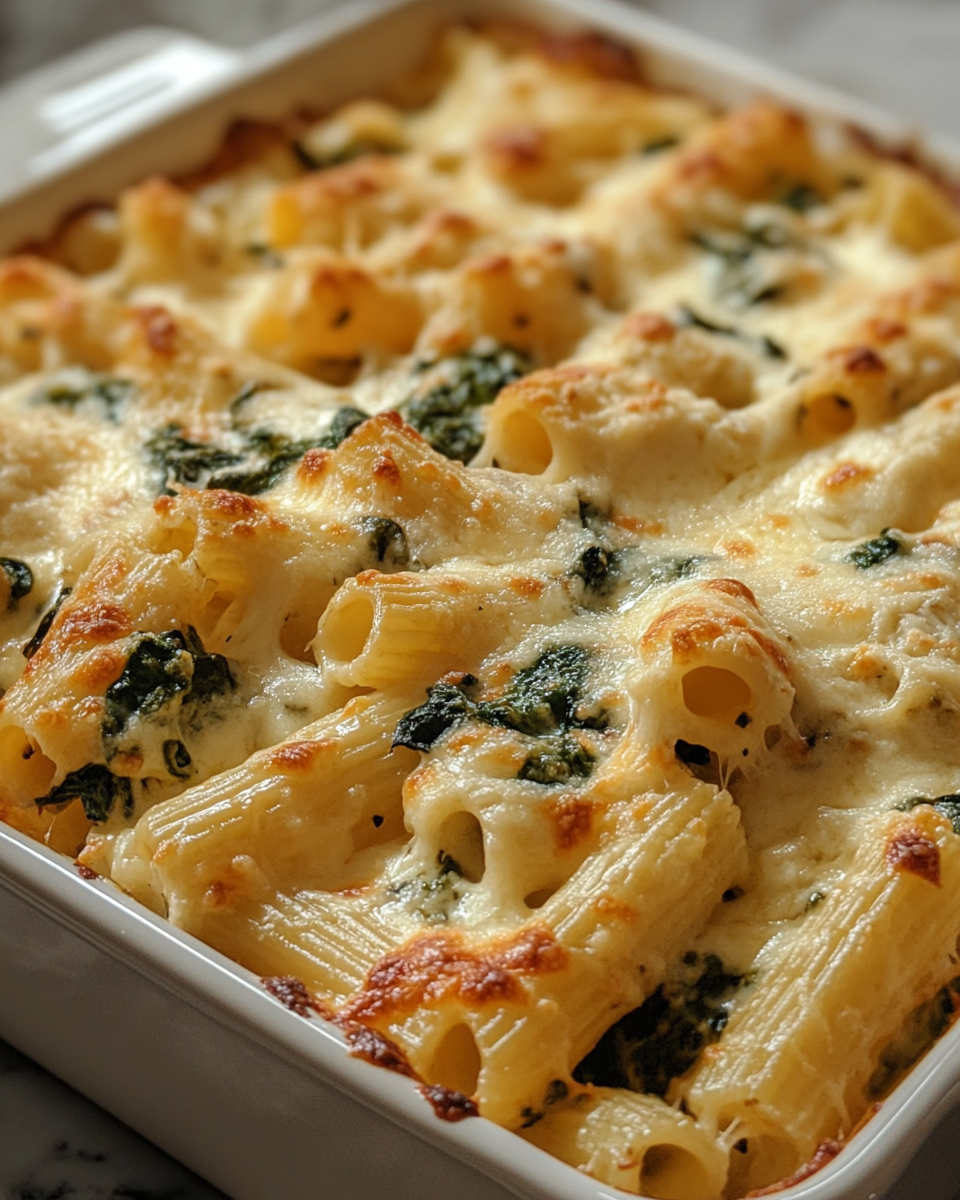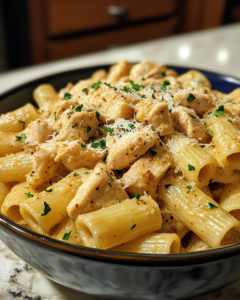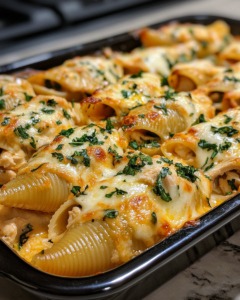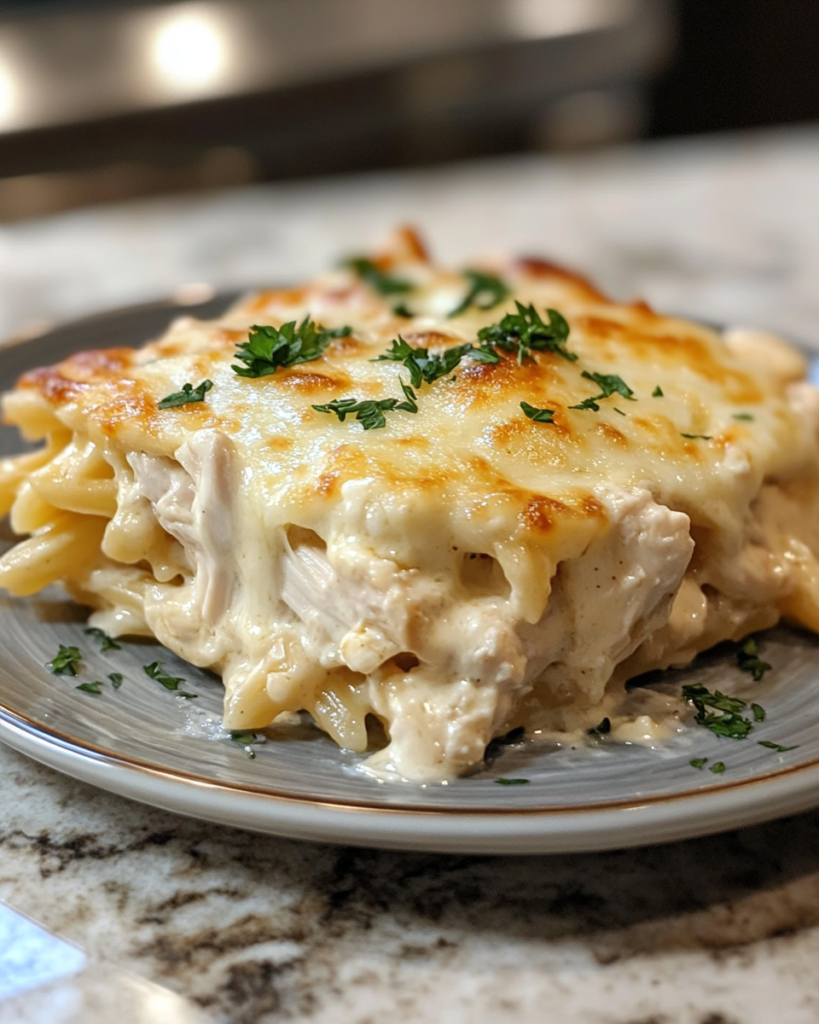
This Cheesy Baked Chicken Alfredo Casserole brings together tender chicken, creamy Alfredo-style sauce, and a golden baked top in a single oven dish. Each portion carries a rich, smooth texture with layers of pasta absorbing the sauce while cheese melts into every corner.
The dish fits well for family-style dining, gatherings, or prepared meals stored for later use. Oven baking creates a lightly crisp surface while keeping the inside soft and creamy. The combination of pasta, chicken, and sauce creates a satisfying balance that holds its structure after serving.
The preparation focuses on straightforward cooking steps, using common kitchen staples and a baking method that brings everything together in one pan.
Ingredients Overview
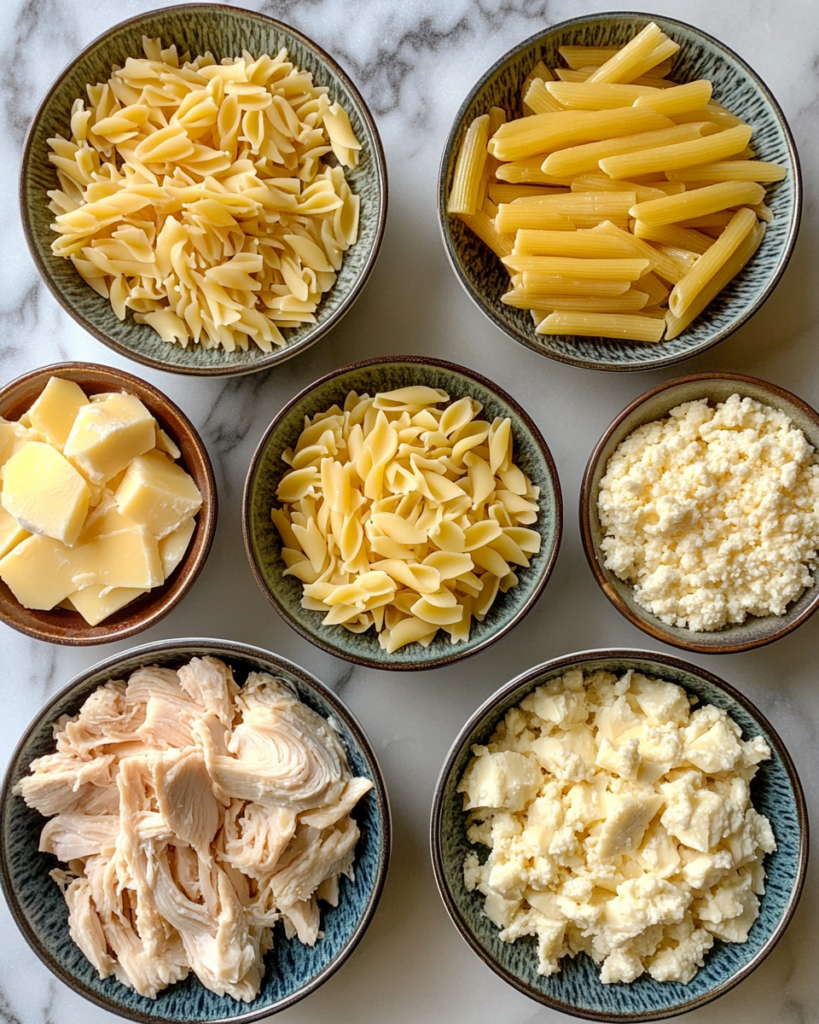
This casserole relies on a small group of familiar components that each play a specific role in texture and flavor. Cooked chicken provides a firm, protein-rich base that holds up well during baking. Pasta such as penne or rotini works well because its shape captures the sauce, allowing each bite to carry creamy coating.
The Alfredo-style sauce is built from butter, cream, and cheese, creating a smooth and rich consistency. Garlic adds depth without overpowering the dish, while salt and pepper help balance the richness of the dairy components. Mozzarella contributes stretch and melt, while Parmesan adds a slightly sharp finish.
Milk or cream can be adjusted depending on desired thickness. A thicker sauce results in a denser casserole, while a lighter mixture creates a softer texture. A small amount of olive oil helps coat the pasta and prevent sticking before baking.
Optional additions such as spinach or mushrooms can be included for added texture. These ingredients should be cooked lightly beforehand to reduce excess moisture in the final bake. The structure of the dish depends on maintaining a balance between sauce and pasta so the casserole holds together when served.
Each ingredient works together to create a layered baked dish with creamy consistency and a lightly browned top.
Ingredients
12 ounces penne pasta
2 cups cooked chicken breast, shredded
3 tablespoons unsalted butter
3 cloves garlic, minced
2 cups heavy cream
1 cup whole milk
1 1/2 cups grated Parmesan cheese
2 cups shredded mozzarella cheese
1 teaspoon salt
1/2 teaspoon black pepper
1 tablespoon olive oil
1/2 teaspoon dried Italian seasoning
1/2 cup chopped spinach (optional)
1/2 cup sliced mushrooms (optional)
Step-by-Step Instructions
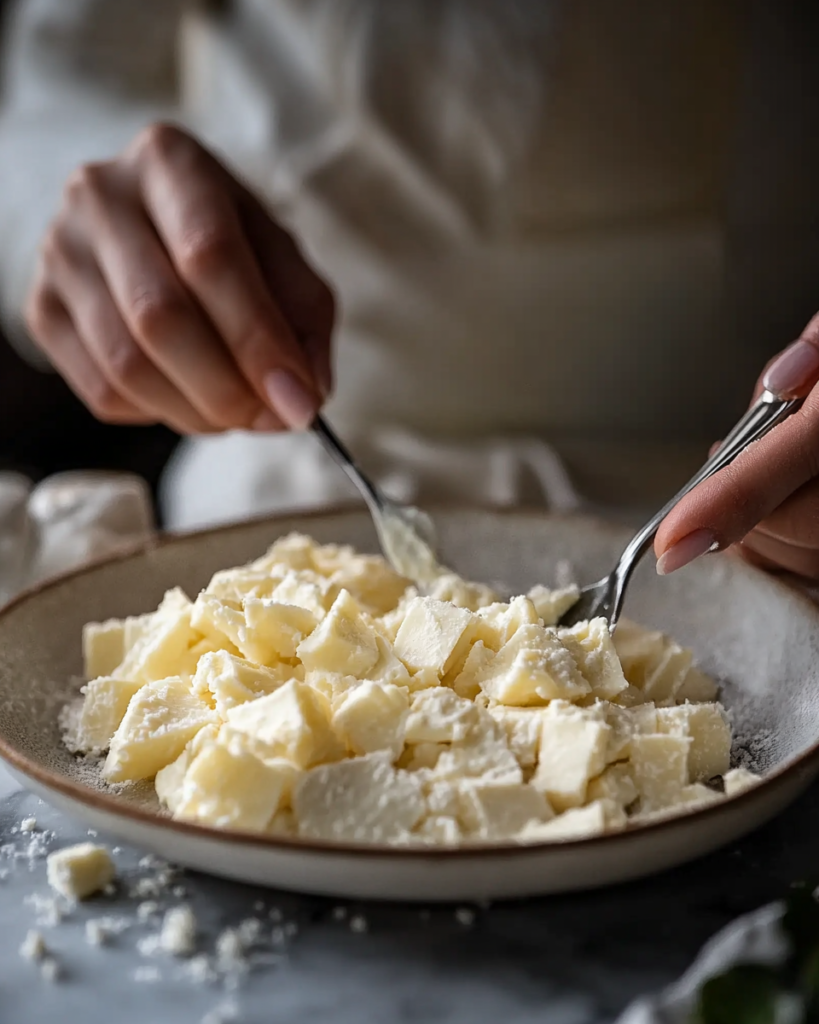
Begin by heating a large pot of salted water until boiling. Add the pasta and cook until firm but tender. Drain the pasta and lightly coat it with olive oil to prevent sticking. Set aside while preparing the sauce.
In a large skillet, melt butter over medium heat. Add minced garlic and cook until aromatic, taking care not to allow browning. Pour in heavy cream and milk, stirring continuously until the mixture becomes smooth and slightly thickened.
Add Parmesan cheese gradually, stirring until fully incorporated. The sauce should become creamy and consistent. Season with salt, black pepper, and Italian seasoning. Adjust heat to maintain a gentle simmer without boiling.
Place shredded chicken into the sauce and mix until evenly coated. If using spinach or mushrooms, add them at this stage and allow them to soften slightly within the sauce.
Combine cooked pasta with the sauce mixture in a large mixing bowl or directly in the skillet if space allows. Stir until all pasta is evenly covered.
Transfer the mixture into a greased baking dish. Spread evenly to form a uniform layer. Top with shredded mozzarella, distributing it across the surface for even melting.
Place the dish into a preheated oven at 375°F (190°C). Bake for approximately 20–25 minutes until the top becomes lightly golden and the sauce bubbles around the edges.
Remove from oven and allow resting for several minutes before serving. This resting period helps the casserole settle, making slicing and serving more structured.
Avoid overbaking, as this may cause the sauce to separate or dry out. Proper timing keeps the texture smooth and creamy throughout.
Tips, Variations & Substitutions
Cooked rotisserie-style chicken can be used for convenience, as it blends easily into the sauce. Pasta shapes with ridges or tubes work especially well for holding the creamy mixture.
For a lighter version, replace part of the cream with additional milk. This creates a softer consistency while still maintaining a smooth sauce base.
Vegetable additions such as broccoli or zucchini can be included after light steaming to reduce moisture release during baking. These additions should remain firm to avoid breaking apart in the casserole.
Different cheeses can be used to adjust flavor intensity. A blend of mozzarella and provolone creates a mild melt, while additional Parmesan increases sharpness.
For a firmer casserole, reduce the amount of sauce slightly before baking. For a softer texture, add a small amount of reserved pasta water before combining.
This dish stores well in covered containers and can be reheated in an oven at low temperature to maintain texture.
Serving Ideas & Occasions
This baked pasta dish pairs well with simple side dishes such as roasted vegetables, steamed greens, or a light salad with vinaigrette. Breadsticks or toasted slices of bread can be served alongside to complete the meal.
It fits well for shared meals, gatherings, or make-ahead dinners prepared earlier in the day. The casserole holds structure after baking, making it suitable for serving in portions without falling apart.
Beverage pairings such as sparkling water or lightly flavored drinks complement the creamy texture of the dish. Serving directly from the baking dish creates a casual presentation suitable for group dining.
Nutritional & Health Notes
This casserole contains a balance of protein, carbohydrates, and fats. Chicken provides a solid protein base, while pasta supplies energy through complex carbohydrates. Dairy ingredients contribute calcium and fat content, which create the creamy texture.
Portion size can be adjusted depending on dietary needs. Adding vegetables increases fiber content and introduces additional micronutrients without significantly altering texture.
For reduced fat content, lighter dairy options can be substituted, though the final consistency may become less dense. Balancing cheese quantity also adjusts richness while maintaining structure.
This dish is generally dense and filling, making smaller portions suitable for balanced intake.
FAQs
What type of pasta works for this casserole?
Short pasta shapes such as penne, rotini, or rigatoni work best because their structure holds sauce effectively. These shapes maintain firmness during baking and allow even coating from the creamy mixture. Avoid very thin pasta, as it may become overly soft in the oven.
Can chicken be prepared in advance?
Cooked chicken can be prepared earlier and stored before use in this dish. Shredded or diced chicken blends easily into the sauce. Keeping it refrigerated until assembly helps maintain texture and freshness.
Can different cheese types be used?
Mozzarella and Parmesan form the base combination for melt and flavor. Additional cheeses such as provolone or mild cheddar can be included for variation. Each cheese changes texture slightly, so balance is important to maintain creaminess.
What prevents the sauce from separating?
Maintaining moderate heat during sauce preparation helps keep dairy components stable. Avoid boiling once cream is added. Stirring consistently during cooking also helps maintain smooth consistency.
Can vegetables be added?
Vegetables such as spinach, mushrooms, or broccoli can be included. Light cooking before mixing reduces excess moisture, helping the casserole maintain structure during baking.
How is storage handled after baking?
Leftovers should be placed in covered containers and stored under refrigeration. Reheating in an oven at low temperature helps maintain texture better than microwave heating.
What causes a dry texture after baking?
Overbaking or using insufficient sauce can lead to dryness. Monitoring baking time and ensuring adequate cream mixture before oven placement helps maintain creamy consistency throughout the dish.