Creamy Garlic Chicken Orzo: 7 Amazing Cozy Bowls

Posted on

Uncategorized

Difficulty

Prep time

Cooking time

Total time

Servings

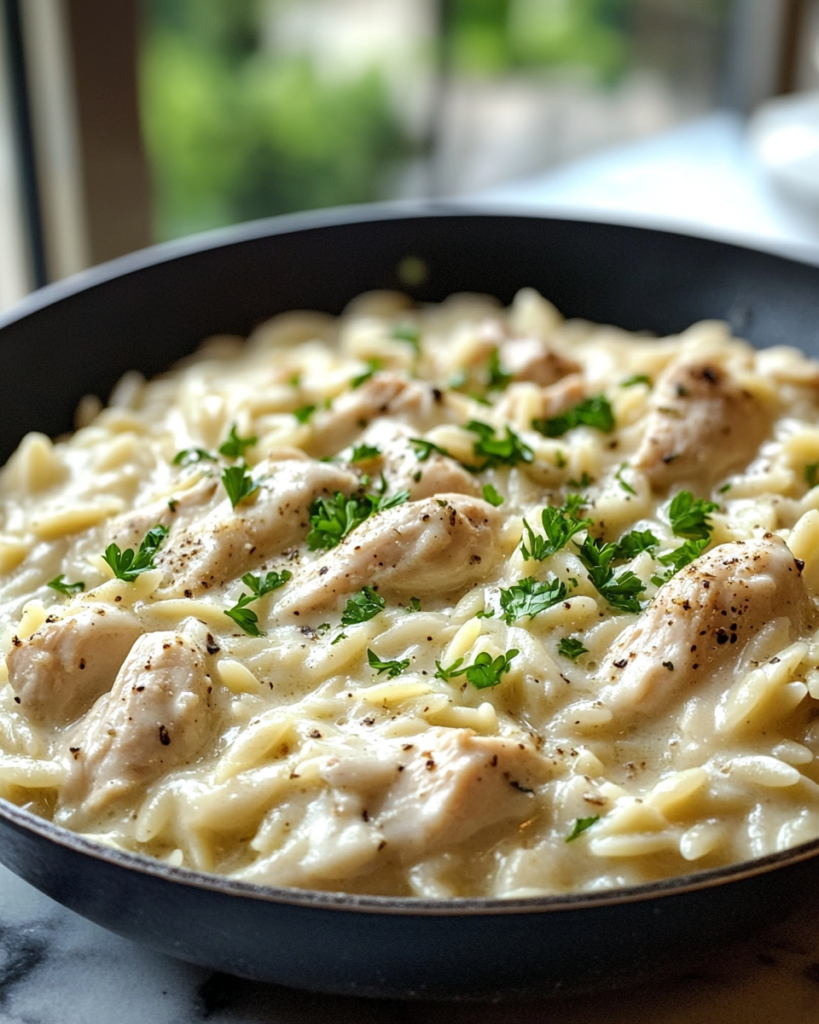
Creamy Garlic Chicken Orzo combines tender chicken, buttery garlic, creamy sauce, and soft orzo into one comforting skillet dinner. This rich meal feels hearty without requiring complicated preparation, making it a reliable option for busy evenings or slow family dinners at home.

The small pasta absorbs flavor beautifully while staying smooth and delicate in the creamy sauce. Garlic adds savory depth, while parmesan and broth create a velvety finish that coats every bite. Juicy chicken brings satisfying texture and turns the dish into a complete meal with very little extra effort.

Creamy Garlic Chicken Orzo cooks mostly in one pan, which keeps cleanup simple and allows all the flavors to blend together naturally. The combination of cream, garlic, herbs, and chicken creates a warm dish that tastes comforting from the very first spoonful.

Ingredients Overview

Chicken breast works wonderfully in this recipe because it cooks quickly and stays tender when sliced into bite-sized pieces. Boneless chicken thighs also make an excellent substitute for slightly richer flavor and extra moisture. Proper seasoning before cooking helps build flavor from the beginning rather than relying only on the sauce later.

Orzo is a small pasta shaped like rice, making it ideal for creamy skillet meals. It cooks directly in broth and cream, absorbing flavor while releasing starch that naturally thickens the sauce. The result feels similar to risotto but requires far less stirring and cooking time.

Garlic serves as the heart of the dish. Fresh garlic gives the sauce deep savory flavor and blends naturally with butter and parmesan. Onion adds mild sweetness while balancing the richness of the cream.

Chicken broth keeps the sauce flavorful without becoming too heavy. Heavy cream gives the dish its smooth texture, while parmesan melts into the sauce for savory richness. Italian seasoning adds subtle herb flavor without overpowering the garlic and chicken.

Spinach works beautifully in this dish for added color and freshness. Mushrooms also pair nicely with the creamy sauce and garlic. Fresh parsley near the end brightens the finished skillet and adds light herbal flavor.

This recipe adapts easily depending on pantry ingredients. Milk and cream cheese can replace heavy cream in some versions, while rotisserie chicken offers a quicker shortcut for busy evenings.

Ingredients

1 pound boneless skinless chicken breast, diced
1 teaspoon salt
1/2 teaspoon black pepper
1 teaspoon Italian seasoning
2 tablespoons olive oil
2 tablespoons butter
1 small yellow onion, finely diced
5 cloves garlic, minced
1 cup uncooked orzo pasta
2 1/2 cups chicken broth
1 cup heavy cream
1 cup freshly grated parmesan cheese
2 cups fresh spinach
1 tablespoon chopped parsley
1/2 teaspoon paprika
1/4 teaspoon crushed red pepper flakes

Step-by-Step Instructions

Pat the chicken dry with paper towels before seasoning. Dry chicken browns more evenly and develops richer flavor during cooking. Season the diced chicken with salt, black pepper, paprika, and Italian seasoning.

Heat a large deep skillet over medium-high heat. Add olive oil and one tablespoon butter. Once the butter melts, add the chicken pieces in a single layer. Cook for about five to seven minutes, stirring occasionally, until lightly golden and fully cooked through. The chicken should reach an internal temperature of 165 degrees Fahrenheit. Transfer the cooked chicken to a plate and keep warm.

Reduce the heat to medium. Add the remaining butter and diced onion to the same skillet. Cook for four minutes until softened and lightly golden. Stir often so the onion cooks evenly without burning. Add the minced garlic and cook for about thirty seconds until fragrant.

Pour the dry orzo into the skillet and stir for one minute. Lightly toasting the orzo adds extra savory flavor and helps the pasta maintain texture during cooking.

Pour in the chicken broth and stir gently to loosen browned bits from the bottom of the pan. Those browned bits carry deep flavor into the sauce. Bring the mixture to a gentle simmer.

Cook the orzo uncovered for about eight to ten minutes, stirring occasionally so the pasta does not stick to the skillet. The liquid should reduce gradually while the orzo softens. If the mixture thickens too quickly before the orzo finishes cooking, add a splash of broth.

Lower the heat slightly once the orzo becomes tender. Stir in the heavy cream slowly until fully combined. Add the parmesan cheese a little at a time while stirring constantly so the sauce stays smooth.

Return the cooked chicken to the skillet and stir gently. Add the spinach and allow it to wilt naturally in the warm sauce for about two minutes. Sprinkle in crushed red pepper flakes if desired.

Taste the sauce before adding extra salt since parmesan and broth already contribute savory flavor. Stir in chopped parsley shortly before serving for freshness and color.

Serve the Creamy Garlic Chicken Orzo immediately while the sauce remains silky and smooth. As the orzo rests, it continues absorbing liquid, so serving promptly keeps the texture creamy rather than overly thick.

Tips, Variations & Substitutions

Chicken thighs create richer flavor and stay especially juicy during cooking. Rotisserie chicken also works nicely when added near the end of cooking, making this recipe even faster for weeknight meals.

Fresh garlic gives the strongest flavor, though jarred minced garlic may work in a pinch. Garlic powder alone does not provide the same savory depth as fresh cloves cooked in butter.

For extra texture and flavor, sliced mushrooms or roasted broccoli blend naturally into the creamy sauce. Sun-dried tomatoes also add slight sweetness and deeper savory flavor.

Heavy cream creates the smoothest texture, but half-and-half can replace part of the cream for a lighter skillet. Whole milk may also work when combined with a few ounces of cream cheese for thickness.

Orzo absorbs liquid steadily during cooking and after serving. If leftovers become too thick in the refrigerator, stir in extra broth or milk during reheating.

Fresh parmesan melts more evenly than pre-packaged shredded cheese. Adding cheese gradually while stirring helps avoid clumping or grainy sauce texture.

For gluten-free preparation, substitute regular orzo with gluten-free orzo or small gluten-free pasta shapes. Cooking times may vary slightly depending on the pasta brand used.

Serving Ideas & Occasions

Creamy Garlic Chicken Orzo pairs beautifully with warm garlic bread or crusty bread for soaking up the rich sauce. A crisp green salad with light dressing balances the creamy texture of the meal nicely.

Roasted vegetables such as asparagus, carrots, or Brussels sprouts also work wonderfully beside the savory garlic sauce. The mild sweetness from roasted vegetables complements the creamy pasta naturally.

This skillet dinner suits busy weeknights because everything cooks quickly in one pan. It also works beautifully for relaxed weekend meals, family gatherings, or small dinner parties where comforting food feels welcome.

Sparkling water with lemon pairs nicely alongside the rich garlic flavor. Light iced tea also balances the creamy sauce without overpowering the meal.

Leftovers warm nicely the following day, making this recipe practical for meal preparation or easy lunches.

Nutritional & Health Notes

Chicken provides lean protein that helps make this dish filling and balanced. Pairing chicken with pasta creates a satisfying combination of protein and carbohydrates suitable for hearty dinners.

Spinach adds vitamins, minerals, and fiber while bringing freshness and color to the creamy sauce. Adding vegetables such as mushrooms or broccoli can further increase nutritional variety without changing the comforting character of the dish.

Heavy cream and parmesan contribute richness, calcium, and savory flavor, though they also increase saturated fat and calorie content. Moderate portions help balance the richness comfortably within a meal plan.

Orzo provides carbohydrates that supply energy and help create the dish’s soft, comforting texture. Whole wheat orzo may offer slightly more fiber when available.

Using low-sodium broth allows better control over salt levels since parmesan naturally carries savory saltiness. Tasting throughout cooking helps maintain balanced flavor without making the dish overly salty.

FAQs

Can I use rotisserie chicken?

Rotisserie chicken works beautifully in Creamy Garlic Chicken Orzo and saves considerable preparation time. Since the chicken is already cooked, simply shred or dice it into bite-sized pieces and stir it into the sauce near the end of cooking. Adding it too early may dry the chicken slightly because it only needs enough time to warm through. Rotisserie chicken also adds deeper savory flavor because of its roasted seasoning. This shortcut makes the dish especially practical for busy evenings when cooking from scratch feels difficult. Pairing rotisserie chicken with fresh garlic and parmesan still creates rich homemade flavor throughout the skillet meal.

Does orzo need to be cooked separately?

No, the orzo cooks directly in the skillet with the broth. Cooking the pasta this way helps the orzo absorb flavor from the garlic, chicken drippings, and broth while naturally thickening the sauce with released starch. Stirring occasionally prevents sticking and helps the pasta cook evenly. If the liquid reduces too quickly before the orzo softens fully, adding extra broth solves the issue easily. Cooking orzo directly in the skillet also simplifies cleanup since fewer pots are needed. The result becomes creamy and rich without requiring additional thickening ingredients or lengthy cooking methods often associated with risotto-style dishes.

Can I freeze Creamy Garlic Chicken Orzo?

Cream-based pasta dishes can freeze, though the texture may change slightly after thawing. The sauce sometimes separates a little because dairy reacts differently after freezing and reheating. For best results, cool the dish fully before storing in airtight containers. Reheat slowly over low heat while stirring frequently. Adding a splash of broth, milk, or cream during reheating helps restore smoother texture. Orzo continues absorbing liquid even after cooking, so the pasta may soften more after freezing. Although fresh preparation gives the creamiest texture, leftovers still carry excellent flavor and make practical future meals for busy schedules.

How do I keep the sauce creamy?

Gentle heat plays an important role in maintaining smooth sauce texture. Boiling heavy cream too aggressively may cause separation or overly thick sauce. Adding parmesan gradually while stirring continuously also helps create a silky finish. Freshly grated cheese melts more evenly than packaged shredded varieties. If the sauce thickens too much during cooking, adding warm broth or milk helps loosen the texture without weakening flavor. Serving the dish shortly after cooking keeps the orzo from absorbing too much liquid. During reheating, low heat and extra liquid help restore the creamy consistency that makes this dish especially comforting.

What vegetables pair best with this recipe?

Spinach blends beautifully into Creamy Garlic Chicken Orzo because it wilts quickly and adds freshness without overpowering the creamy garlic flavor. Mushrooms also pair naturally with the savory sauce and create deeper earthy flavor. Broccoli, asparagus, peas, and roasted bell peppers all work nicely in the skillet as well. Softer vegetables should be added near the end of cooking so they stay bright and tender. Roasted vegetables added after cooking provide richer flavor and prevent excess moisture from thinning the sauce. Mixing vegetables into the dish creates extra texture, color, and nutritional variety while keeping the meal satisfying and balanced.

Can I use milk instead of heavy cream?

Milk may replace heavy cream, though the sauce will become lighter and less rich. Whole milk works best because it carries slightly more fat and creates smoother texture. To help thicken the sauce, some cooks stir in cream cheese or a small amount of flour. Half-and-half offers another balanced option that keeps the dish creamy without becoming overly heavy. Regardless of which dairy option is chosen, gentle heat remains important because dairy can separate if cooked too aggressively. While heavy cream creates the silkiest finish, lighter substitutes still produce comforting flavor and creamy texture suitable for everyday meals.

How long do leftovers last?

Creamy Garlic Chicken Orzo keeps well in the refrigerator for about three to four days when stored in airtight containers. Since orzo continues absorbing liquid over time, leftovers may appear thicker after chilling. Adding broth, milk, or cream during reheating helps loosen the sauce again. Warm leftovers slowly over medium-low heat while stirring occasionally for the best texture. Microwaving also works, though stirring halfway through heating prevents uneven temperature and overly thick spots. The flavors often deepen slightly overnight as the garlic and parmesan continue blending together. Proper storage helps maintain freshness and keeps the dish enjoyable for future meals.

[rank_math_breadcrumb]

Creamy Garlic Chicken Orzo: 7 Amazing Cozy Bowls

Photo of author
Author: Carol
Published:

Creamy Garlic Chicken Orzo combines tender chicken, buttery garlic, creamy sauce, and soft orzo into one comforting skillet dinner. This rich meal feels hearty without requiring complicated preparation, making it a reliable option for busy evenings or slow family dinners at home.

The small pasta absorbs flavor beautifully while staying smooth and delicate in the creamy sauce. Garlic adds savory depth, while parmesan and broth create a velvety finish that coats every bite. Juicy chicken brings satisfying texture and turns the dish into a complete meal with very little extra effort.

Creamy Garlic Chicken Orzo cooks mostly in one pan, which keeps cleanup simple and allows all the flavors to blend together naturally. The combination of cream, garlic, herbs, and chicken creates a warm dish that tastes comforting from the very first spoonful.

Ingredients Overview

Chicken breast works wonderfully in this recipe because it cooks quickly and stays tender when sliced into bite-sized pieces. Boneless chicken thighs also make an excellent substitute for slightly richer flavor and extra moisture. Proper seasoning before cooking helps build flavor from the beginning rather than relying only on the sauce later.

Orzo is a small pasta shaped like rice, making it ideal for creamy skillet meals. It cooks directly in broth and cream, absorbing flavor while releasing starch that naturally thickens the sauce. The result feels similar to risotto but requires far less stirring and cooking time.

Garlic serves as the heart of the dish. Fresh garlic gives the sauce deep savory flavor and blends naturally with butter and parmesan. Onion adds mild sweetness while balancing the richness of the cream.

Chicken broth keeps the sauce flavorful without becoming too heavy. Heavy cream gives the dish its smooth texture, while parmesan melts into the sauce for savory richness. Italian seasoning adds subtle herb flavor without overpowering the garlic and chicken.

Spinach works beautifully in this dish for added color and freshness. Mushrooms also pair nicely with the creamy sauce and garlic. Fresh parsley near the end brightens the finished skillet and adds light herbal flavor.

This recipe adapts easily depending on pantry ingredients. Milk and cream cheese can replace heavy cream in some versions, while rotisserie chicken offers a quicker shortcut for busy evenings.

Ingredients

1 pound boneless skinless chicken breast, diced
1 teaspoon salt
1/2 teaspoon black pepper
1 teaspoon Italian seasoning
2 tablespoons olive oil
2 tablespoons butter
1 small yellow onion, finely diced
5 cloves garlic, minced
1 cup uncooked orzo pasta
2 1/2 cups chicken broth
1 cup heavy cream
1 cup freshly grated parmesan cheese
2 cups fresh spinach
1 tablespoon chopped parsley
1/2 teaspoon paprika
1/4 teaspoon crushed red pepper flakes

Step-by-Step Instructions

Pat the chicken dry with paper towels before seasoning. Dry chicken browns more evenly and develops richer flavor during cooking. Season the diced chicken with salt, black pepper, paprika, and Italian seasoning.

Heat a large deep skillet over medium-high heat. Add olive oil and one tablespoon butter. Once the butter melts, add the chicken pieces in a single layer. Cook for about five to seven minutes, stirring occasionally, until lightly golden and fully cooked through. The chicken should reach an internal temperature of 165 degrees Fahrenheit. Transfer the cooked chicken to a plate and keep warm.

Reduce the heat to medium. Add the remaining butter and diced onion to the same skillet. Cook for four minutes until softened and lightly golden. Stir often so the onion cooks evenly without burning. Add the minced garlic and cook for about thirty seconds until fragrant.

Pour the dry orzo into the skillet and stir for one minute. Lightly toasting the orzo adds extra savory flavor and helps the pasta maintain texture during cooking.

Pour in the chicken broth and stir gently to loosen browned bits from the bottom of the pan. Those browned bits carry deep flavor into the sauce. Bring the mixture to a gentle simmer.

Cook the orzo uncovered for about eight to ten minutes, stirring occasionally so the pasta does not stick to the skillet. The liquid should reduce gradually while the orzo softens. If the mixture thickens too quickly before the orzo finishes cooking, add a splash of broth.

Lower the heat slightly once the orzo becomes tender. Stir in the heavy cream slowly until fully combined. Add the parmesan cheese a little at a time while stirring constantly so the sauce stays smooth.

Return the cooked chicken to the skillet and stir gently. Add the spinach and allow it to wilt naturally in the warm sauce for about two minutes. Sprinkle in crushed red pepper flakes if desired.

Taste the sauce before adding extra salt since parmesan and broth already contribute savory flavor. Stir in chopped parsley shortly before serving for freshness and color.

Serve the Creamy Garlic Chicken Orzo immediately while the sauce remains silky and smooth. As the orzo rests, it continues absorbing liquid, so serving promptly keeps the texture creamy rather than overly thick.

Tips, Variations & Substitutions

Chicken thighs create richer flavor and stay especially juicy during cooking. Rotisserie chicken also works nicely when added near the end of cooking, making this recipe even faster for weeknight meals.

Fresh garlic gives the strongest flavor, though jarred minced garlic may work in a pinch. Garlic powder alone does not provide the same savory depth as fresh cloves cooked in butter.

For extra texture and flavor, sliced mushrooms or roasted broccoli blend naturally into the creamy sauce. Sun-dried tomatoes also add slight sweetness and deeper savory flavor.

Heavy cream creates the smoothest texture, but half-and-half can replace part of the cream for a lighter skillet. Whole milk may also work when combined with a few ounces of cream cheese for thickness.

Orzo absorbs liquid steadily during cooking and after serving. If leftovers become too thick in the refrigerator, stir in extra broth or milk during reheating.

Fresh parmesan melts more evenly than pre-packaged shredded cheese. Adding cheese gradually while stirring helps avoid clumping or grainy sauce texture.

For gluten-free preparation, substitute regular orzo with gluten-free orzo or small gluten-free pasta shapes. Cooking times may vary slightly depending on the pasta brand used.

Serving Ideas & Occasions

Creamy Garlic Chicken Orzo pairs beautifully with warm garlic bread or crusty bread for soaking up the rich sauce. A crisp green salad with light dressing balances the creamy texture of the meal nicely.

Roasted vegetables such as asparagus, carrots, or Brussels sprouts also work wonderfully beside the savory garlic sauce. The mild sweetness from roasted vegetables complements the creamy pasta naturally.

This skillet dinner suits busy weeknights because everything cooks quickly in one pan. It also works beautifully for relaxed weekend meals, family gatherings, or small dinner parties where comforting food feels welcome.

Sparkling water with lemon pairs nicely alongside the rich garlic flavor. Light iced tea also balances the creamy sauce without overpowering the meal.

Leftovers warm nicely the following day, making this recipe practical for meal preparation or easy lunches.

Nutritional & Health Notes

Chicken provides lean protein that helps make this dish filling and balanced. Pairing chicken with pasta creates a satisfying combination of protein and carbohydrates suitable for hearty dinners.

Spinach adds vitamins, minerals, and fiber while bringing freshness and color to the creamy sauce. Adding vegetables such as mushrooms or broccoli can further increase nutritional variety without changing the comforting character of the dish.

Heavy cream and parmesan contribute richness, calcium, and savory flavor, though they also increase saturated fat and calorie content. Moderate portions help balance the richness comfortably within a meal plan.

Orzo provides carbohydrates that supply energy and help create the dish’s soft, comforting texture. Whole wheat orzo may offer slightly more fiber when available.

Using low-sodium broth allows better control over salt levels since parmesan naturally carries savory saltiness. Tasting throughout cooking helps maintain balanced flavor without making the dish overly salty.

FAQs

Can I use rotisserie chicken?

Rotisserie chicken works beautifully in Creamy Garlic Chicken Orzo and saves considerable preparation time. Since the chicken is already cooked, simply shred or dice it into bite-sized pieces and stir it into the sauce near the end of cooking. Adding it too early may dry the chicken slightly because it only needs enough time to warm through. Rotisserie chicken also adds deeper savory flavor because of its roasted seasoning. This shortcut makes the dish especially practical for busy evenings when cooking from scratch feels difficult. Pairing rotisserie chicken with fresh garlic and parmesan still creates rich homemade flavor throughout the skillet meal.

Does orzo need to be cooked separately?

No, the orzo cooks directly in the skillet with the broth. Cooking the pasta this way helps the orzo absorb flavor from the garlic, chicken drippings, and broth while naturally thickening the sauce with released starch. Stirring occasionally prevents sticking and helps the pasta cook evenly. If the liquid reduces too quickly before the orzo softens fully, adding extra broth solves the issue easily. Cooking orzo directly in the skillet also simplifies cleanup since fewer pots are needed. The result becomes creamy and rich without requiring additional thickening ingredients or lengthy cooking methods often associated with risotto-style dishes.

Can I freeze Creamy Garlic Chicken Orzo?

Cream-based pasta dishes can freeze, though the texture may change slightly after thawing. The sauce sometimes separates a little because dairy reacts differently after freezing and reheating. For best results, cool the dish fully before storing in airtight containers. Reheat slowly over low heat while stirring frequently. Adding a splash of broth, milk, or cream during reheating helps restore smoother texture. Orzo continues absorbing liquid even after cooking, so the pasta may soften more after freezing. Although fresh preparation gives the creamiest texture, leftovers still carry excellent flavor and make practical future meals for busy schedules.

How do I keep the sauce creamy?

Gentle heat plays an important role in maintaining smooth sauce texture. Boiling heavy cream too aggressively may cause separation or overly thick sauce. Adding parmesan gradually while stirring continuously also helps create a silky finish. Freshly grated cheese melts more evenly than packaged shredded varieties. If the sauce thickens too much during cooking, adding warm broth or milk helps loosen the texture without weakening flavor. Serving the dish shortly after cooking keeps the orzo from absorbing too much liquid. During reheating, low heat and extra liquid help restore the creamy consistency that makes this dish especially comforting.

What vegetables pair best with this recipe?

Spinach blends beautifully into Creamy Garlic Chicken Orzo because it wilts quickly and adds freshness without overpowering the creamy garlic flavor. Mushrooms also pair naturally with the savory sauce and create deeper earthy flavor. Broccoli, asparagus, peas, and roasted bell peppers all work nicely in the skillet as well. Softer vegetables should be added near the end of cooking so they stay bright and tender. Roasted vegetables added after cooking provide richer flavor and prevent excess moisture from thinning the sauce. Mixing vegetables into the dish creates extra texture, color, and nutritional variety while keeping the meal satisfying and balanced.

Can I use milk instead of heavy cream?

Milk may replace heavy cream, though the sauce will become lighter and less rich. Whole milk works best because it carries slightly more fat and creates smoother texture. To help thicken the sauce, some cooks stir in cream cheese or a small amount of flour. Half-and-half offers another balanced option that keeps the dish creamy without becoming overly heavy. Regardless of which dairy option is chosen, gentle heat remains important because dairy can separate if cooked too aggressively. While heavy cream creates the silkiest finish, lighter substitutes still produce comforting flavor and creamy texture suitable for everyday meals.

How long do leftovers last?

Creamy Garlic Chicken Orzo keeps well in the refrigerator for about three to four days when stored in airtight containers. Since orzo continues absorbing liquid over time, leftovers may appear thicker after chilling. Adding broth, milk, or cream during reheating helps loosen the sauce again. Warm leftovers slowly over medium-low heat while stirring occasionally for the best texture. Microwaving also works, though stirring halfway through heating prevents uneven temperature and overly thick spots. The flavors often deepen slightly overnight as the garlic and parmesan continue blending together. Proper storage helps maintain freshness and keeps the dish enjoyable for future meals.
Name

Lorem ipsum dolor sit amet, consectetur adipiscing elit. Suspendisse varius enim in eros elementum tristique. Duis cursus, mi quis viverra ornare, eros dolor interdum nulla, ut commodo diam libero vitae erat.

You Might Also Like...

Lemon Herb Chicken Thighs: 7 Cozy Family Favorites

Lemon Herb Chicken Thighs: 7 Cozy Family Favorites

Beef and Broccoli Stir Fry: 6 Savory Skillet Favorites

Beef and Broccoli Stir Fry: 6 Savory Skillet Favorites

Creamy Cajun Chicken Pasta: 5 Rich Dinner Favorites

Creamy Cajun Chicken Pasta: 5 Rich Dinner Favorites

Garlic Butter Chicken Bake: 5 Cozy Family Dinner Tips

Garlic Butter Chicken Bake: 5 Cozy Family Dinner Tips

Tags:

You might also like these recipes

Leave a Comment