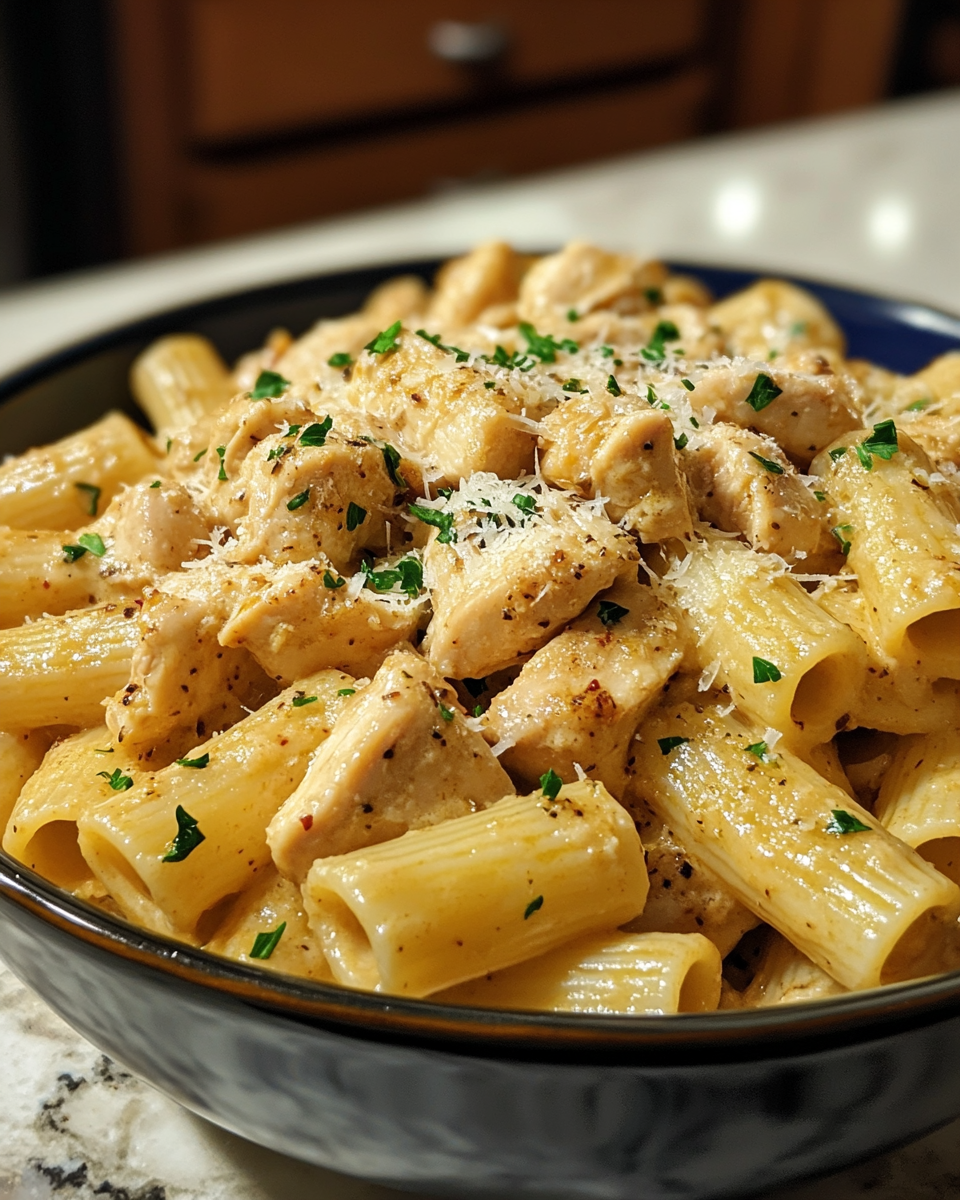
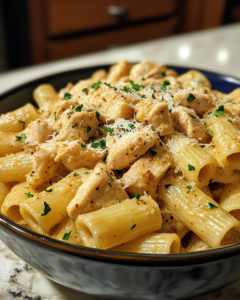
Garlic Parmesan Chicken Pasta brings together tender chicken, buttery garlic sauce, and rich Parmesan cheese in one comforting skillet meal. The pasta absorbs the creamy sauce while the chicken stays juicy and flavorful, creating a dinner that feels hearty without requiring complicated preparation. This dish works beautifully for busy weeknights, family dinners, or casual gatherings because it comes together quickly while still tasting deeply satisfying.
The balance of garlic, Parmesan, cream, and pasta creates layers of savory flavor in every bite. A touch of Italian seasoning and black pepper keeps the sauce from tasting too heavy, while freshly cooked chicken adds texture and richness. Since the ingredients are widely available and simple to prepare, this recipe fits naturally into regular meal planning.
Ingredients Overview

The heart of Garlic Parmesan Chicken Pasta comes from a short list of kitchen staples that blend into a creamy, savory sauce. Boneless chicken breasts provide lean protein and absorb seasoning beautifully during cooking. Chicken thighs also work well if a richer texture is preferred. A light coating of seasoning before cooking gives the chicken a golden crust that adds depth to the final dish.
Fresh garlic is one of the most important ingredients because it creates the bold savory foundation of the sauce. Minced garlic cooked gently in butter releases a mellow flavor that spreads through the cream and cheese. Parmesan cheese thickens the sauce naturally while adding nutty, salty richness. Freshly grated Parmesan melts more smoothly than pre-shredded varieties and helps create a velvety finish.
Heavy cream gives the sauce its creamy texture, though half-and-half may be used for a lighter version. Chicken broth prevents the sauce from becoming overly thick and adds savory depth. Pasta shapes such as penne, fettuccine, or rotini work especially well because they hold the sauce nicely.
Italian seasoning contributes herbal warmth while black pepper adds mild heat. Fresh parsley brightens the finished dish and balances the richness. A small amount of olive oil keeps the chicken from sticking during cooking and helps develop color in the skillet.
Ingredients
2 large boneless skinless chicken breasts
1 teaspoon salt
1/2 teaspoon black pepper
1 teaspoon Italian seasoning
1/2 teaspoon paprika
2 tablespoons olive oil
12 ounces penne pasta
3 tablespoons butter
6 cloves garlic, minced
2 cups heavy cream
1 cup chicken broth
1 1/2 cups freshly grated Parmesan cheese
1/4 teaspoon crushed red pepper flakes
2 tablespoons chopped fresh parsley
Extra Parmesan for serving
Step-by-Step Instructions

Bring a large pot of salted water to a boil and cook the pasta until al dente according to package directions. Reserve about 1 cup of pasta water before draining. The reserved water can help loosen the sauce later if needed.
While the pasta cooks, pat the chicken dry with paper towels. Season both sides with salt, black pepper, Italian seasoning, and paprika. Dry chicken browns more evenly and develops richer flavor during cooking.
Heat olive oil in a large skillet over medium-high heat. Add the chicken breasts and cook for about 5 to 6 minutes per side until golden brown and fully cooked. The internal temperature should reach 165 degrees Fahrenheit. Avoid moving the chicken too frequently because steady contact with the skillet helps create a flavorful crust.
Transfer the cooked chicken to a cutting board and let it rest for several minutes. Resting keeps the juices inside the meat instead of running out immediately after slicing.
Reduce the skillet heat to medium. Add butter and minced garlic, stirring constantly for about 1 minute. Garlic cooks quickly, so watch closely to prevent burning. Burned garlic creates bitterness that can spread through the sauce.
Pour in the chicken broth and gently scrape the browned bits from the bottom of the skillet. Those browned pieces carry rich savory flavor that strengthens the sauce naturally. Stir in the heavy cream and crushed red pepper flakes. Simmer gently for about 3 to 4 minutes until slightly thickened.
Gradually stir in the Parmesan cheese a little at a time. Stir continuously so the cheese melts smoothly into the sauce. Adding the cheese too quickly can create clumps instead of a silky texture.
Slice the rested chicken into thin strips. Add the cooked pasta and chicken back into the skillet, tossing gently until coated evenly. If the sauce becomes too thick, stir in small splashes of reserved pasta water until the consistency becomes creamy and smooth.
Sprinkle fresh parsley over the pasta before serving. Extra Parmesan on top adds additional richness and texture. Serve immediately while the sauce remains warm and creamy.
One common mistake involves overheating the cream sauce after adding the cheese. High heat may cause separation, resulting in a grainy texture. Gentle heat keeps the sauce smooth and rich. Another mistake comes from overcooking the pasta, which can turn soft after mixing with the sauce. Slightly firm pasta holds up far better in creamy dishes like this one.
Tips, Variations & Substitutions
Garlic Parmesan Chicken Pasta adapts easily to different ingredients and preferences. For a richer flavor, chicken thighs may replace chicken breasts. Thigh meat stays especially juicy and pairs beautifully with creamy sauces. Shrimp also works nicely and cooks quickly for an even faster meal.
Penne, rotini, rigatoni, and fettuccine all work well in this recipe. Short pasta shapes trap the creamy sauce inside their ridges, while long noodles create a smoother, restaurant-style presentation. Whole wheat pasta provides additional fiber and a slightly nuttier flavor.
Fresh spinach, broccoli florets, or sautéed mushrooms can be added during the final few minutes of cooking for extra texture and color. Spinach wilts quickly into the sauce while mushrooms contribute earthy depth. Sun-dried tomatoes bring a slightly tangy contrast to the richness of the Parmesan cream.
For a lighter sauce, substitute half-and-half for heavy cream. The sauce will remain creamy while tasting less rich. A small amount of cream cheese may also be stirred into the sauce for extra thickness.
Freshly grated Parmesan produces the smoothest texture. Pre-packaged shredded cheese often contains anti-caking ingredients that can prevent smooth melting. If the sauce thickens too much during serving, a splash of warm broth or milk quickly loosens it.
Serving Ideas & Occasions
Garlic Parmesan Chicken Pasta pairs beautifully with warm garlic bread, roasted vegetables, or a crisp green salad. A side of steamed broccoli or roasted asparagus balances the richness of the creamy sauce while adding color to the plate. Caesar salad also works nicely because its crisp texture contrasts with the creamy pasta.
Sparkling water with lemon, iced tea, or a light white wine complements the savory garlic and Parmesan flavors without overpowering the dish. For family dinners, serving the pasta directly from a large skillet creates a relaxed and welcoming atmosphere.
This recipe fits many occasions because it feels comforting yet polished. It works well for weeknight meals, casual dinner parties, or cozy weekend suppers. Since the ingredients remain simple and familiar, even picky eaters usually enjoy the creamy sauce and tender chicken combination.
Leftovers also reheat well for lunch the next day, making the recipe practical for meal preparation and busy schedules.
Nutritional & Health Notes
Garlic Parmesan Chicken Pasta provides a balanced combination of protein, carbohydrates, and fats. Chicken contributes lean protein that helps create a filling meal, while pasta supplies energy-rich carbohydrates. Parmesan cheese adds calcium along with savory depth.
The creamy sauce gives the dish richness, so moderate portions pair nicely with vegetables or salad for balance. Using whole wheat pasta can increase fiber content, while adding spinach or broccoli contributes extra vitamins and texture.
Fresh garlic contains natural compounds that contribute bold flavor without requiring excessive amounts of salt. Since Parmesan already carries salty notes, tasting the sauce before adding additional salt helps maintain balance.
For lighter preparation, reduced-fat dairy products or smaller amounts of cream may be used. Grilled chicken instead of pan-seared chicken also lowers the amount of added oil while still delivering rich flavor.
Although creamy pasta dishes feel indulgent, pairing them with vegetables and moderate serving sizes keeps the meal balanced and satisfying for regular family dinners.
FAQs
Can I prepare Garlic Parmesan Chicken Pasta ahead of time?
Yes, this dish can be prepared ahead, though the sauce tastes smoothest shortly after cooking. If preparing in advance, cook the pasta slightly firm so it does not soften too much during reheating. Store the pasta and sauce together in an airtight container in the refrigerator for up to three days.
When reheating, warm the pasta slowly over low heat with a splash of milk, cream, or chicken broth. This helps restore the creamy texture since refrigerated sauces naturally thicken. Stir frequently while reheating so the cheese sauce stays smooth. Fresh parsley and extra Parmesan added after reheating help refresh the flavor before serving.
Which pasta shape works best for this recipe?
Several pasta shapes work beautifully in Garlic Parmesan Chicken Pasta. Penne remains one of the most popular choices because the sauce settles inside the tubes and coats every bite evenly. Rotini and fusilli also perform well since their spirals catch creamy sauce nicely.
Fettuccine creates a smoother and slightly richer texture because the long noodles wrap fully in the sauce. Rigatoni works particularly well for hearty portions since the larger pasta shape holds chunks of chicken and sauce together. Whichever pasta shape you choose, cooking it to al dente texture prevents softness after mixing with the warm sauce.
Can I freeze Garlic Parmesan Chicken Pasta?
Cream-based pasta dishes can be frozen, though the sauce texture may change slightly after thawing. For best results, cool the pasta completely before transferring it into freezer-safe containers. Freeze for up to two months.
Thaw overnight in the refrigerator before reheating gently on the stovetop. Adding a small splash of cream, milk, or broth while reheating helps smooth the sauce again. Pasta sometimes absorbs sauce during storage, so additional liquid helps restore creaminess. Freshly grated Parmesan stirred in during reheating also improves texture and flavor after freezing.
How can I keep the sauce smooth and creamy?
The key to a smooth sauce comes from moderate heat and gradual cheese addition. High heat may cause dairy products to separate, resulting in a grainy texture. After adding cream, keep the sauce at a gentle simmer instead of a rapid boil.
Freshly grated Parmesan melts far more evenly than packaged shredded cheese. Add the cheese slowly while stirring continuously so it blends smoothly into the cream. If the sauce becomes too thick, reserved pasta water helps thin it without weakening flavor. Pasta water contains starch that keeps the sauce silky while helping it cling to the noodles.
Can I add vegetables to this pasta?
Yes, vegetables blend naturally into this dish and add freshness, texture, and color. Spinach works especially well because it wilts quickly into the warm sauce without additional preparation. Broccoli florets provide mild crunch and pair beautifully with garlic and Parmesan flavors.
Mushrooms contribute earthy richness while peas add sweetness and brightness. Roasted red peppers also bring gentle sweetness and color contrast. If using firmer vegetables like broccoli, cook them before adding them to the sauce. Softer vegetables such as spinach can simply be stirred into the skillet near the end of cooking until wilted.
What type of Parmesan cheese should I use?
Freshly grated Parmesan delivers the richest flavor and smoothest texture for Garlic Parmesan Chicken Pasta. Blocks of Parmesan melt more evenly because they contain fewer additives than packaged shredded cheese. Fresh Parmesan also carries deeper nutty and savory flavor.
Parmigiano-Reggiano works beautifully if available, though regular Parmesan cheese also produces excellent results. Avoid powdered Parmesan in shaker containers because it may create a grainy sauce texture. Grating the cheese finely before adding it to the sauce helps it melt quickly and evenly throughout the cream mixture.
How do I prevent dry chicken in this recipe?
Dry chicken usually comes from overcooking or cooking at excessively high heat. Boneless chicken breasts cook relatively quickly, so monitoring temperature carefully helps maintain juiciness. Cooking until the internal temperature reaches 165 degrees Fahrenheit keeps the chicken safe while preserving moisture.
Letting the chicken rest for several minutes after cooking also helps retain juices. Cutting immediately after cooking often causes moisture loss. Thin, evenly sized chicken pieces cook more consistently and reduce the chance of dry edges. If preferred, chicken thighs offer a naturally juicier texture and remain tender even with slightly longer cooking times.