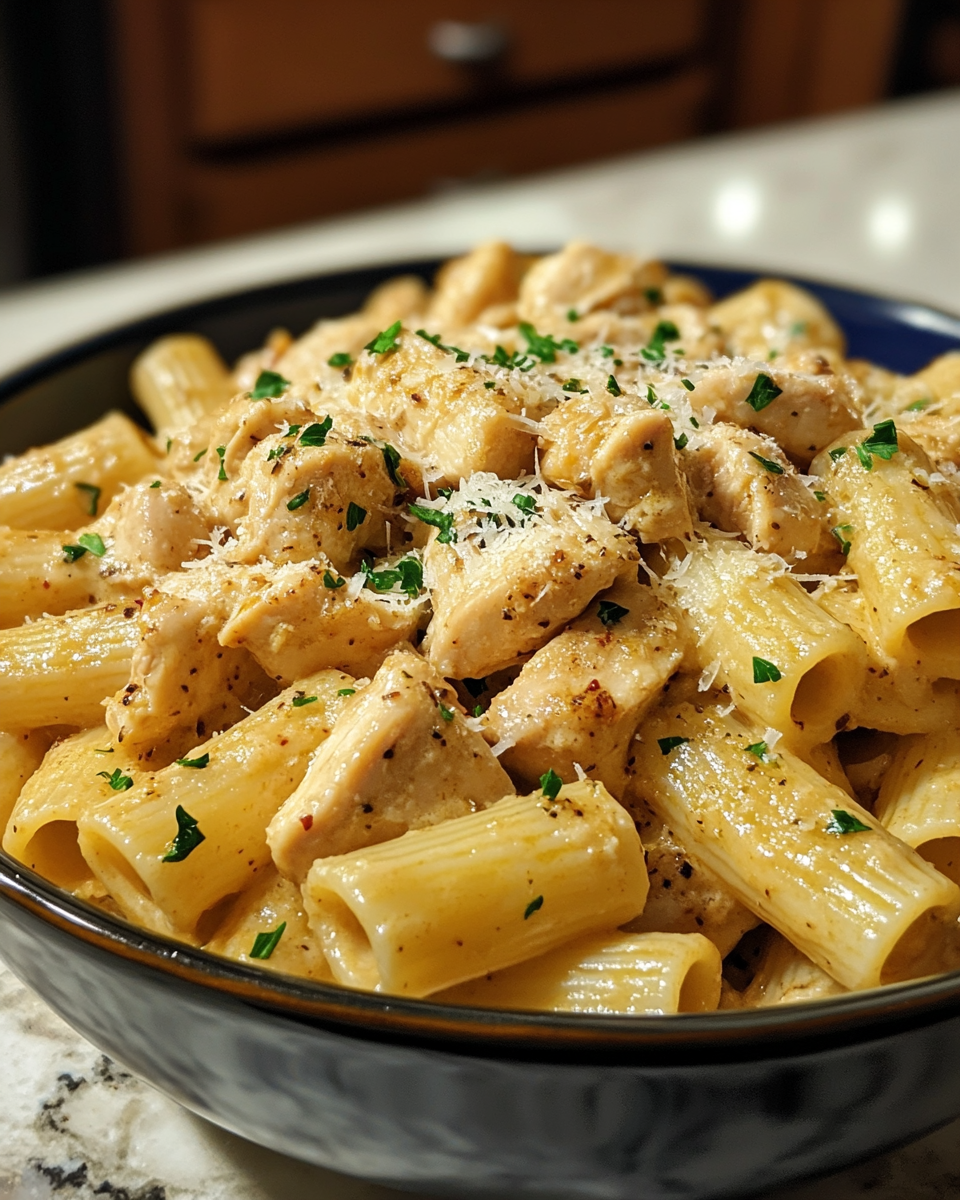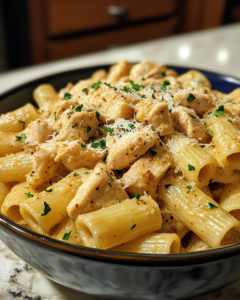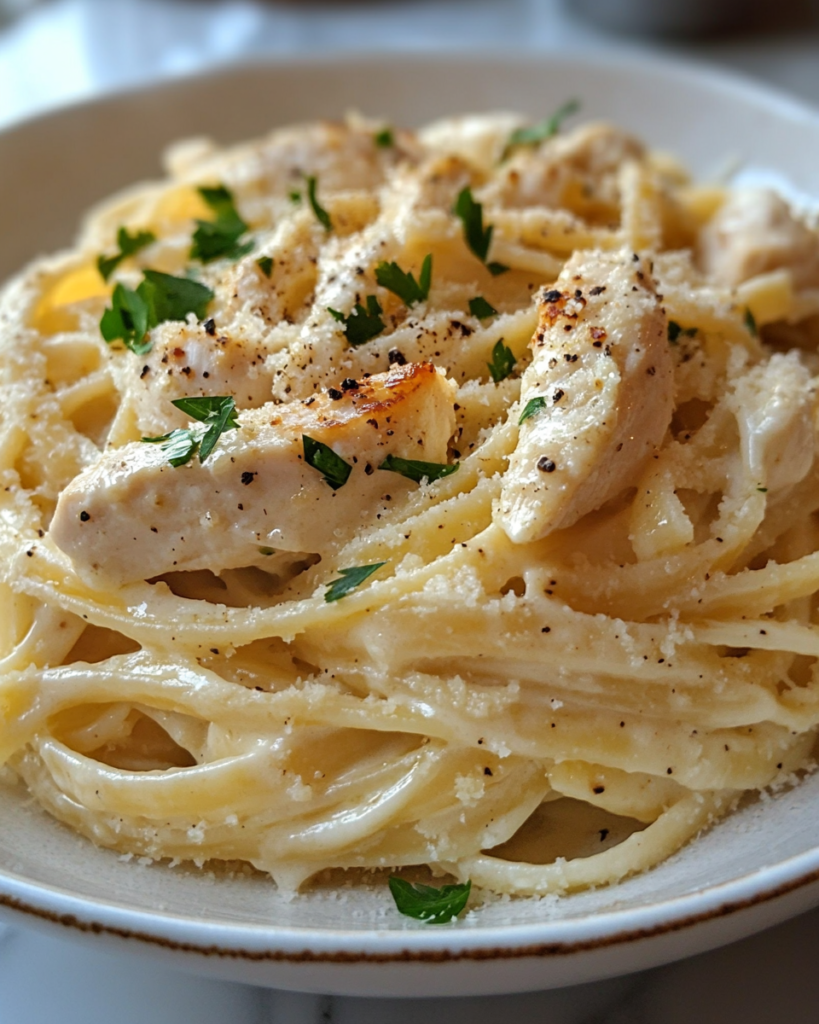
A light creamy chicken Alfredo dinner brings a smooth pasta experience with tender chicken and a velvety sauce that coats every strand of pasta. This dish focuses on balance, offering richness without feeling heavy, making it suitable for weeknight meals or relaxed gatherings.
The combination of garlic, Parmesan, milk, and lean chicken creates a comforting plate that feels satisfying yet not overly dense. Each element works together to deliver a smooth texture and a savory profile that pairs well with simple sides like greens or roasted vegetables.
This version keeps the sauce lighter than traditional Alfredo while maintaining depth of flavor. The result is a dish that feels satisfying, smooth, and ideal for serving in a variety of casual dining settings.
Ingredients Overview
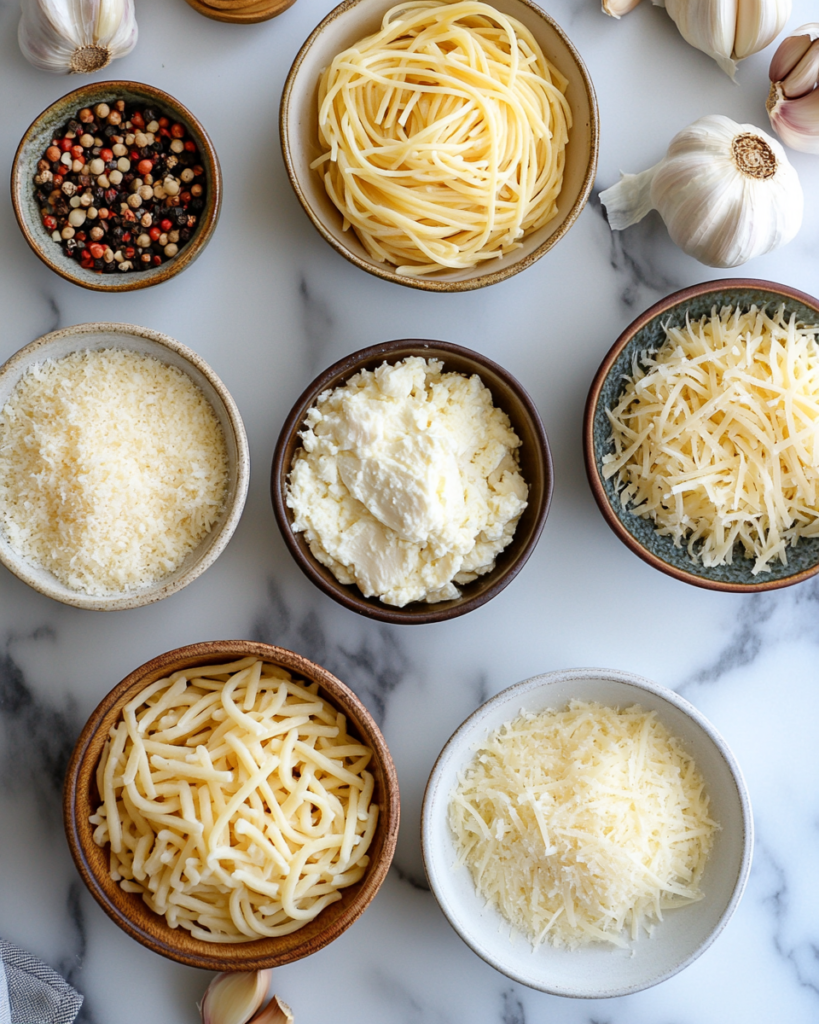
The core of this dish rests on a few simple ingredients that bring structure, creaminess, and savory depth. Chicken breast serves as the main protein, offering a lean base that absorbs the flavors of garlic and cheese while staying tender when cooked properly.
Parmesan cheese is essential for the sauce, providing a salty, nutty depth that thickens the mixture naturally. Instead of heavy cream alone, a blend of milk and a small amount of butter creates a lighter texture while still delivering smooth richness.
Garlic adds aromatic depth, enhancing the savory profile without overpowering the dish. Olive oil supports the searing of chicken, helping create a golden surface that locks in moisture.
Pasta acts as the foundation, traditionally fettuccine or linguine, though penne also works well. Its structure holds the sauce, ensuring each bite carries a balanced coating.
A small amount of flour may be used to gently thicken the sauce. Black pepper and salt round out the flavor, while parsley can be added at the end for freshness.
Substitutions are flexible. Whole milk can replace low-fat milk for a richer sauce. Chicken thighs can be used for a juicier texture. Gluten-free pasta works for dietary adjustments without altering the overall character of the dish.
Ingredients
12 ounces fettuccine pasta
1 pound chicken breast, sliced into strips
2 tablespoons olive oil
3 cloves garlic, minced
2 tablespoons unsalted butter
2 tablespoons all-purpose flour
2 cups milk
1 cup grated Parmesan cheese
1/2 teaspoon salt
1/2 teaspoon black pepper
1/4 teaspoon garlic powder
1/4 teaspoon onion powder
2 tablespoons chopped fresh parsley
Step-by-Step Instructions
Begin by preparing the pasta in a large pot of salted boiling water. Cook until the texture becomes tender yet still firm when bitten. Drain and set aside, reserving a small amount of pasta water for later adjustment of the sauce consistency if required.
Heat olive oil in a large skillet over medium heat. Add chicken strips in a single layer. Allow them to cook until the surface turns golden and the interior becomes fully cooked. Remove the chicken from the skillet and set aside.
In the same skillet, add butter and allow it to melt fully. Add minced garlic and stir until fragrant. Keep the heat controlled to prevent burning, as garlic can turn bitter if overheated.
Sprinkle flour over the butter and garlic mixture. Stir continuously to form a smooth base. This step helps create a gentle thickening structure for the sauce.
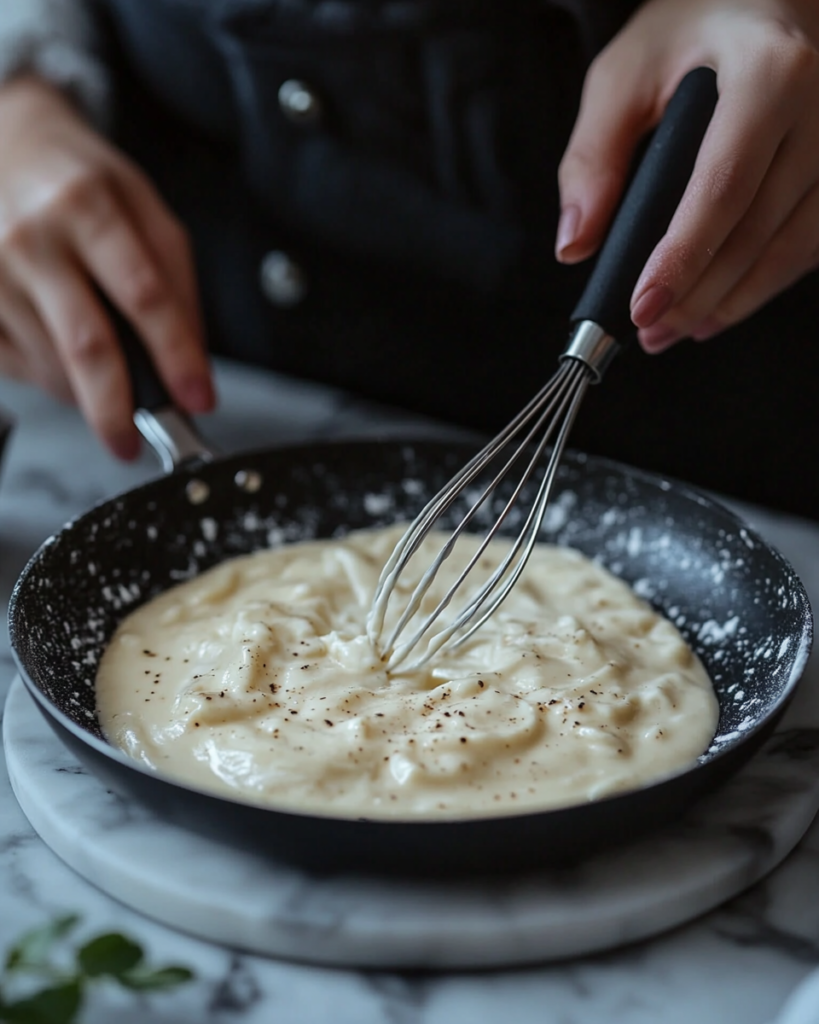
Slowly pour in milk while stirring. Continue mixing until the liquid becomes smooth and slightly thickened. Maintain steady heat to avoid lumps forming in the sauce.
Add Parmesan cheese gradually, stirring until it melts into the mixture. The sauce should become creamy and uniform in texture. Season with salt, black pepper, garlic powder, and onion powder.
Return the cooked chicken to the skillet. Stir to coat each piece with sauce. Add the cooked pasta and mix gently until everything is evenly combined.
If the sauce appears too thick, a small amount of reserved pasta water can be added to adjust the texture. Continue stirring until the sauce clings lightly to the pasta.
Finish with chopped parsley for a fresh aroma and mild contrast to the creamy base. Serve immediately while warm for the smoothest texture.
Tips, Variations & Substitutions
For a lighter texture, use low-fat milk instead of whole milk. This reduces richness while keeping the sauce smooth. Adding extra Parmesan can restore depth if a stronger savory profile is preferred.
Vegetable additions such as spinach or broccoli blend well with the sauce and add color and texture. These should be lightly cooked before mixing into the pasta.
Shrimp can replace chicken for a seafood variation. Cook shrimp briefly until they turn opaque, then combine with the sauce in the same way.
For a stronger garlic profile, roast garlic before adding it to the sauce. This creates a mellow, slightly sweet undertone.
Gluten-free pasta works well for dietary adjustments. Rice-based or corn-based pasta maintains structure when handled gently during mixing.
Serving Ideas & Occasions
This dish pairs well with simple side salads featuring greens and light vinaigrettes. The freshness of the salad balances the creamy pasta.
Garlic bread or toasted rolls complement the sauce and provide a crisp contrast in texture. Steamed vegetables also work well as a side option.
A light creamy chicken Alfredo dinner fits casual family meals, relaxed gatherings, or simple indoor dining settings. It also works well as a comforting evening meal after a long day.
Nutritional & Health Notes
This dish provides a balance of protein, carbohydrates, and fats. Chicken offers lean protein, while milk and cheese contribute calcium and energy.
Using milk instead of heavy cream reduces overall richness while maintaining a smooth texture. Portion control helps maintain balance within a daily eating pattern.
Adding vegetables increases fiber content and broadens the nutritional profile. Spinach, broccoli, or peas are commonly used additions that blend well with the sauce.
FAQs
Can I use another type of pasta?
Yes, different pasta shapes work well in this dish. Fettuccine is traditional, but penne, linguine, or even rotini can hold the creamy sauce effectively. The key is selecting pasta with enough surface area or ridges to carry the sauce evenly. Cooking should follow package instructions, ensuring the texture remains firm yet tender for best results when mixed with the sauce.
How can the sauce be kept smooth?
A smooth sauce depends on steady heat and gradual mixing. Milk should be added slowly while stirring continuously to prevent lumps. Cheese should also be added in small portions, allowing it to melt fully before adding more. Keeping heat at a moderate level helps maintain stability in the mixture and prevents separation or clumping.
Can chicken be prepared ahead of serving?
Yes, chicken can be cooked in advance and stored properly in a sealed container. When reheating, it should be warmed gently in a skillet with a small amount of sauce or milk to maintain tenderness. Avoid high heat during reheating, as this can dry out the texture and reduce juiciness.
Is it possible to reduce dairy content?
The dairy content can be adjusted by using more milk and less cheese. Plant-based milk alternatives can also be used, though they may slightly change the texture and flavor. Thickening may require a small amount of flour or starch if dairy is reduced significantly.
How can the dish be stored?
Leftovers should be stored in a sealed container and kept in refrigeration. When reheating, a small splash of milk can help restore creaminess. Gentle heat on a stovetop is preferred to maintain texture and avoid drying.
Can vegetables be added directly?
Yes, vegetables such as spinach, peas, or broccoli can be added directly into the sauce. They should be lightly cooked beforehand to ensure tenderness. This addition brings color, texture, and nutritional variety to the dish without altering the core flavor.
What can be served alongside this dish?
Simple sides such as green salads, roasted vegetables, or garlic bread pair well. These options provide contrast in texture and balance the creamy pasta. Light beverages such as water or unsweetened iced tea complement the meal without overpowering the flavor.