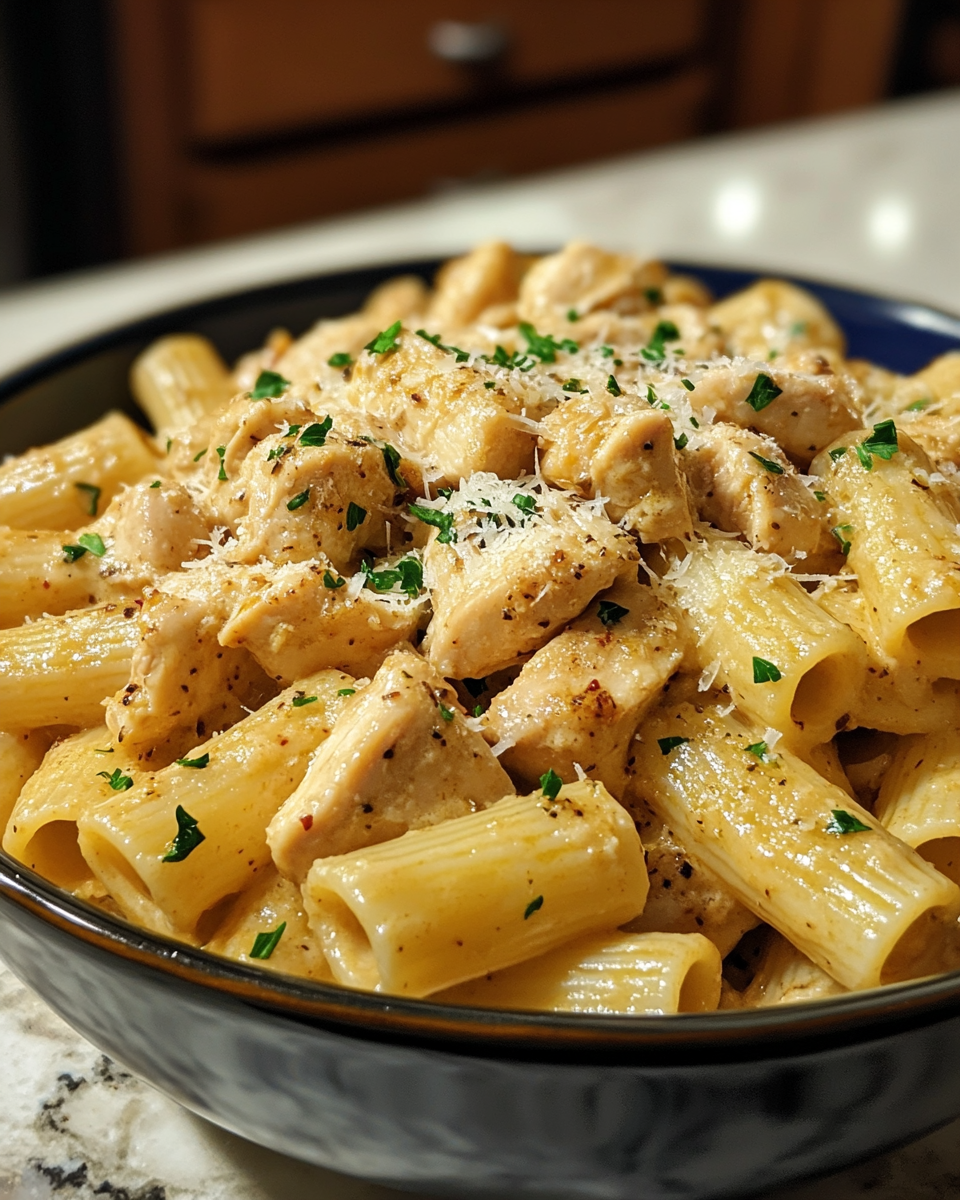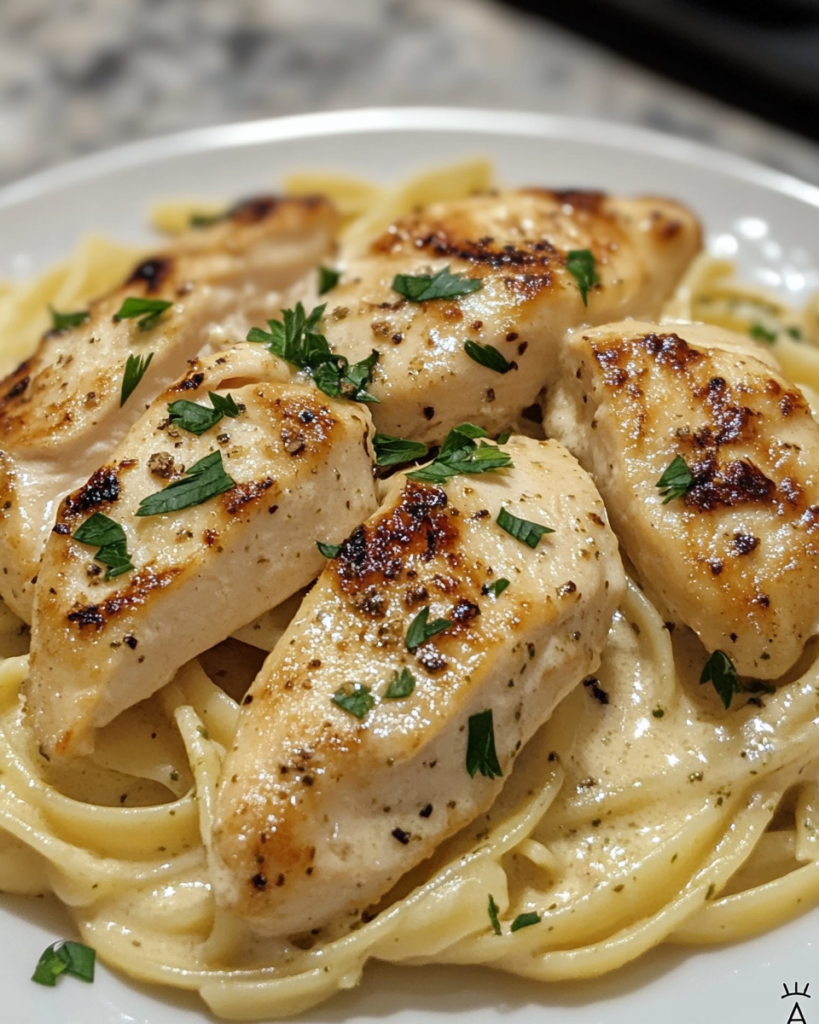
A light creamy chicken Alfredo dinner brings together tender chicken slices, smooth Parmesan sauce, and pasta coated in a silky texture. This version keeps the richness of classic Alfredo while focusing on a lighter dairy balance and clean flavor profile. The dish works well for a quiet evening meal or a relaxed gathering, offering comfort without feeling overly heavy.
The sauce preparation centers on gentle heat, allowing cream, butter, and cheese to blend into a smooth consistency. Chicken is seasoned simply, then cooked until tender and golden. When combined with pasta, the sauce clings evenly, creating a cohesive dish that feels satisfying in every portion.
This recipe focuses on balance between protein, dairy, and pasta. Each component plays a specific role in creating a cohesive plate with smooth texture and savory depth.
Ingredients Overview
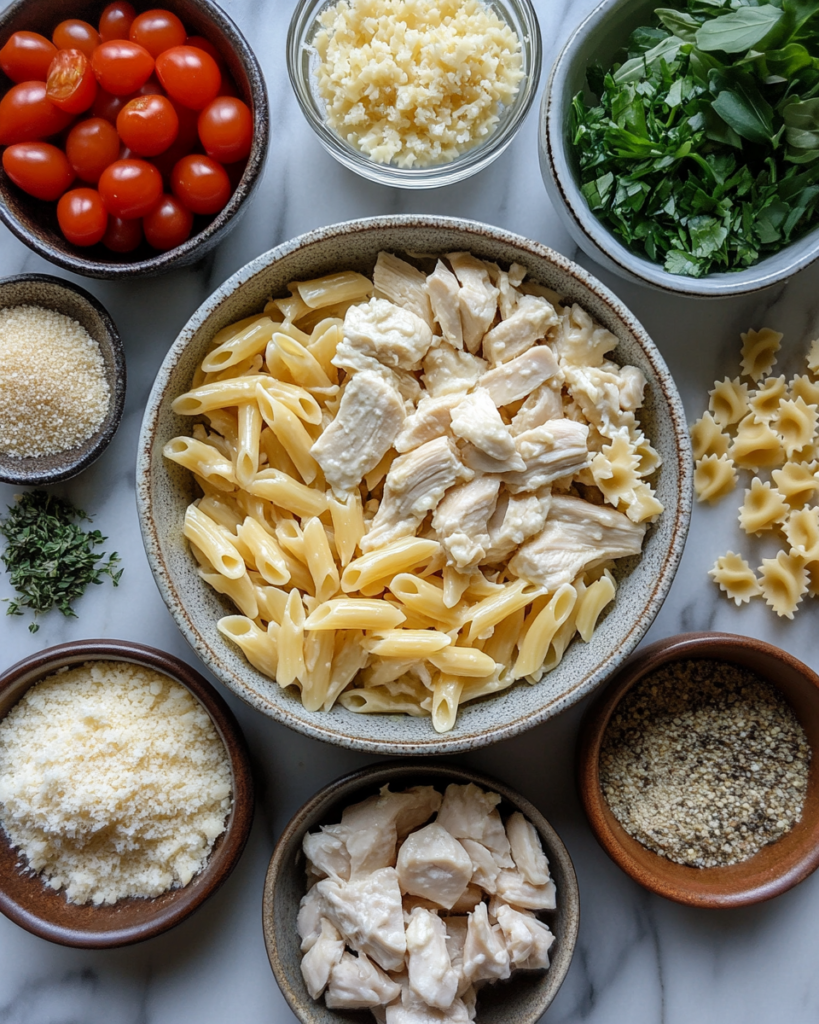
Chicken breast serves as the primary protein, offering a lean base that absorbs seasoning and pairs well with creamy sauce. Slicing the chicken into even portions allows uniform cooking and consistent texture throughout the dish. Light seasoning with salt, pepper, and garlic powder brings out natural flavor without overpowering the sauce.
Fettuccine pasta provides structure and holds the sauce effectively. Its flat shape allows the creamy mixture to coat every strand, delivering a consistent bite. Alternative pasta shapes such as linguine or tagliatelle can also be used, depending on preference and pantry availability.
The sauce is built from a combination of butter, cream, and Parmesan cheese. Butter adds richness, while cream creates smooth texture. Parmesan contributes a salty, nutty depth that balances the dairy base. A small amount of garlic adds aromatic character without overwhelming the dish.
Olive oil is used for cooking the chicken, helping achieve a golden exterior while maintaining moisture inside. Fresh parsley adds a light herbal note at the end, offering contrast to the creamy base.
Milk can be incorporated to lighten the sauce slightly if a thinner consistency is preferred. Cornstarch may be used in small amounts if a thicker finish is desired without increasing dairy content.
Each ingredient works together to create a balanced dish where texture, flavor, and consistency align smoothly across every serving.
Ingredients
12 ounces fettuccine pasta
2 large chicken breasts, sliced into strips
1 teaspoon salt
1/2 teaspoon black pepper
1 teaspoon garlic powder
2 tablespoons olive oil
3 tablespoons unsalted butter
3 garlic cloves, minced
1 1/2 cups heavy cream
1 cup whole milk
1 cup grated Parmesan cheese
1/4 teaspoon ground nutmeg
2 tablespoons chopped fresh parsley
Step-by-Step Instructions
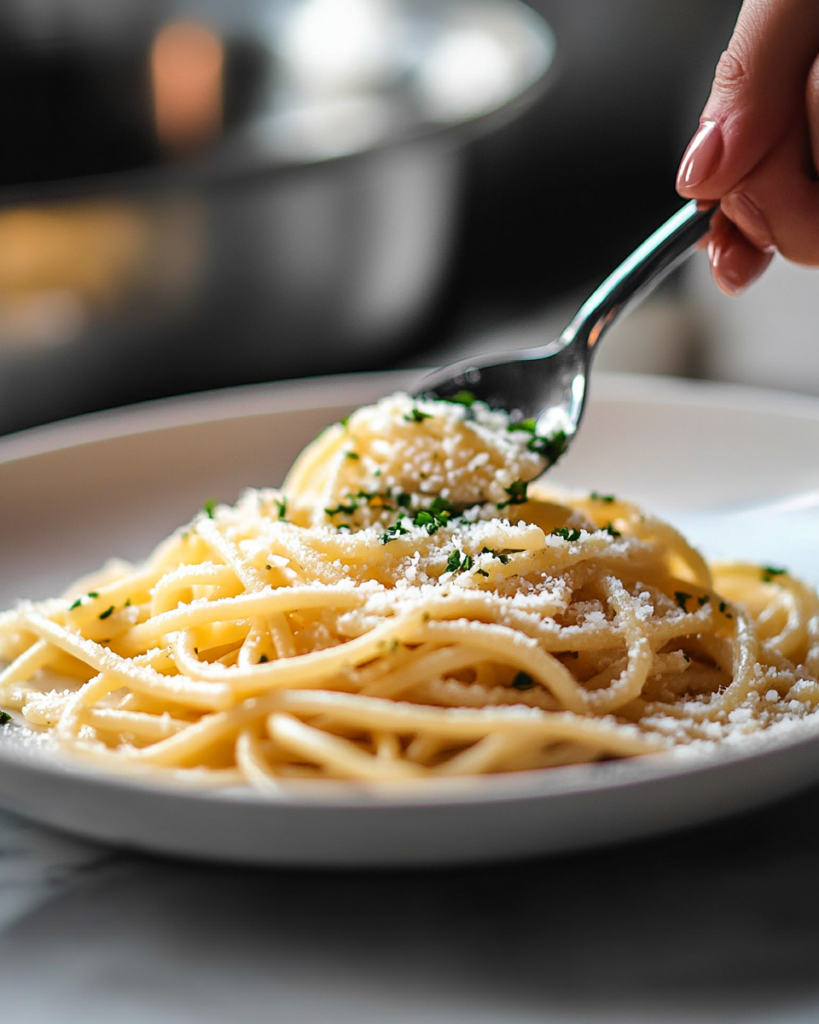
Begin by preparing the pasta in a large pot of salted boiling water. Cook until tender with slight firmness at the center. Drain and set aside while reserving a small portion of cooking liquid for later use if needed to adjust sauce texture.
Season chicken strips with salt, black pepper, and garlic powder. Heat olive oil in a large skillet over medium heat. Place chicken in a single layer and cook until golden on each side and fully cooked through. Remove from skillet and keep warm.
In the same skillet, reduce heat slightly and add butter. Allow it to melt fully, then add minced garlic. Stir gently until fragrant, taking care to avoid browning.
Pour in heavy cream and milk, stirring slowly to create a smooth base. Maintain low to medium heat so the mixture remains stable and does not separate. Gradually incorporate Parmesan cheese, stirring continuously until fully melted and incorporated into the sauce.
Add ground nutmeg to introduce subtle warmth. Allow the sauce to thicken slightly as it simmers gently. If a thinner consistency is preferred, a small amount of reserved pasta liquid can be added gradually.
Return cooked chicken to the skillet and coat evenly with sauce. Add drained pasta and gently toss until every strand is covered. The sauce should cling evenly without pooling at the bottom of the pan.
Allow everything to heat together for a short period so flavors combine. Once the texture appears smooth and cohesive, remove from heat.
Finish with chopped parsley sprinkled over the top for a light herbal contrast. Serve immediately while the texture remains creamy and consistent.
Tips, Variations & Substitutions
For a lighter version, replace part of the heavy cream with additional milk. This reduces richness while maintaining smooth texture. Another option involves using grilled chicken instead of pan-seared chicken for a slightly smoky profile.
Vegetables such as spinach, broccoli, or mushrooms can be added during the sauce stage. These ingredients introduce additional texture and pair well with the creamy base without overwhelming it.
For a deeper savory profile, a small amount of Romano cheese can be blended with Parmesan. This adds sharper flavor while maintaining creamy consistency.
Gluten-free pasta works well as a substitute without altering the structure of the dish significantly. Cooking duration may vary slightly depending on pasta type.
If thicker sauce is preferred, allow the mixture to simmer longer before combining with pasta. For thinner sauce, add reserved pasta liquid gradually until desired consistency is reached.
Serving Ideas & Occasions
Light creamy chicken Alfredo pairs well with simple side dishes such as roasted vegetables or a fresh green salad. Garlic bread or toasted baguette slices complement the sauce without overwhelming the plate.
This dish fits well into casual evening meals, small gatherings, or relaxed weekend cooking. It also works well as a prepared meal for next-day portions, as the sauce maintains texture when reheated gently with a small amount of milk.
A light citrus drink or sparkling water pairs well alongside the creamy texture, offering contrast to the richness of the sauce.
Nutritional & Health Notes
This dish provides a balance of protein, carbohydrates, and fats. Chicken contributes lean protein, while pasta supplies energy through complex carbohydrates. Dairy ingredients offer calcium and contribute to satiety.
Adjustments in dairy ratios allow control over richness. Using reduced-fat milk or smaller portions of cheese lowers overall fat content. Adding vegetables increases fiber and micronutrient content.
Portion size plays an important role in maintaining balance within the meal. Smaller servings paired with vegetables create a more rounded plate.
FAQs
Can chicken thighs be used instead of chicken breast?
Chicken thighs can be used in place of chicken breast. They contain slightly higher fat content, which results in a richer texture. Cooking duration may vary slightly due to thickness and fat distribution. Thigh meat remains tender when cooked properly and blends well with creamy sauce. Cutting into even strips helps maintain consistent cooking results across all pieces.
What pasta works if fettuccine is not available?
Linguine, tagliatelle, or spaghetti can be used as substitutes. Each shape holds sauce differently, but all provide acceptable results. Wider noodles tend to hold more sauce, while thinner pasta offers a lighter texture. Cooking pasta until just tender helps maintain structure when combined with sauce.
Can the sauce be prepared without dairy cream?
A dairy-light version can be prepared using milk and a small amount of flour or cornstarch for thickness. This adjustment changes texture slightly but still produces a creamy result. Gradual heating is important to prevent separation when using lower fat ingredients.
How can sauce thickness be controlled?
Thickness depends on simmer duration and dairy ratio. Longer simmering creates a thicker texture, while additional liquid results in a thinner consistency. Reserved pasta water can help adjust texture without altering flavor balance.
Is it possible to prepare this dish in advance?
Components can be prepared separately in advance. Chicken and sauce can be stored and combined later with freshly cooked pasta. Reheating should be done slowly over low heat with a small amount of milk added to restore smooth texture.
What herbs work well besides parsley?
Basil, thyme, or chives can be used as alternatives. Each herb brings a slightly different aromatic note. Parsley remains the most neutral option, while basil introduces mild sweetness and thyme adds earthy depth.
How can extra flavor be added without changing texture?
Garlic infusion during butter melting adds depth without altering consistency. A small amount of grated Parmesan added at the end also increases savory profile. G