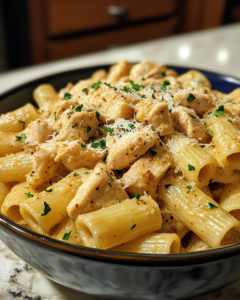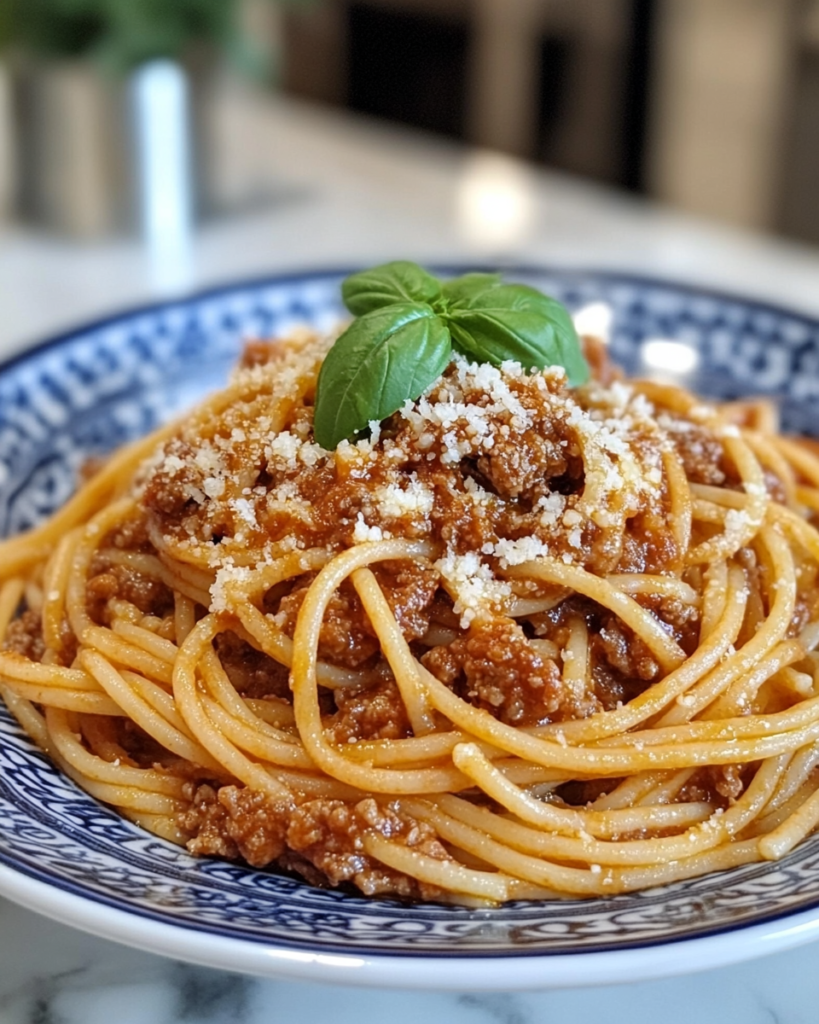
A steaming plate of meat sauce spaghetti brings together tender pasta, slow-cooked tomato sauce, and seasoned ground meat in a comforting, home-style dish. Meat sauce spaghetti has long been a favorite for family dinners, offering deep flavor and satisfying texture in every bite.
This version focuses on a slow-simmered meat sauce that clings beautifully to spaghetti strands, creating a balanced bite each time. The combination of tomatoes, herbs, and savory meat creates a hearty sauce that feels both traditional and satisfying.
Meat sauce spaghetti is often served on busy weeknights, relaxed weekends, or shared meals with friends. The aroma alone fills the kitchen with warmth, making it a dish that feels inviting from the very first step of cooking.
Ingredients Overview
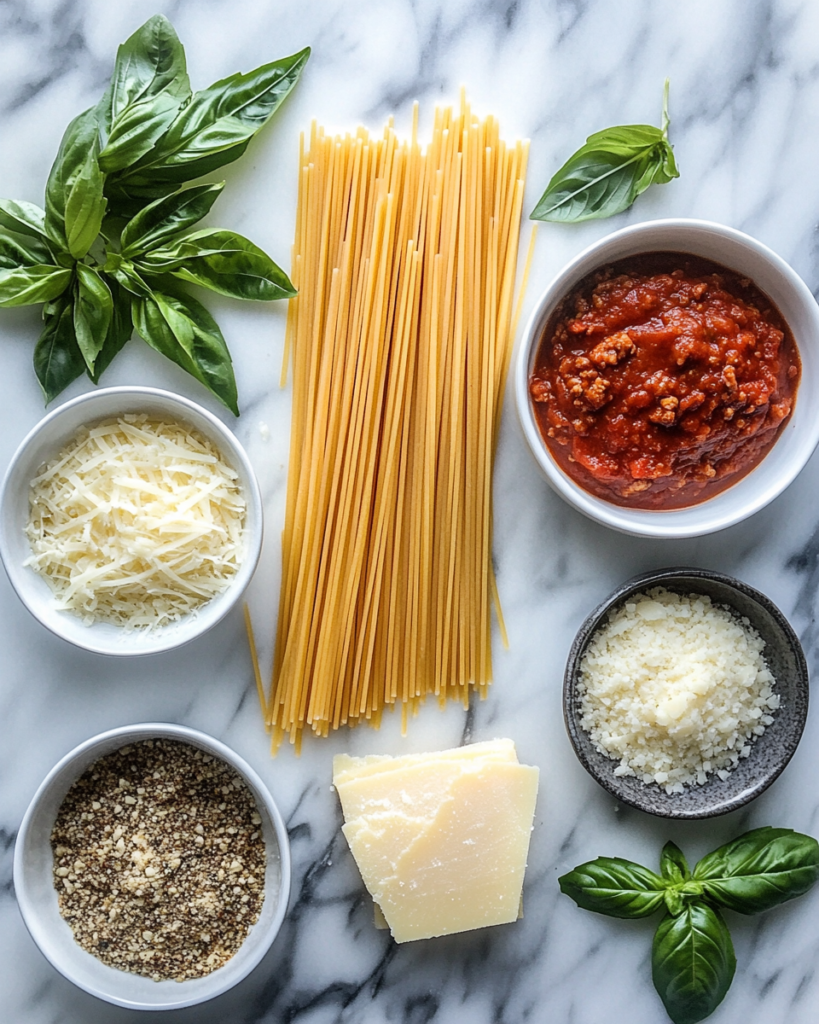
The foundation of meat sauce spaghetti starts with ground beef, which provides a savory base and a hearty texture. Choosing beef with a moderate fat content helps develop flavor while keeping the sauce balanced. Some cooks prefer mixing beef with ground pork for added depth.
Tomatoes play a central role, typically in the form of crushed tomatoes or tomato passata. These give the sauce its body and gentle acidity, helping balance the meat’s savory notes. Tomato paste is often added to intensify flavor and give the sauce a thicker consistency.
Aromatic vegetables like onion, garlic, and carrot build the flavor base. Onion adds sweetness, garlic brings depth, and carrot softens the acidity of the tomatoes. These ingredients slowly soften during cooking, blending into the sauce.
Herbs such as basil and oregano add a familiar Italian-inspired profile. Olive oil helps sauté the vegetables and carries flavor throughout the sauce. Salt and black pepper season the dish, while a small amount of sugar can smooth the acidity of tomatoes if needed.
Spaghetti serves as the perfect pasta choice due to its long strands that hold sauce well. Some variations use whole wheat or gluten-free spaghetti, depending on dietary preference.
Together, these ingredients create a balanced sauce that coats each strand evenly, delivering a comforting and satisfying pasta experience.
Ingredients
1 pound ground beef
12 ounces spaghetti
1 tablespoon olive oil
1 medium onion, finely chopped
2 cloves garlic, minced
1 medium carrot, finely diced
1 can (28 ounces) crushed tomatoes
2 tablespoons tomato paste
1 teaspoon dried oregano
1 teaspoon dried basil
1/2 teaspoon salt
1/4 teaspoon black pepper
1/2 teaspoon sugar
1/2 cup water
1/4 cup grated Parmesan cheese
2 tablespoons fresh parsley, chopped
Step-by-Step Instructions
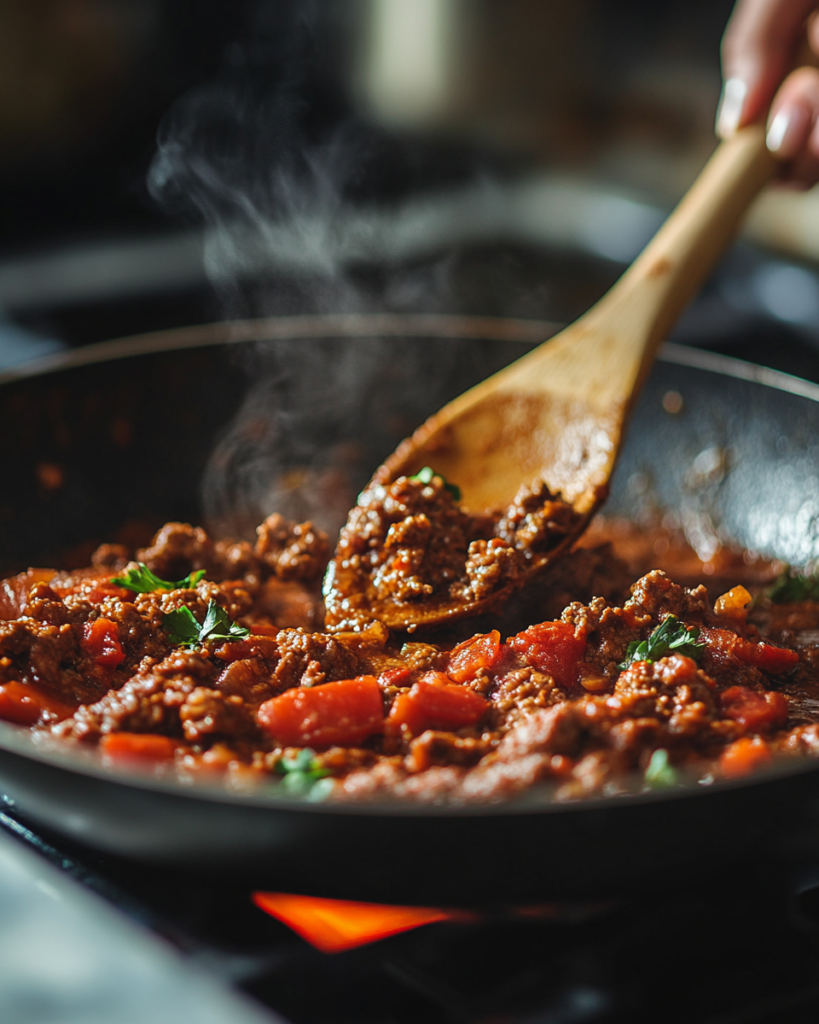
Start by heating olive oil in a large deep skillet or saucepan over medium heat. Add chopped onion and carrot, cooking until softened and lightly golden. This step builds the base flavor, so allow the vegetables to cook slowly without rushing.
Add minced garlic and stir briefly until fragrant. Avoid browning the garlic too much, as it can turn bitter. Next, add ground beef, breaking it apart with a spoon as it cooks. Continue cooking until the meat is browned evenly and no pink remains.
Once the beef is cooked, stir in tomato paste. Let it cook for a minute to deepen its flavor before adding crushed tomatoes. Pour in water to loosen the sauce slightly, making it easier for simmering.
Season the sauce with oregano, basil, salt, black pepper, and a small amount of sugar. Stir everything together until well combined. Reduce the heat to low and let the sauce simmer gently for 25–35 minutes. Stir occasionally to prevent sticking.
While the sauce simmers, bring a large pot of salted water to a boil. Add spaghetti and cook according to package directions until al dente. Drain the pasta, reserving a small cup of pasta water in case the sauce needs thinning later.
Taste the sauce and adjust seasoning if needed. If it feels too thick, add a splash of reserved pasta water. If it feels too thin, let it simmer uncovered for a few more minutes.
Combine spaghetti with the sauce directly in the pan or serve sauce over plated pasta. Toss lightly to coat the strands evenly. Finish with grated Parmesan cheese and fresh parsley before serving.
Tips, Variations & Substitutions
For deeper flavor, let the sauce simmer longer on low heat. A slow simmer allows the ingredients to blend more fully, creating a smoother texture. Stir occasionally to maintain even cooking.
Ground turkey or chicken can replace beef for a lighter version. Pork or a beef-pork blend adds a slightly different flavor profile. For a vegetarian option, lentils or finely chopped mushrooms can be used in place of meat.
If you prefer a slightly sweeter sauce, increase the carrot or add a small amount of tomato paste. For a sharper profile, reduce cooking time of tomatoes slightly.
Whole wheat or gluten-free pasta works well with this sauce. Adjust cooking time based on package instructions. Fresh herbs like basil or oregano can be added at the end for a brighter finish.
Serving Ideas & Occasions
Meat sauce spaghetti pairs well with simple side dishes such as green salad, roasted vegetables, or garlic bread. A light salad with vinaigrette helps balance the savory nature of the pasta.
This dish is often served during family dinners, casual gatherings, or meal prep for the week. It reheats well, making it practical for leftovers.
For drinks, sparkling water with lemon or a light non-alcoholic beverage pairs nicely. The dish also works well for shared meals where everyone serves themselves from a large pot or baking dish.
Nutritional & Health Notes
Meat sauce spaghetti provides a balance of protein, carbohydrates, and fats. The ground beef supplies protein, while pasta offers energy-rich carbohydrates.
Tomatoes contribute natural plant compounds and flavor without adding heaviness. Vegetables like onion, garlic, and carrot add fiber and subtle sweetness.
Portion size plays an important role in balancing overall intake. Adjusting pasta and meat ratios can help tailor the dish to personal dietary needs.
Using lean meat and adding extra vegetables can create a lighter version while maintaining flavor and satisfaction.
FAQs
What type of beef works best for meat sauce spaghetti?
Ground beef with moderate fat content is commonly used because it delivers both flavor and moisture. Very lean beef can result in a drier sauce, while higher fat content adds more depth but may require draining excess grease. Many cooks prefer an 80/20 blend for balanced results. If a lighter option is desired, lean beef or ground turkey can be used instead. Each choice slightly changes the final texture and taste, so selecting depends on personal preference and dietary goals.
Can I make meat sauce spaghetti ahead of time?
Yes, meat sauce spaghetti works very well as a make-ahead dish. The sauce can be prepared a day or two in advance and stored in the refrigerator. In fact, resting time allows the flavors to blend more deeply. When ready to serve, gently reheat the sauce on the stove while cooking fresh spaghetti. If the sauce thickens during storage, a small splash of water can help restore consistency. This makes it practical for meal planning or busy schedules.
How do I thicken the sauce if it is too thin?
If the sauce feels too thin, continue simmering it uncovered over low heat. This allows excess liquid to evaporate gradually. Stir occasionally to prevent sticking at the bottom of the pan. Another option is to add a small amount of tomato paste, which naturally thickens the texture while deepening flavor. Avoid adding too much liquid during cooking if a thicker sauce is preferred. With patience, the sauce will naturally reach a hearty consistency.
Can I freeze meat sauce spaghetti?
Yes, the meat sauce freezes very well. Allow it to cool completely before transferring it to airtight containers. It can be stored in the freezer for several months. When ready to use, thaw it in the refrigerator overnight and reheat gently on the stove. Freshly cooked spaghetti should be prepared separately for the best texture. Freezing the sauce alone helps maintain quality and makes future meals quick and convenient.
What pasta works besides spaghetti?
While spaghetti is the classic choice, other pasta shapes also pair well with meat sauce. Penne, rigatoni, and fusilli are popular alternatives because their shapes hold sauce effectively. Short pasta varieties capture small pieces of meat and sauce in every bite. Whole wheat or gluten-free pasta options can also be used without changing the cooking method. The key is selecting pasta that holds the sauce well and complements the texture of the meat mixture.
How can I make the sauce more flavorful?
Flavor develops through slow cooking and layering ingredients. Sautéing vegetables properly at the start builds a strong base. Allowing the sauce to simmer for a longer period helps deepen taste. Fresh herbs added near the end of cooking bring brightness. A small amount of tomato paste can intensify overall flavor. Adjusting seasoning gradually during cooking also helps create balance without overpowering any single ingredient.
Why does my sauce taste acidic?
Tomatoes naturally have acidity, which can sometimes stand out. To balance this, a small amount of sugar or finely grated carrot can soften the sharpness. Cooking the sauce longer also helps reduce acidity as flavors blend together. Using good-quality tomatoes can make a noticeable difference. Adding dairy such as Parmesan at serving time can also smooth the overall taste. Careful seasoning adjustments help create a more rounded sauce.