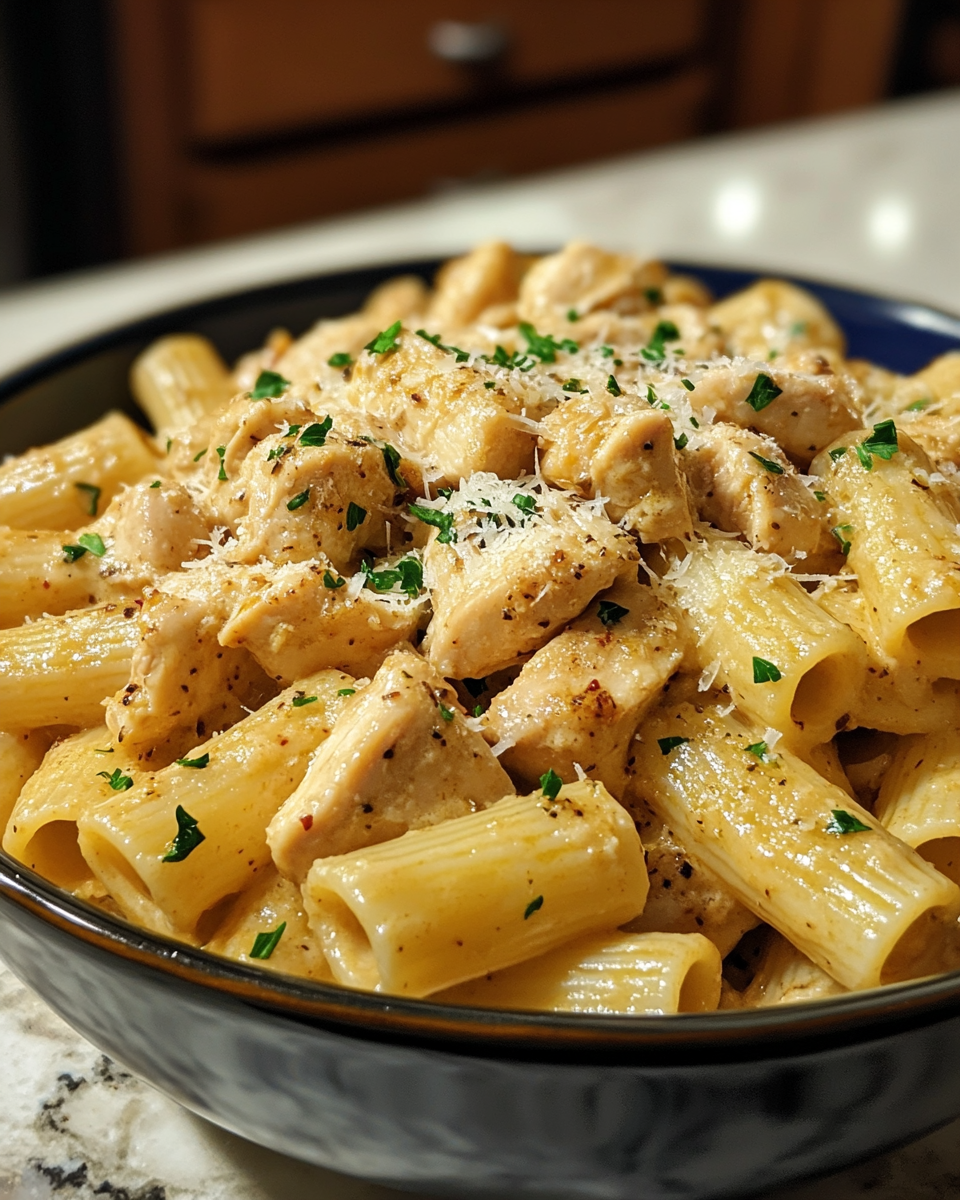
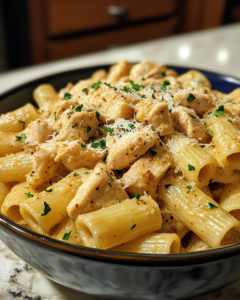
A creamy one pot chicken pasta brings together tender chicken pieces, silky pasta, and a rich, velvety sauce cooked in a single pot. The dish develops deep flavor as the pasta absorbs the seasoned broth and cream, creating a comforting texture throughout every bite.
This style of pasta is ideal for busy evenings since everything cooks together without separate pans. The starch from the pasta naturally thickens the sauce, blending with garlic, herbs, and chicken juices for a cohesive finish. Each spoonful carries a balance of savory chicken, soft pasta, and a creamy coating that clings gently to every strand.
Unlike traditional pasta dishes that require multiple steps, this version keeps preparation straightforward while still delivering a rich dining experience. The aroma builds gradually as the chicken browns, followed by onions, garlic, and broth simmering into a unified base. The result is a warm, satisfying meal with minimal cleanup.
Ingredients Overview

This creamy one pot chicken pasta relies on a combination of everyday ingredients that work together to build layers of flavor and texture. Chicken breast or thighs provide the protein foundation, offering tenderness and a mild savory profile that absorbs seasoning well during cooking. Searing the chicken first adds depth through light browning, which becomes part of the sauce base.
Pasta plays a central role since it cooks directly in the liquid mixture. Short shapes such as penne or rotini hold the sauce effectively, while longer pasta like fettuccine creates a silkier presentation. As the pasta simmers, it releases starch, naturally thickening the sauce without additional agents.
Garlic and onion create aromatic depth. When gently sautéed, they soften and infuse the base with warmth. Chicken broth serves as the cooking liquid, carrying seasoning throughout the dish while helping the pasta cook evenly. Heavy cream is added toward the end, creating a smooth, rich texture that binds everything together.
Italian seasoning or a blend of dried herbs adds subtle earthy notes. Salt and pepper adjust balance, while grated cheese melts into the sauce for added richness. A small amount of butter can be included for extra silkiness.
Substitutions are flexible. Chicken thighs can replace breast meat for a juicier result. Half-and-half can replace cream for a lighter texture. Vegetable broth works in place of chicken broth for a milder profile. Gluten-free pasta can be used, though cooking time may vary slightly.
Each ingredient contributes to a layered, cohesive dish where the sauce, protein, and pasta cook together into a unified creamy consistency.
Ingredients
1 1/2 pounds chicken breast, cut into bite-size pieces
2 tablespoons olive oil
1 small onion, finely chopped
4 cloves garlic, minced
2 cups chicken broth
1 1/2 cups heavy cream
12 ounces penne pasta
1 teaspoon Italian seasoning
1/2 teaspoon paprika
1/2 teaspoon salt
1/4 teaspoon black pepper
1 cup grated Parmesan cheese
2 tablespoons butter
2 tablespoons chopped parsley
Step-by-Step Instructions

Start by heating olive oil in a large, deep skillet or pot over medium heat. Add the chicken pieces in a single layer and cook until lightly golden on the outside. Stir occasionally to allow even browning. Once the chicken is mostly cooked through, remove it from the pot and set aside.
In the same pot, add chopped onion. Cook until it softens and becomes translucent, stirring gently to lift any browned bits from the bottom. Add minced garlic and cook briefly until aromatic, taking care not to let it darken.
Pour in chicken broth and stir well, scraping the base of the pot to incorporate flavor. Add pasta directly into the liquid, ensuring it is mostly submerged. Sprinkle in Italian seasoning, paprika, salt, and pepper. Stir to distribute evenly.
Return the cooked chicken to the pot. Bring the mixture to a gentle simmer, stirring occasionally to prevent sticking. As the pasta cooks, it will absorb liquid and release starch, gradually thickening the mixture.
Once the pasta reaches a tender texture and most of the liquid has reduced, lower the heat. Add heavy cream and stir until the sauce becomes smooth and uniform. Allow it to simmer gently for a few minutes so the flavors blend.
Add Parmesan cheese and butter, stirring until melted into the sauce. The mixture should become creamy and slightly thick, coating the pasta and chicken evenly. If the sauce becomes too thick, a small splash of broth can loosen it slightly.
Taste and adjust seasoning if needed. Remove from heat and let it rest briefly so the sauce settles. Sprinkle chopped parsley over the top before serving for a fresh finish.
Common mistakes include cooking at too high a temperature, which can cause the sauce to reduce too quickly or the pasta to stick. Stirring occasionally during simmering helps maintain even cooking. Another point to watch is adding cream too early, which can affect texture; it should be added near the end for a smooth finish.
Tips, Variations & Substitutions
For deeper flavor, allow the chicken to brown slightly before removing it from the pot. Those browned bits at the bottom contribute richness once deglazed with broth. Stirring the pasta during simmering prevents clumping and promotes even cooking.
For a lighter version, substitute half-and-half in place of heavy cream. This creates a softer sauce while maintaining creaminess. Adding spinach or peas near the end of cooking introduces color and mild sweetness without altering the base structure.
Cheese variations can also shift the flavor profile. Romano cheese adds sharper notes, while mozzarella creates a stretchier texture. For a herb-forward version, fresh basil or thyme can be stirred in just before serving.
Protein swaps work well in this recipe. Turkey or shrimp can replace chicken, though cooking times will vary. For a vegetarian approach, mushrooms can be sautéed until browned and used as the primary ingredient, adding a savory depth.
Pasta shape influences texture. Short pasta holds sauce more tightly, while long pasta produces a smoother coating effect. Adjust liquid slightly if switching pasta types, as absorption rates differ.
Serving Ideas & Occasions
Creamy one pot chicken pasta fits well into casual dinners, family meals, or relaxed gatherings. It pairs nicely with a light green salad dressed in vinaigrette, which balances the richness of the sauce. Garlic bread or toasted baguette slices complement the creamy texture by adding crunch.
For beverages, sparkling water with citrus or a mild iced tea pairs well with the dish’s savory profile. It also works as a standalone meal since it includes protein, starch, and a creamy sauce in one preparation.
This dish suits cooler evenings when warm, hearty meals feel especially satisfying. It also works for shared meals where serving directly from the pot keeps things simple and inviting.
Nutritional & Health Notes
This pasta dish provides a balanced combination of protein, carbohydrates, and fats. Chicken supplies lean protein that supports muscle maintenance and satiety. Pasta contributes energy through complex carbohydrates, while cream and cheese add fats that create richness and fullness.
Portion size influences overall nutritional balance. Adding vegetables such as spinach or broccoli increases fiber and micronutrient content without changing preparation steps significantly.
Using reduced-fat dairy products can lower overall calorie content while still maintaining a creamy texture. Whole grain pasta increases fiber content and provides a slightly firmer bite.
FAQs
Can chicken thighs be used instead of chicken breast?
Chicken thighs work well in this recipe and provide a juicier texture compared to chicken breast. They contain slightly more fat, which adds extra richness to the sauce. Cooking time remains similar, though thighs may take a bit longer to brown fully. Cutting them into even pieces helps maintain consistent cooking. The final dish becomes slightly more tender and flavorful due to the natural juices in thigh meat.
Which pasta shapes work well for this dish?
Short pasta shapes such as penne, rotini, or rigatoni hold the creamy sauce effectively. These shapes allow the sauce to cling inside ridges and curves. Longer pasta like fettuccine can also be used for a smoother texture. Cooking time may vary slightly depending on pasta type, so monitoring texture during simmering is important to prevent overcooking.
Can dairy-free alternatives be used?
Dairy-free options such as coconut cream or oat-based cooking cream can replace heavy cream. These alternatives slightly change the flavor profile but still create a creamy texture. Nutritional yeast can be used in place of Parmesan cheese to add a savory note. The overall consistency remains similar when substitutions are balanced correctly.
How can the sauce be thickened if it feels thin?
If the sauce remains thin after cooking, continue simmering uncovered for a few extra minutes to reduce excess liquid. Stirring helps release more starch from the pasta, naturally thickening the mixture. Adding a small amount of grated cheese can also help bind the sauce without altering flavor significantly.
Can vegetables be added to this dish?
Vegetables such as spinach, peas, mushrooms, or bell peppers can be added without changing the structure of the recipe. Leafy greens should be added near the end of cooking so they wilt gently. Firmer vegetables should be sautéed earlier with the onion to soften properly before simmering.
Is it possible to prepare this dish ahead of time?
This pasta is best enjoyed fresh, but it can be stored and reheated. When reheating, adding a small splash of broth or milk helps restore creaminess. Gentle heating over low heat works better than high heat to maintain texture and prevent separation.
Why cook pasta directly in the sauce instead of separately?
Cooking pasta in the same pot allows it to absorb seasoning from the broth and chicken while releasing starch into the sauce. This creates a naturally thicker and more cohesive texture without needing additional thickeners. It also reduces cleanup and keeps flavors concentrated in one cooking vessel.