One Pot Garlic Butter Rice brings rich garlic flavor, soft fluffy grains, and a silky buttery finish into a single pan meal that fits busy weeknights and relaxed family dinners alike. The rice absorbs savory broth while garlic slowly cooks into the butter, giving every spoonful deep flavor without heavy preparation. The texture stays tender while the bottom of the pan develops light golden bits that add extra character.
This dish pairs well with roasted chicken, grilled shrimp, baked salmon, or sautéed vegetables. It also works as a filling base for bowls topped with eggs, herbs, or sliced steak. Since the entire recipe cooks in one pot, cleanup stays light and the rice gathers flavor from start to finish without extra pans cluttering the kitchen.
The aroma alone fills the kitchen with warm buttery garlic notes that feel comforting during colder months, though the recipe tastes just as satisfying beside grilled meats during summer meals. A handful of herbs near the end brightens the dish while black pepper and broth round out the savory finish.
Ingredients Overview
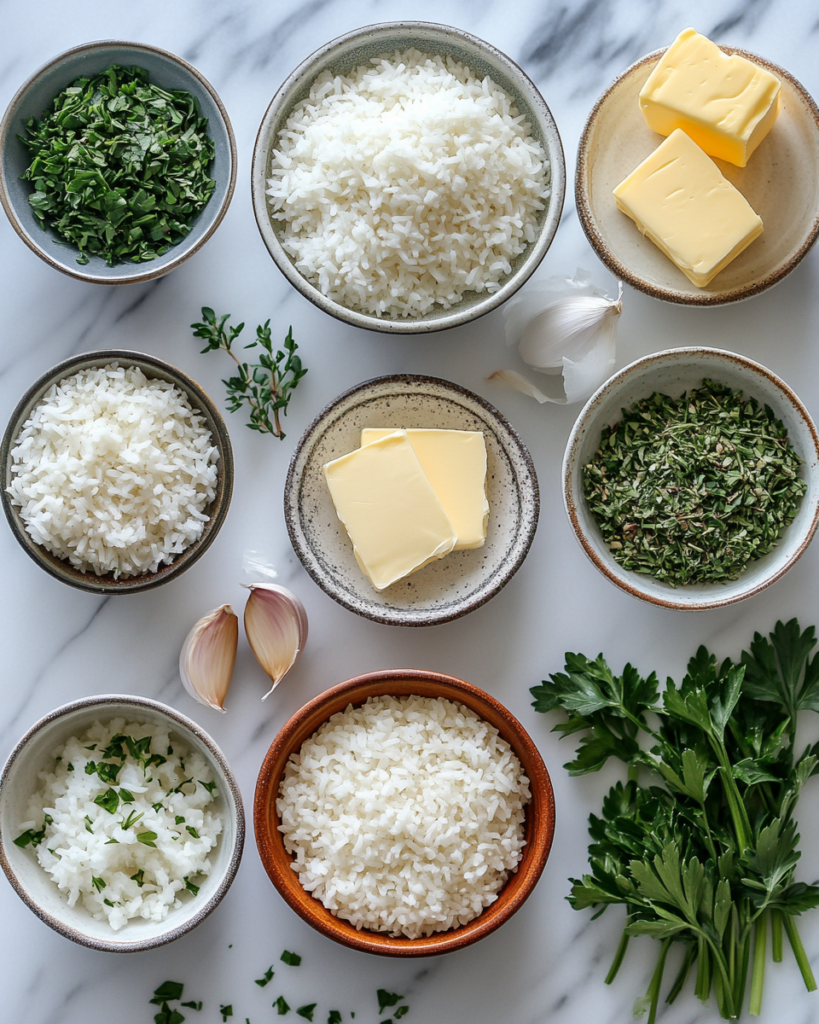
Rice forms the foundation of this dish, and long-grain white rice works particularly well because the grains stay separate after cooking. Jasmine rice brings a slightly floral aroma while basmati delivers a lighter texture. Medium-grain rice creates a softer finish with a bit more cling between grains. Brown rice may also work, though it requires additional liquid and cooking time.
Butter gives the rice a rich silky texture while carrying the garlic flavor through the entire pot. Unsalted butter helps balance the salt level more carefully, especially when broth already contains sodium. Garlic should be freshly minced rather than powdered because fresh cloves release sweetness as they cook slowly in butter.
Chicken broth adds savory depth, though vegetable broth works nicely for meat-free meals. Onion contributes sweetness and gentle texture that blends into the rice during cooking. Olive oil keeps the butter from browning too quickly while the garlic softens.
Parsley adds freshness at the end and balances the richness from the butter. Black pepper brings mild heat without overpowering the garlic. Parmesan cheese may be stirred in for extra richness, though the dish tastes complete without it.
Small additions can shift the flavor in different directions. Mushrooms create earthy notes, peas add sweetness, and spinach folds into the hot rice with very little effort. A splash of lemon juice near serving time brightens the buttery finish while chopped chives add color and mild onion flavor.
Ingredients
1 1/2 cups long-grain white rice
3 tablespoons unsalted butter
1 tablespoon olive oil
6 garlic cloves, minced
1 small yellow onion, finely chopped
3 cups chicken broth
1/2 teaspoon salt
1/2 teaspoon black pepper
2 tablespoons chopped fresh parsley
2 tablespoons grated Parmesan cheese, optional
1 tablespoon lemon juice, optional
Step-by-Step Instructions

Rinse the rice under cool running water until the water runs mostly clear. This removes excess starch and helps the grains stay fluffy rather than sticky during cooking. Drain thoroughly before adding the rice to the pot.
Place a medium heavy-bottomed pot over medium heat. Add the olive oil and butter together. Once the butter melts fully, stir in the chopped onion. Cook for about 4 minutes, stirring occasionally, until the onion softens and turns slightly translucent. Avoid high heat because the butter can darken too quickly.
Add the minced garlic and cook for about 30 seconds. Stir constantly so the garlic softens without turning bitter. Garlic cooks rapidly, and dark brown pieces can give the rice a harsh flavor.
Stir the rinsed rice into the pot. Coat every grain in the buttery mixture for about 2 minutes. This brief toasting step adds deeper flavor and helps the rice cook evenly. The grains should appear glossy and lightly warmed.
Pour in the chicken broth, then add salt and black pepper. Stir once to combine everything evenly. Bring the liquid to a gentle boil over medium-high heat.
Once bubbling steadily, reduce the heat to low and cover the pot with a tight-fitting lid. Allow the rice to simmer undisturbed for 16 to 18 minutes. Lifting the lid too often releases steam and interrupts cooking, which can leave uneven texture in the center.
When the liquid has absorbed fully, remove the pot from the heat. Leave the lid on for another 10 minutes. This resting period finishes the steaming process and helps the grains firm slightly while staying tender.
Remove the lid and fluff the rice gently with a fork. Stir in chopped parsley and Parmesan cheese if using. Add lemon juice for a brighter finish.
Taste and adjust the seasoning if needed. Serve warm straight from the pot or transfer to a serving bowl.
A frequent mistake involves using heat that stays too high during simmering. Rapid boiling can leave the bottom scorched while the upper layer remains undercooked. Another common issue comes from stirring the rice repeatedly after simmering begins. Too much stirring releases starch and creates gummy texture instead of fluffy grains.
Tips, Variations & Substitutions
For deeper savory flavor, replace part of the broth with mushroom broth or add sautéed mushrooms before simmering. Thinly sliced mushrooms cook directly alongside the rice and absorb the garlic butter beautifully.
Fresh herbs can shift the overall flavor profile quite a bit. Parsley keeps the dish bright and balanced, while thyme gives a slightly woodsy finish. Chopped chives add delicate onion flavor without overpowering the garlic.
Brown rice works nicely for a heartier texture, though the liquid should increase to roughly 3 1/2 cups with a longer simmering period. Wild rice blends also create pleasant texture contrast, though cooking times vary between brands.
For a dairy-free version, replace butter with plant-based butter or additional olive oil. Vegetable broth keeps the recipe meat-free while still delivering rich savory flavor.
Protein additions turn the rice into a complete meal. Stir cooked shrimp into the pot during the final few minutes of resting time. Diced rotisserie chicken also blends nicely with the buttery garlic flavor.
A pinch of red pepper flakes gives mild warmth without overwhelming the dish. Spinach folds easily into the hot rice just before serving and wilts within moments from residual heat.
Leftover rice reheats well with a splash of broth or water. Warm it slowly in a covered skillet or microwave so the grains stay soft rather than dry.
Serving Ideas & Occasions
One Pot Garlic Butter Rice fits many meals because the flavor stays balanced and flexible. Serve it beside grilled chicken thighs, baked salmon, pork chops, or roasted vegetables for a hearty dinner that feels comforting without heavy preparation.
The rice also works beautifully beneath sliced steak or sautéed shrimp. A fried egg on top turns leftovers into a filling lunch with very little extra work. During colder months, pair the rice with roasted vegetables or braised meats for warm family suppers.
For gatherings, this recipe serves well alongside barbecue dishes, roasted turkey, or herb-seasoned chicken. The mild garlic butter flavor appeals to many guests and complements a wide range of main dishes.
Simple green salads with lemon dressing pair nicely because the fresh acidity balances the buttery rice. Sparkling water with citrus slices or iced tea also match the savory flavor profile without overpowering the meal.
Nutritional & Health Notes
This rice dish offers carbohydrates for steady energy along with moderate fat from butter and olive oil. Garlic contributes strong savory flavor without relying heavily on extra salt, helping the dish taste rich while keeping seasoning balanced.
Using broth rather than plain water adds deeper flavor and a small amount of protein depending on the variety selected. Parsley contributes freshness along with small amounts of vitamins and minerals.
Brown rice may increase fiber content for those wanting a heartier version with longer-lasting fullness. Adding vegetables such as spinach, peas, or mushrooms also raises nutrient variety while adding texture and color.
Butter creates the rich finish that defines the recipe, though the quantity stays moderate across several servings. Reduced-sodium broth can help control salt levels more carefully if preferred.
Portion size matters when pairing the rice with heavier proteins or creamy sauces. Since the dish already carries buttery richness, lighter vegetable sides often create the most balanced plate.
FAQs
Can I prepare One Pot Garlic Butter Rice ahead of time?
Yes, this recipe holds up nicely for meal preparation. Allow the rice to cool slightly before transferring it into airtight containers. Refrigerate for up to four days. When reheating, add a small splash of broth or water so the grains soften again without drying out. Warm the rice slowly over low heat or microwave in short intervals while covered. Fresh parsley added after reheating brightens the flavor nicely. The garlic flavor often becomes slightly deeper by the following day, making leftovers particularly satisfying for lunches or quick dinners during busy weeks.
Which rice variety works most successfully for this recipe?
Long-grain white rice usually gives the fluffiest texture because the grains stay separate after simmering. Jasmine rice adds gentle fragrance while basmati delivers a lighter texture with longer grains. Medium-grain rice creates a softer and slightly creamier finish. Brown rice also works, though cooking time increases significantly and additional broth becomes necessary. Avoid quick-cooking instant rice because it softens too rapidly and may turn mushy in the buttery broth. Rinsing the rice beforehand remains helpful regardless of the variety selected because it removes excess starch that can create sticky texture.
Can I freeze leftover garlic butter rice?
Yes, the rice freezes fairly well when cooled completely before storage. Spoon portions into freezer-safe containers or resealable bags and press out excess air. Frozen rice keeps its quality for around two months. Thaw overnight in the refrigerator when possible for more even reheating. Adding a spoonful of broth during warming helps restore softness and moisture. The parsley may darken slightly after freezing, so adding fresh herbs before serving improves the appearance and flavor. Avoid freezing rice that has already been reheated multiple times because repeated temperature changes can affect texture.
How can I keep the rice from sticking to the bottom?
A heavy-bottomed pot helps distribute heat more evenly and lowers the chance of scorching. Cooking over low heat after the liquid reaches a boil also matters greatly. Rapid bubbling can burn the lower layer while the upper rice remains undercooked. Stirring only once before covering the pot keeps starch from building excessively along the bottom surface. Leaving the lid closed during simmering traps steam properly and promotes even cooking. If the pot tends to run hot, placing it partly off-center on the burner may help moderate direct heat exposure.
Can I add vegetables directly into the pot?
Yes, many vegetables cook nicely alongside the rice. Peas, diced carrots, mushrooms, spinach, and chopped zucchini all blend naturally with the buttery garlic flavor. Firmer vegetables such as carrots should enter earlier so they soften properly during simmering. Delicate greens like spinach work best stirred in after cooking because the residual heat wilts them quickly. Vegetable additions may slightly alter the liquid balance depending on moisture content, though moderate amounts usually work without major changes. Fresh herbs near serving time keep the overall flavor bright and balanced.
What proteins pair nicely with garlic butter rice?
This rice complements many proteins because the flavor stays savory without overpowering other foods. Grilled chicken, roasted turkey, baked salmon, shrimp, pork chops, and sliced steak all pair beautifully with the buttery garlic notes. Rotisserie chicken creates a quick dinner option during busy evenings. Fried eggs or soft-boiled eggs also turn the rice into a satisfying lunch. For meat-free meals, roasted chickpeas or sautéed tofu provide texture contrast while absorbing the garlic butter flavor nicely. Lighter proteins often balance the richness most successfully.
Why did my rice turn mushy instead of fluffy?
Mushy rice usually comes from excess liquid, excessive stirring, or cooking at heat that stays too high. Measuring both rice and broth carefully helps maintain proper texture. Stirring repeatedly during simmering releases starch and causes the grains to cling together. Another frequent issue involves skipping the resting period after cooking. Allowing the rice to sit covered for several minutes helps excess moisture settle evenly throughout the pot. Rinsing the rice before cooking also removes starch that contributes to gummy texture. Using the proper rice variety plays an important role as well.