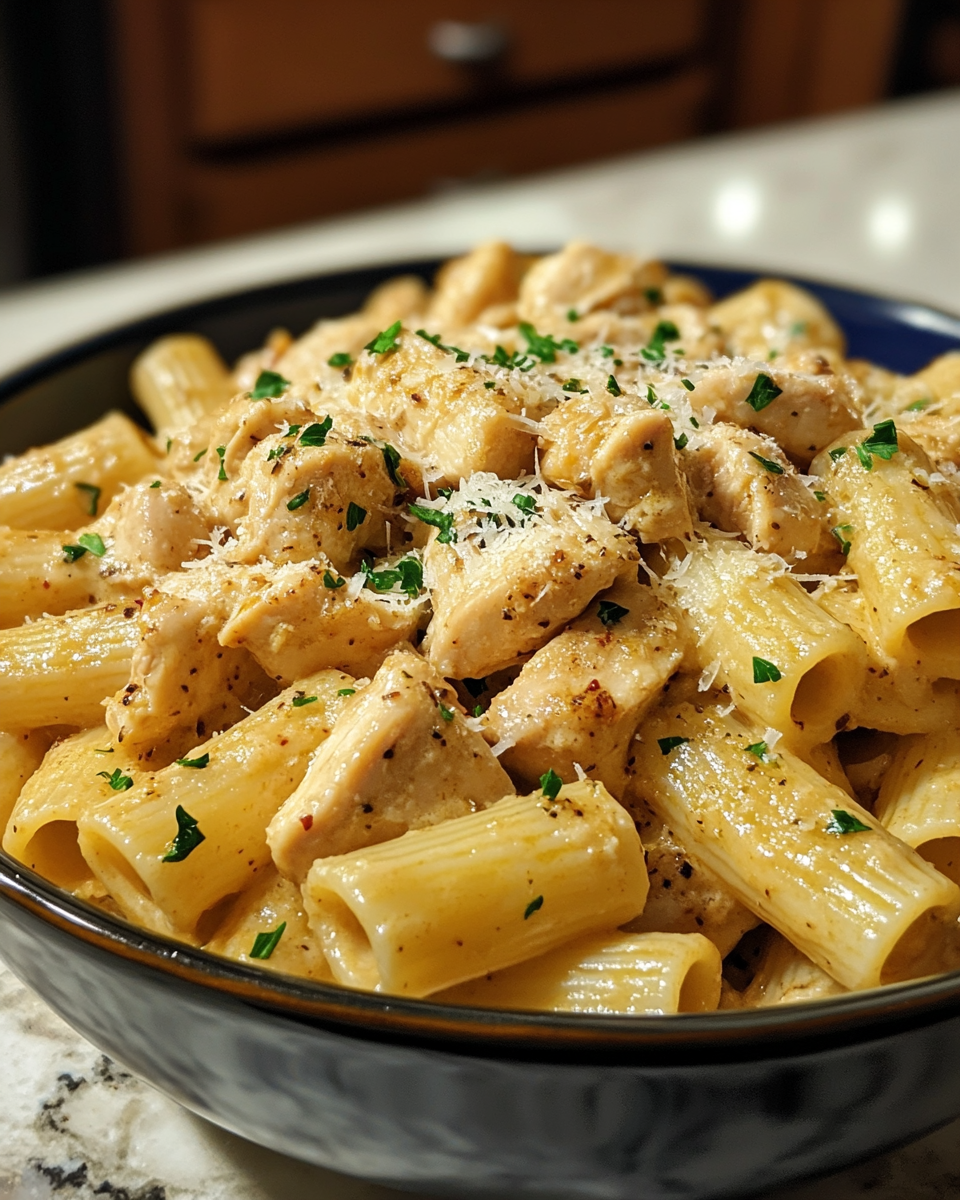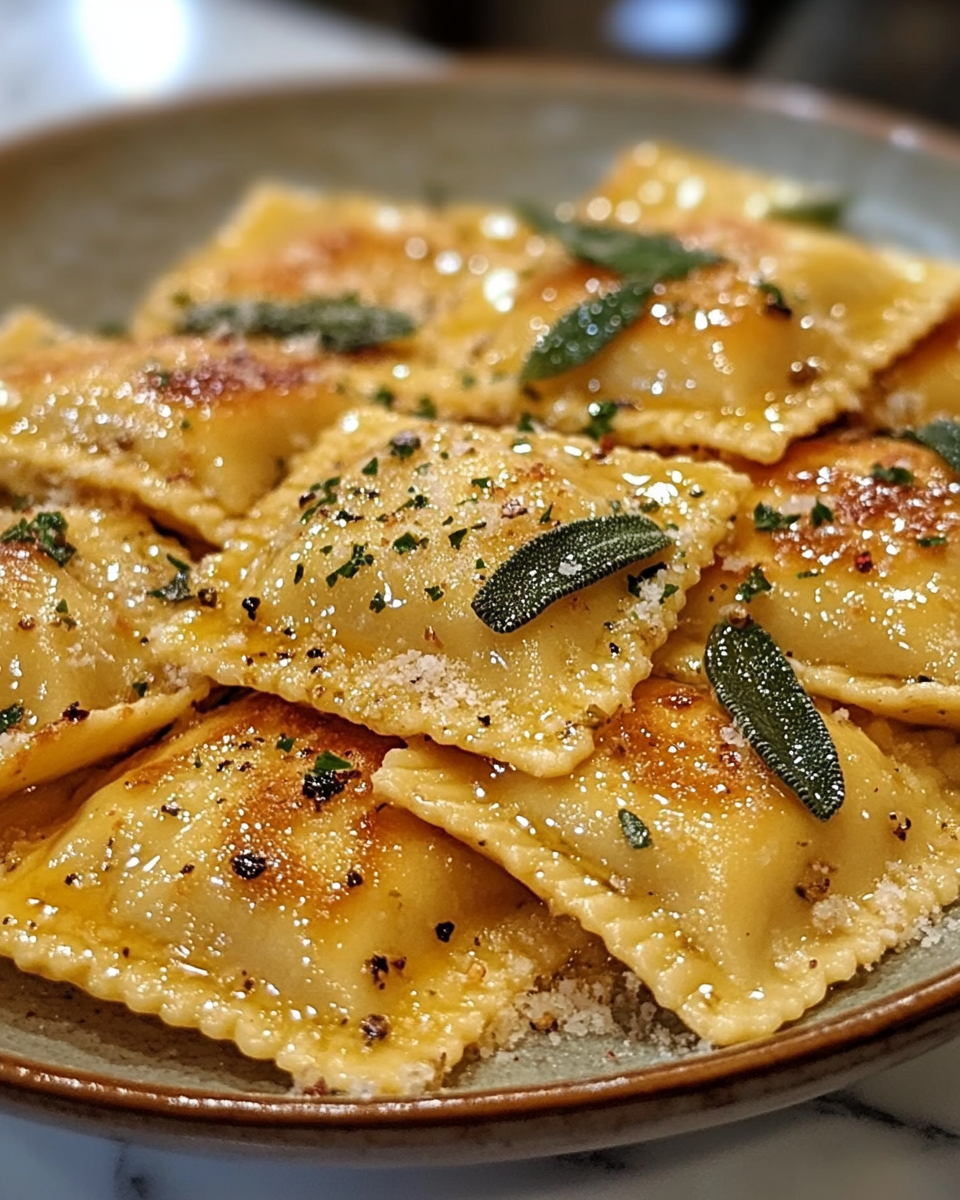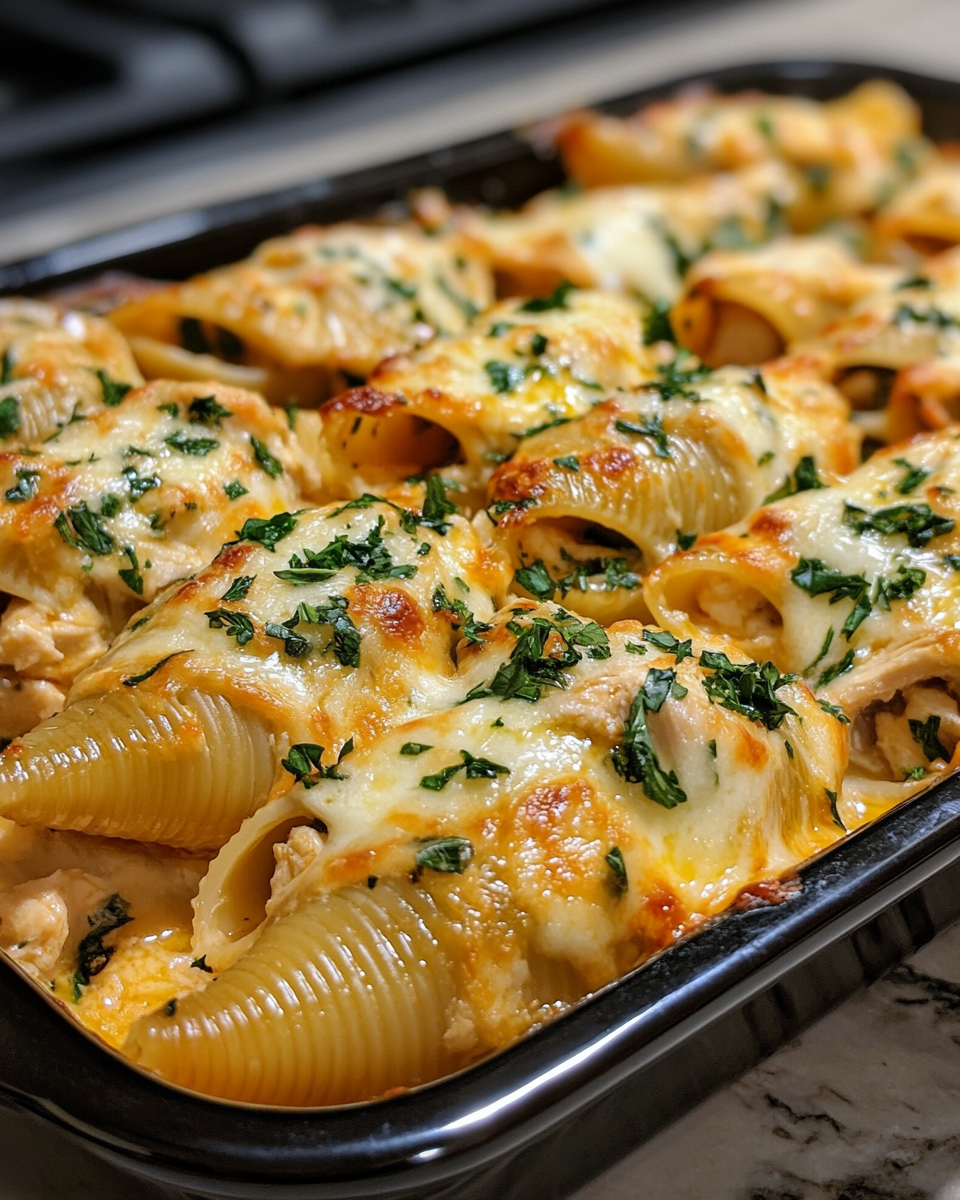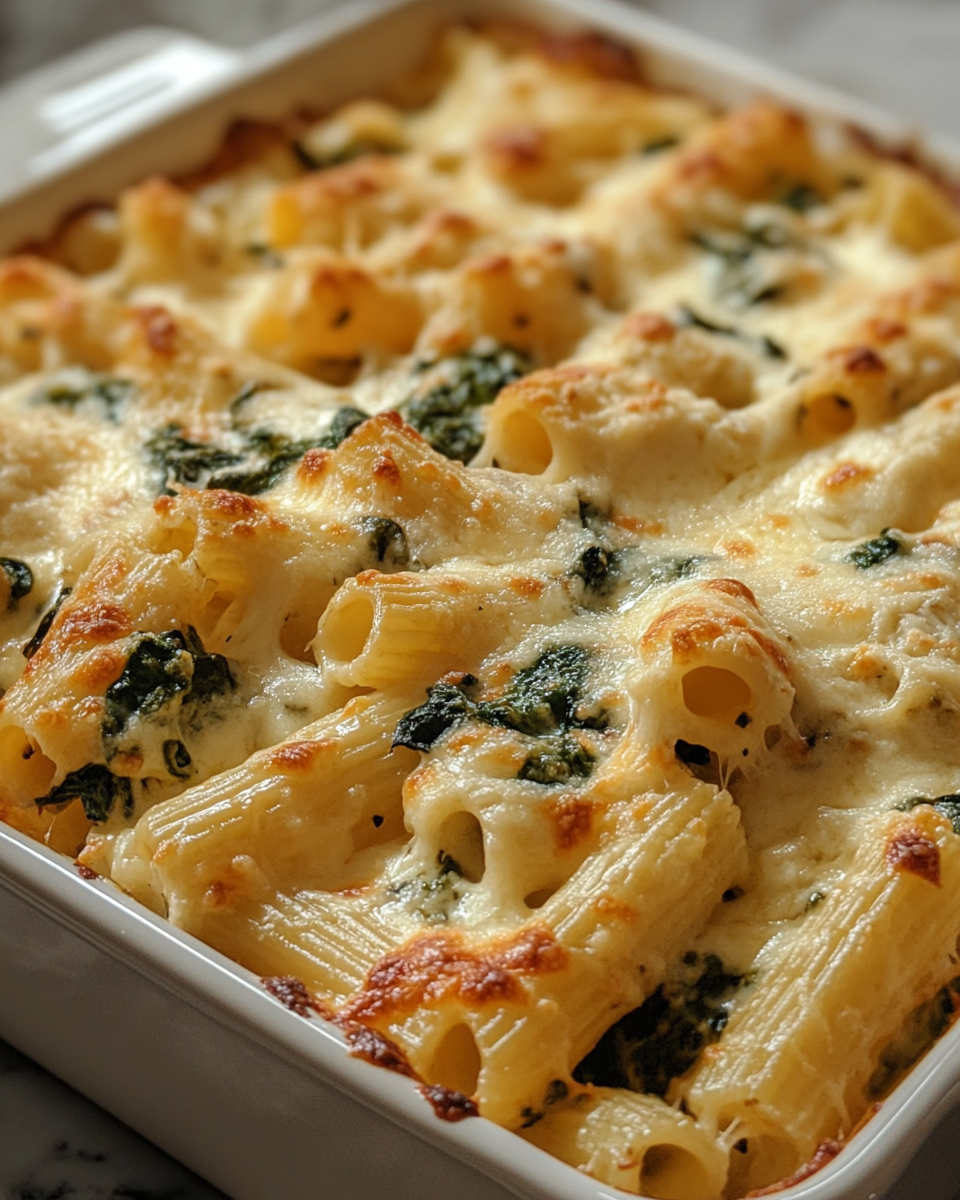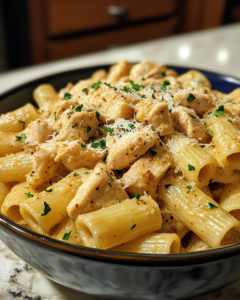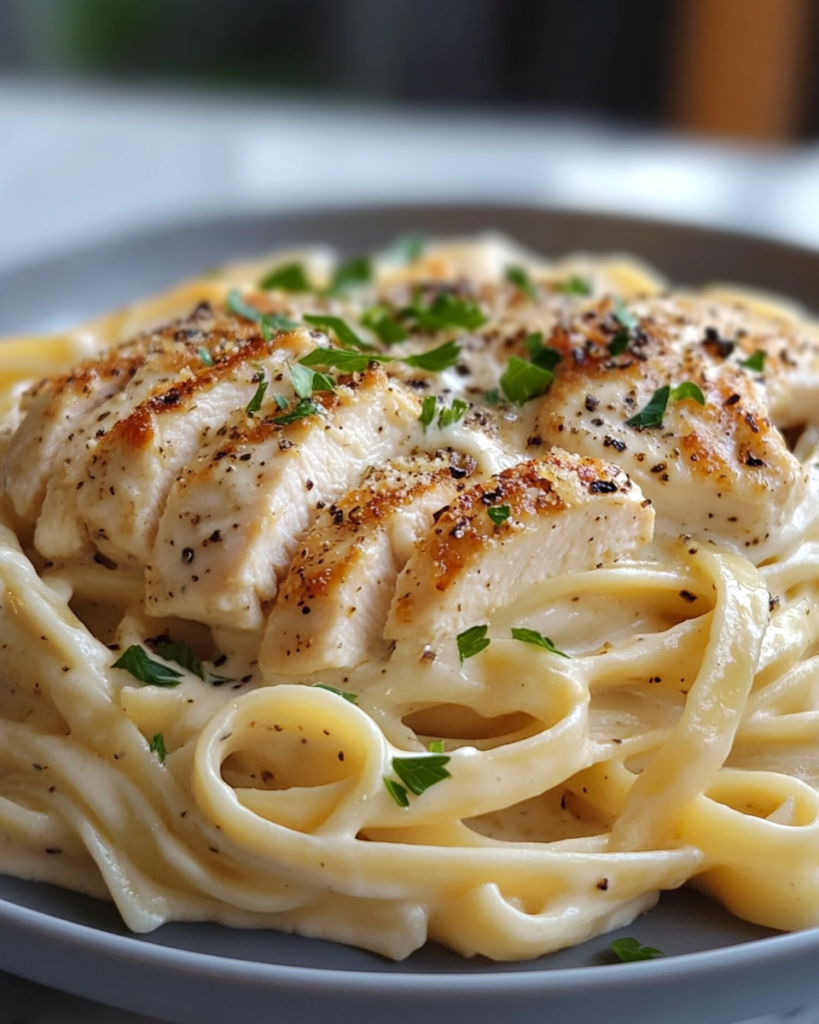
Classic Chicken Alfredo with Rich Creamy Sauce is a comforting pasta dish featuring tender chicken strips coated in a smooth, buttery parmesan cream sauce. Served over fettuccine, it delivers a warm, satisfying plate that feels ideal for both weeknight cooking and relaxed weekend meals.
The dish centers on a silky sauce made from butter, cream, and cheese that clings to every strand of pasta. Seared chicken adds a hearty bite, while garlic brings gentle depth without overpowering the cream base. When prepared with care, each element blends into a balanced, velvety texture that feels complete on its own.
This version stays close to traditional preparation, focusing on simple kitchen steps and familiar ingredients. It avoids unnecessary complexity and keeps attention on flavor and texture. The result is a pasta dish that feels comforting, filling, and consistently enjoyable at the table.
Ingredients Overview
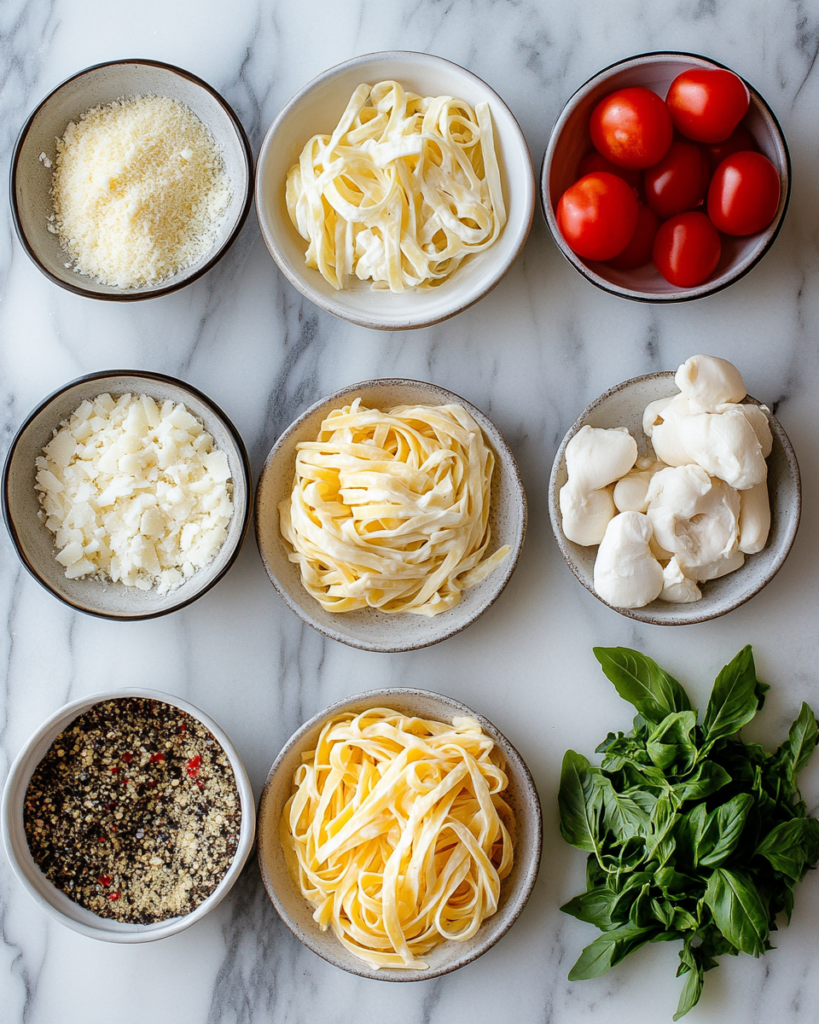
Chicken Alfredo relies on a small group of familiar ingredients that work together to build a smooth, layered sauce and tender protein. The pasta acts as the foundation, usually fettuccine, because its wide shape holds the creamy sauce well.
Chicken breast is commonly used due to its lean texture and mild flavor. When cooked properly, it stays tender and absorbs the seasoning from the pan. Butter and heavy cream form the base of the sauce, creating a smooth consistency that coats the pasta evenly.
Parmesan cheese is essential for both flavor and texture. It melts into the cream and thickens the sauce naturally, adding a savory depth. Fresh garlic introduces aroma and warmth, while salt and black pepper balance the richness.
Olive oil helps sear the chicken, while a small amount of reserved pasta water can loosen the sauce if needed. Some variations include a pinch of nutmeg for subtle warmth or a sprinkle of parsley for freshness at the end.
If needed, chicken thighs can replace chicken breast for a juicier result. Half-and-half may substitute part of the cream, though the sauce will be slightly lighter. Freshly grated cheese is preferred since pre-shredded varieties may not melt as smoothly.
Each ingredient plays a specific role, and together they create a creamy, cohesive dish that feels satisfying without being complicated.
Ingredients
12 ounces fettuccine pasta
2 large chicken breasts, sliced into strips
2 tablespoons olive oil
3 tablespoons unsalted butter
4 cloves garlic, minced
1 ½ cups heavy cream
1 cup freshly grated Parmesan cheese
½ teaspoon salt
½ teaspoon black pepper
½ cup reserved pasta water
1 tablespoon chopped parsley (optional for garnish)
Step-by-Step Instructions
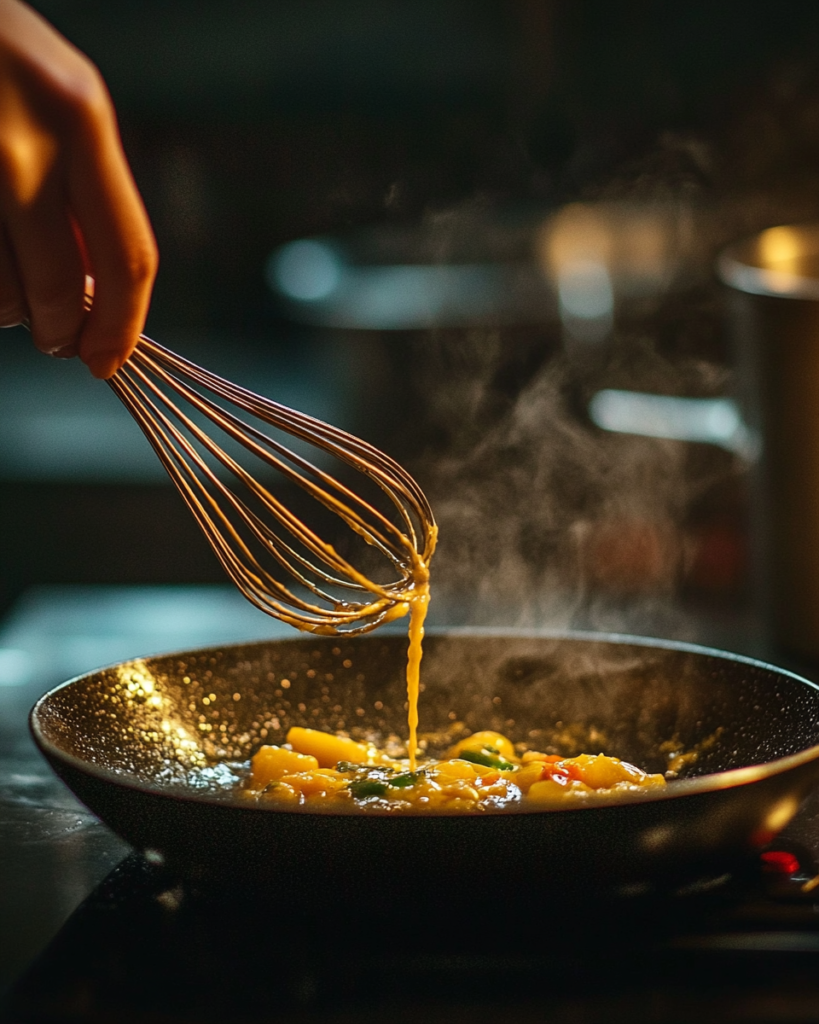
Begin by bringing a large pot of salted water to a boil. Add the fettuccine and cook until just tender with a slight bite. Before draining, reserve about half a cup of pasta water to adjust the sauce later if needed. Drain the pasta and set it aside.
While the pasta cooks, heat olive oil in a large skillet over medium-high heat. Place the chicken strips in a single layer and season lightly with salt and black pepper. Cook until golden on the outside and fully cooked through, turning occasionally for even browning. Remove the chicken from the pan and set aside.
Reduce the heat to medium and add butter to the same skillet. Once melted, stir in minced garlic and cook briefly until fragrant. Be careful not to let the garlic brown, as this can affect the flavor of the sauce.
Pour in the heavy cream slowly while stirring. Allow it to warm gently, then lower the heat to maintain a soft simmer. Stir in grated Parmesan cheese a little at a time, letting it melt into the cream until the sauce becomes smooth and slightly thickened.
Return the cooked chicken to the skillet, stirring to coat it in the sauce. Add the drained pasta and gently toss until every strand is covered. If the sauce feels too thick, add small amounts of reserved pasta water until the desired consistency is reached.
Let everything warm together for a minute so the flavors blend. Taste and adjust seasoning with a little more salt or pepper if needed. Remove from heat once the sauce clings evenly to the pasta.
Serve immediately while warm, optionally topped with chopped parsley for a fresh finish. The sauce should remain creamy and smooth, coating the pasta without pooling at the bottom of the plate.
Common mistakes include overheating the cream, which can cause separation, or adding cheese too quickly, which may lead to clumping. Keeping the heat moderate helps maintain a stable, silky sauce.
Tips, Variations & Substitutions
Using freshly grated Parmesan makes a noticeable difference in texture since it melts more evenly into the cream. Pre-shredded cheese often contains additives that can affect smoothness.
For a lighter version, part of the cream can be replaced with whole milk, though the sauce will be less thick. Chicken thighs can be used instead of breasts for a juicier texture and slightly deeper flavor.
Adding sautéed mushrooms or spinach can bring extra depth and balance to the creamy base. A small pinch of nutmeg can also add subtle warmth without changing the core profile of the dish.
If the sauce thickens too much while resting, a splash of warm pasta water or cream can restore its smooth consistency. Keeping the heat low throughout sauce preparation helps prevent curdling and maintains a stable texture.
Leftovers can be reheated gently on low heat with a small amount of added cream to bring back the original consistency.
Serving Ideas & Occasions
Chicken Alfredo is often served as a main dish for family dinners or relaxed gatherings. It pairs well with simple sides like garlic bread, roasted vegetables, or a light green salad with a mild dressing.
The creamy texture of the pasta works well alongside crisp vegetables that provide contrast. A simple sparkling water or chilled iced tea complements the richness of the sauce.
It is commonly prepared for casual evenings when a filling, comforting meal is desired without requiring complex preparation. It also works well for shared meals since it can be served directly from the skillet.
Nutritional & Health Notes
This dish contains a balance of protein, carbohydrates, and fats. Chicken provides lean protein, while pasta supplies energy from carbohydrates. The sauce contributes fats from cream, butter, and cheese, which also carry flavor and texture.
Portion size plays an important role in balancing the richness of the dish. Pairing it with vegetables can help create a more rounded meal. Adjusting cream or cheese levels can also change the overall heaviness of the sauce.
While it is a creamy pasta dish, it can be enjoyed as part of a varied eating pattern when served in reasonable portions alongside lighter foods.
FAQs
What type of pasta works best for Chicken Alfredo?
Fettuccine is most commonly used because its wide, flat shape holds the creamy sauce well. However, other pasta types such as linguine or tagliatelle can also work. Short pasta like penne can be used, though the sauce will coat it differently. The key is choosing a shape that allows the sauce to cling evenly.
Can I use pre-cooked chicken?
Yes, pre-cooked chicken can be used for convenience. Simply warm it in the sauce during the final steps of cooking. Keep in mind that freshly cooked chicken from the skillet often has better texture and flavor because it absorbs seasoning during cooking.
Why did my sauce turn grainy?
A grainy sauce usually happens when the heat is too high or cheese is added too quickly. Parmesan should be added gradually over low heat so it melts smoothly. If the sauce separates, lowering the heat and stirring gently can sometimes help bring it back together.
Can I make this dish ahead of time?
It is best enjoyed fresh, but it can be prepared ahead in parts. The chicken and sauce can be made earlier and stored separately. When reheating, add a small amount of cream or pasta water to restore the original consistency before combining with freshly cooked pasta.
What can I use instead of heavy cream?
Half-and-half or whole milk can be used, though the sauce will be lighter and less thick. For a slightly richer alternative without heavy cream, a mix of milk and a small amount of cream cheese can also work.
How do I prevent the pasta from sticking together?
Tossing the cooked pasta with a small amount of sauce or a light drizzle of olive oil can help prevent sticking. Also, combining pasta with sauce while it is still warm allows it to absorb flavor and stay separated.
Can vegetables be added to this recipe?
Yes, vegetables such as spinach, broccoli, or mushrooms can be added. They should be cooked separately or sautéed before being mixed into the sauce so they maintain texture and flavor without watering down the cream base.